A failing MBR membrane can raise energy use, reduce water quality, and slow the whole wastewater treatment line. If membrane life is not planned early, your treatment plant may face surprise downtime, higher costs, and missed discharge targets.
MBR membranes usually last 5–10 years in a well-designed wastewater treatment plant. The real service life depends on influent quality, membrane material, system design, aeration, cleaning, flux control, and daily operation. With proper engineering, stable MBR operation, and timely membrane cleaning, many projects can extend membrane life and reduce replacement cost.
Article Outline
- How long do MBR membranes normally last?
- What is an MBR membrane in a membrane bioreactor?
- What affects membrane life in wastewater treatment?
- How does membrane fouling shorten MBR service life?
- What role does operation play in MBR performance?
- How can membrane cleaning extend membrane life?
- Hollow fiber membranes vs flat sheet membranes: which lasts longer?
- Where are MBR solutions commonly used?
- What are the advantages of membrane bioreactors?
- When should you plan membrane replacement?
- Case study: extending membrane life in an industrial wastewater project
- FAQs about MBR membrane service life
How Long Do MBR Membranes Normally Last?
In most real projects, an MBR membrane lasts about 5 to 10 years. Some MBR systems may need membrane replacement sooner if the influent is harsh, the design is weak, or operators skip regular checks. In well-run wastewater treatment projects, the membrane can often stay stable for many years.
From our work as a manufacturer and engineering provider of water and wastewater treatment systems, we do not look at membrane life as only a product issue. We look at the full MBR system: influent quality, tank design, air scouring, sludge concentration, control logic, cleaning plan, and spare parts support.
A good wastewater treatment plant does not just install a membrane module and hope it works. It controls the flux of the membrane, protects the membrane surface, and keeps the biological tank healthy. That is how an MBR project gets long service life and stable treated water quality.
How Long Do MBR Membranes Normally Last?
What Is an MBR Membrane in a Membrane Bioreactor?
An MBR, or membrane bioreactor, combines biological treatment with membrane filtration. In simple words, bacteria break down pollutants, and the membrane separates clean water from sludge. This makes the MBR process more compact than many forms of conventional wastewater treatment.
In an activated sludge membrane bioreactor, the biological tank works like a suspended growth bioreactor. The bacteria grow in the mixed liquor, also called MBR mixed liquor. Then the membrane holds back activated sludge, suspended solids, and many fine particles, while clean treated water passes through.
The membrane pore size is very small. This is why an ultrafiltration membrane is widely used in MBR projects. The membrane separation step improves clarity and helps the wastewater treatment process produce more stable effluent for discharge or reuse.
What Affects Membrane Life in Wastewater Treatment?
Many factors affect how long an MBR membrane lasts. The most important ones are influent quality, design flux, aeration, sludge age, chemical dosing, cleaning schedule, and operator skill. A strong treatment process protects the membrane from overload.
For industrial wastewater, the risk is often higher than in simple domestic sewage. Textile, dyeing, food, beverage, chemical, pharmaceutical, and electronics factories may have oil, color, high COD, salt, fine particles, or toxic substances. These can be likely to degrade the membrane if pretreatment is not designed well.
Here is a simple view:
| Factor |
Risk to Membrane Life |
Engineering Control |
| High suspended solids |
Blocks the membrane surface |
Screening, grit removal, sludge control |
| Oil and grease |
Causes sticky membrane fouling |
Oil separation and pretreatment |
| High flux |
Stresses the membrane layer |
Correct membrane area design |
| Weak aeration |
Allows foulants to build up |
Proper air scouring |
| Poor cleaning |
Reduces membrane permeability |
Planned membrane cleaning |
| Harsh chemicals |
May damage membrane fibers |
Correct cleaning concentration |
A good MBR design starts before the equipment is built. We check water quality, project flow, discharge target, reuse goal, site space, automation needs, and future expansion. This helps us provide customized MBR solutions for both municipal and industrial wastewater.
How Does Membrane Fouling Shorten MBR Service Life?
Membrane fouling is one of the main reasons an MBR membrane loses performance. Fouling happens when sludge, colloids, organic matter, grease, or salts build up on the surface of the membrane. Over time, these foulants on the membrane surface reduce water flow.
Not all fouling is permanent. Some membrane foulants can be removed by air scouring, backwashing, or chemical cleaning. But if fouling is ignored for too long, the membrane layer may become hard to clean. Then the membrane permeability drops, energy use rises, and the MBR becomes less stable.
In membrane fouling in membrane bioreactors, the goal is not to remove fouling forever. That is not realistic. The goal is to control it. A smart MBR operation plan uses moderate flux, correct sludge concentration, regular cleaning, and online monitoring to minimize membrane stress.
What Role Does Operation Play in MBR Performance?
Even the best membrane can fail early if the operation of the MBR is poor. Daily operation controls the real working environment around the membrane surface. Operators should watch transmembrane pressure, flow rate, dissolved oxygen, MLSS, pH, temperature, and cleaning records.
A stable MBR system needs balance. If the activated sludge is too old, too thick, or poorly aerated, the biological process may become weak. If the biological process is weak, more pollutants reach the membrane. That increases MBR fouling and reduces MBR performance.
For EPC contractors and engineering companies, this is important. The treatment system should include clear PLC / SCADA logic, alarms, operating manuals, and commissioning support. A good MBR plant is not only a tank with a membrane unit. It is a complete engineered system.
How Can Membrane Cleaning Extend Membrane Life?
Membrane cleaning helps recover flow and extend membrane life. In many MBR projects, operators use maintenance cleaning and recovery cleaning. Maintenance cleaning is light and regular. Recovery cleaning is stronger and used when performance drops more seriously.
The cleaning of the membranes must match the fouling type. Organic fouling may need oxidizing chemicals. Scaling may need acid cleaning. Oil fouling may need special pretreatment and careful chemical selection. Too little cleaning leaves fouling behind. Too much cleaning may shorten membrane life.
A simple cleaning plan may look like this:
| Cleaning Type |
Typical Purpose |
When to Use |
| Air scouring |
Reduce sludge buildup |
Continuous or scheduled |
| Backwash |
Remove loose particles |
Frequent operation cycle |
| Maintenance clean |
Keep stable permeability |
Weekly or monthly |
| Recovery clean |
Restore serious flux loss |
When pressure rises sharply |
| Offline soak |
Deep cleaning |
During shutdown or overhaul |
The key is discipline. Record data. Watch trends. Act early. This is how membrane filtration stays reliable in a real wastewater treatment project.
Hollow Fiber Membranes vs Flat Sheet Membranes: Which Lasts Longer?
Both hollow fiber membranes and flat sheet membrane products can work well in MBR projects. The right choice depends on wastewater type, tank layout, air demand, maintenance plan, operator skill, and project budget.
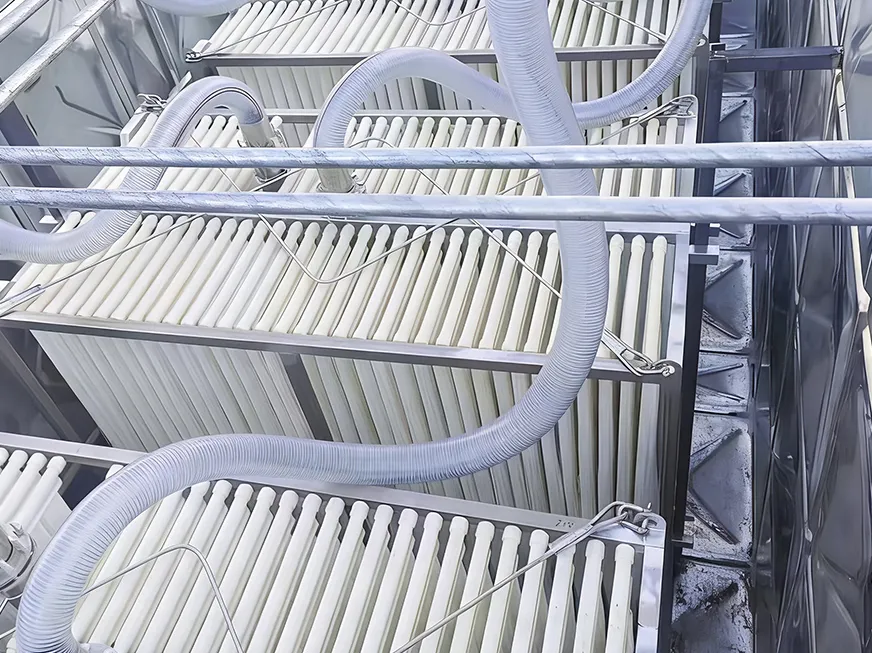
A hollow fibre membrane has many small fibers. It offers high packing density and a compact design. This is useful when the site is limited or when a modular MBR design is needed. However, membrane fibers must be protected from sharp solids, strong twisting, and poor aeration.
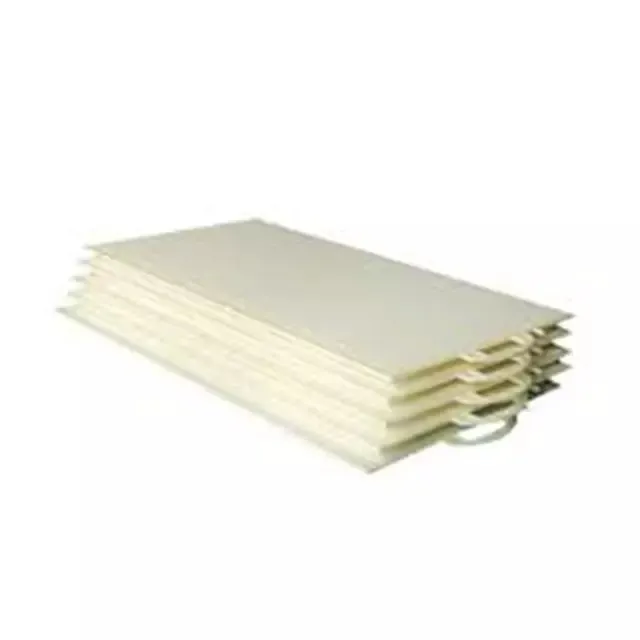
Flat sheet membrane products are often valued for simple cleaning and strong mechanical support. In some difficult wastewater projects, flat sheet designs may handle sludge movement well. But they may need more space than some hollow fiber designs. For this reason, we select the membrane type based on the project, not just on a catalog name.
Flat Sheet Membranes
Where Are MBR Solutions Commonly Used?
MBR applications cover many project types. Membranes can be used in municipal sewage, hotels, schools, hospitals, farms, food factories, textile plants, industrial parks, electronics factories, and water reuse projects. The compact footprint makes MBR useful when land is expensive.
In municipal wastewater treatment, MBR technology can improve effluent clarity and help upgrade old plants. In municipal wastewater treatment plants, the system can support stricter discharge rules and reuse goals. For urban wastewater, the compact design is a major benefit.
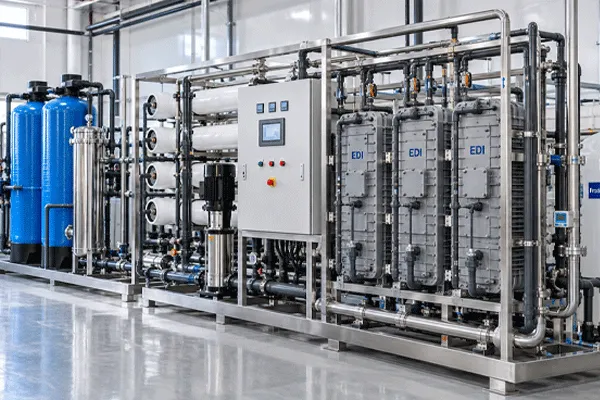
For industrial wastewater treatment, the MBR is often part of a larger line. It may work after pretreatment and before RO, EDI, or other polishing steps. For treating industrial wastewater, we often combine screens, equalization tanks, dosing systems, a membrane reactor, RO membranes, EDI modules, and automation into one project plan.
What Are the Advantages of Membrane Bioreactors?
The advantages of membrane bioreactors are easy to understand. An MBR can provide high effluent clarity, compact layout, lower suspended solids in outlet water, and better control than many traditional clarifier-based systems. It also supports wastewater treatment and reuse.
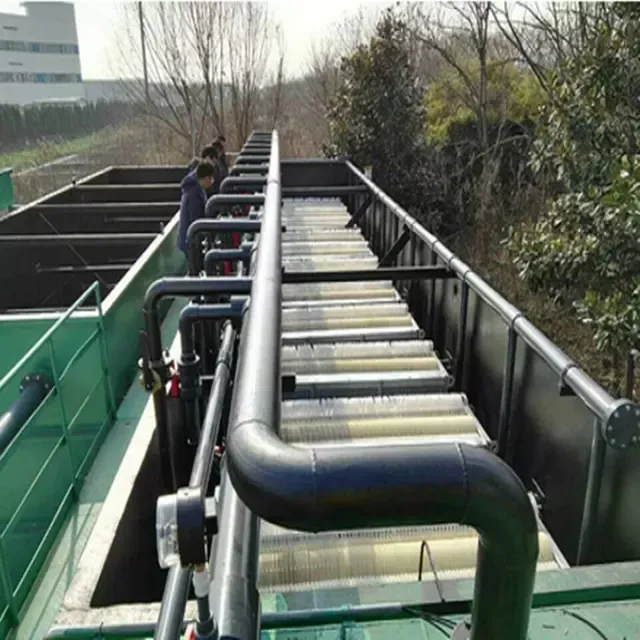
A submerged MBR uses an immersed membrane placed inside the biological tank or a separate membrane tank. This submerged membrane bioreactor design saves space and reduces the need for a large secondary clarifier. The submerged membrane also allows direct solid-liquid separation.
For industrial owners, the benefit is practical. Better outlet quality means less risk. Compact layout saves land. Automation reduces labor. Stable treatment efficiency supports compliance. When needed, the MBR can be followed by additional treatment such as RO, UF, EDI, or disinfection for high-grade reuse or even process drinking water after proper design and approval.
How Do You Know When an MBR Membrane Needs Replacement?
A membrane does not usually fail overnight. It gives signs first. The most common signs are rising pressure, lower flow, more frequent cleaning, unstable effluent, broken fibers, or visible damage to the MBR module. If these signs continue after proper cleaning, it may be time to plan membrane replacement.
A project team should not wait until failure. Plan ahead. Keep spare modules. Track pressure and flow. Compare current data with start-up data. If the membrane needs more cleaning but gives less recovery, the aging trend is clear.
Here is a simple replacement planning chart:
Year 1–2: Stable operation, normal cleaning
Year 3–5: Watch fouling trend, optimize operation
Year 5–7: Prepare spare membrane budget
Year 7–10: Check replacement timing by data
After 10 years: Replace or upgrade based on project condition
This is only a guide. Some full-scale MBR plants may replace earlier. Others may last longer. The real answer depends on water, design, and operation.
How Do You Know When an MBR Membrane Needs Replacement?
How Can Engineering Design Extend MBR Membrane Life?
Good design protects the membrane before problems start. For a new wastewater treatment system, we first study influent data, flow changes, discharge standards, site layout, and reuse needs. Then we choose the membrane area, aeration system, tank structure, PLC logic, and cleaning method.
For municipal and industrial wastewater treatment, one fixed design does not fit every project. A food factory and a semiconductor plant have different risks. A hotel and a chemical plant also need different pretreatment. This is why customized engineering support matters.
As a professional manufacturer, we support hollow fiber MBR membranes, hollow fiber UF membranes, flat sheet MBR membranes, RO membranes, EDI modules, small RO machines, pure water plants, wastewater plants, containerized systems, and skid-mounted systems. This lets us design integrated membrane processes instead of selling only one part.
Case Study: Extending Membrane Life in an Industrial Wastewater Project
One industrial plant had unstable flow, high suspended solids, and frequent fouling. The old water treatment line used simple settling before the MBR. The operators cleaned often, but the membrane pressure still rose. The plant needed more stable effluent and lower downtime.
We reviewed the process and found three main issues: weak pretreatment, high peak load, and poor sludge control. The solution included better screening, equalization, improved aeration, optimized activated sludge process control, and a clearer cleaning schedule. We also adjusted the operating flux to protect the membrane surface.
After the upgrade, the industrial mbr systems ran more smoothly. The plant reduced emergency cleaning, improved water quality, and made the membrane filtration system easier to manage. This kind of result is common when equipment supply and engineering design work together.
What Should Buyers Ask Before Choosing an MBR Membrane Supplier?
Before buying an MBR membrane, buyers should ask more than price. Price matters, but long-term operation matters more. A cheap membrane can become expensive if it causes downtime, high energy use, or frequent replacement.
Useful buyer questions include:
- Can the supplier design for both municipal and industrial wastewater?
- Does the supplier provide hollow fiber and flat sheet options?
- Can the supplier support containerized or skid-mounted systems?
- Does the supplier provide PLC / SCADA automation?
- Are drawings, manuals, and technical documents clear?
- Can the supplier help with commissioning and spare parts?
- Does the supplier understand membrane bioreactors for wastewater treatment as a full project, not only a product?
For EPC contractors, distributors, and system integrators, the best partner is not only a seller. The best partner helps reduce project risk from design to delivery.
FAQs About MBR Membrane Service Life
Can an MBR membrane really last 10 years?
Yes, an MBR membrane can last around 10 years in a well-designed and well-operated system. The influent should be controlled, the flux should be reasonable, and cleaning should follow a proper plan.
What is the main reason MBR membranes fail early?
The main reason is often uncontrolled membrane fouling. Other causes include poor pretreatment, chemical damage, weak aeration, high solids, wrong cleaning, and poor operation.
Is MBR better than conventional wastewater treatment?
For many projects, yes. MBR provides better solid-liquid separation, smaller footprint, and more stable effluent than many conventional systems. However, it needs good operation and correct design.
Can MBR treated water be reused?
Yes. Treated water from an MBR can often be reused for irrigation, flushing, cooling, cleaning, or further purified by RO and EDI for higher-grade use. Final use depends on local standards and project design.
Do industrial wastewater projects need special MBR design?
Yes. Industrial wastewater may contain oil, chemicals, salt, color, or toxic compounds. These require proper pretreatment and customized design to protect the membrane and keep stable performance.
How often should MBR membranes be cleaned?
It depends on water quality and operating data. Many systems use regular maintenance cleaning and deeper recovery cleaning when pressure rises. The best schedule should be based on site data, not guesswork.
Final Thoughts: How Long Do MBR Membranes Last?
An MBR membrane usually lasts 5–10 years, but the real service life depends on the full project. A good membrane bioreactor is not only about the membrane itself. It is about design, operation, cleaning, automation, and long-term support.
For EPC contractors, engineering companies, municipal plants, factories, and distributors, choosing the right partner can make the difference between frequent problems and stable operation. We build water treatment and wastewater treatment systems with customized engineering, factory manufacturing, clear documentation, commissioning support, and long-term spare parts service.
Key Things to Remember
- MBR membranes normally last 5–10 years in a well-managed system.
- Membrane fouling is the biggest daily risk to long service life.
- Good pretreatment protects the membrane and improves system stability.
- Correct flux, aeration, sludge control, and cleaning extend membrane life.
- Hollow fiber and flat sheet designs both have advantages.
- Industrial projects need customized engineering, not one-size-fits-all equipment.
- A reliable supplier should support design, manufacturing, automation, commissioning, and spare parts.
- The best MBR result comes from matching the membrane, process, and project goal.











 17:51
17:51