










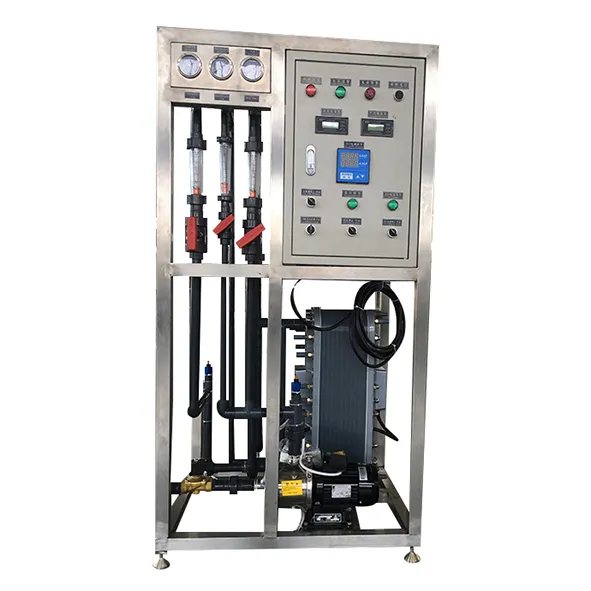
Integration von Ionenaustausch
Verwendet eine mehrschichtige Polyamidstruktur, um die Wasserdurchlässigkeit zu maximieren und gleichzeitig eine außergewöhnlich hohe Barriere für gelöste Salze aufrechtzuerhalten.
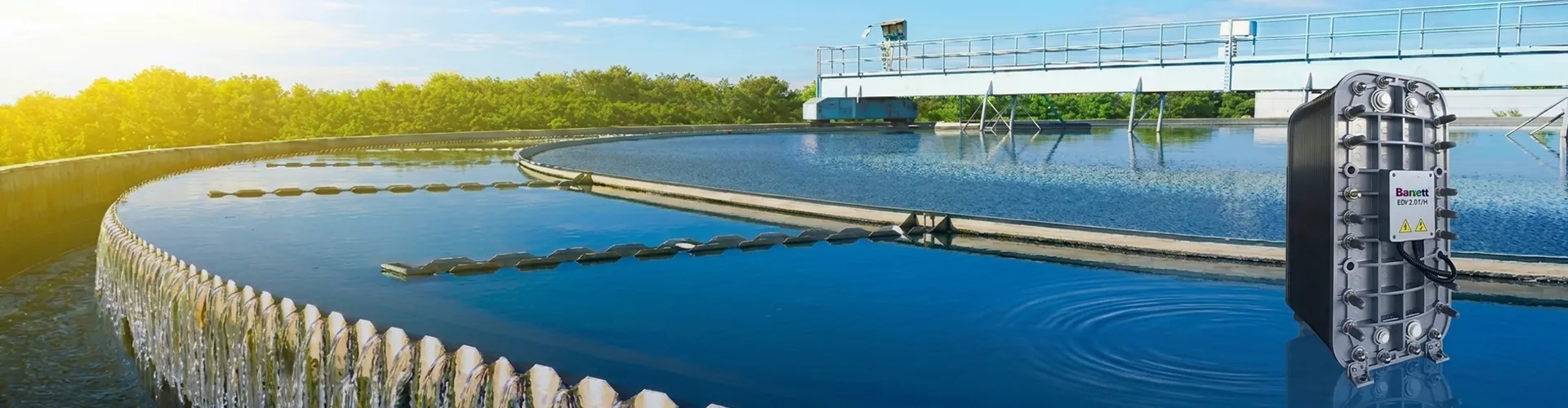
Die Elektrodeionisation (EDI) ist eine kontinuierliche, chemikalienfreie Wasserreinigungstechnologie, die Ionenaustauscherharze, Ionenaustauschmembranen und Gleichstrom zur Tiefenentionisierung von Wasser kombiniert. Als idealer Reinigungsschritt nach der Umkehrosmose (RO) machen EDI-Systeme die gefährlichen sauren und ätzenden Regenerationschemikalien überflüssig, die beim herkömmlichen Ionenaustausch im Mischbett verwendet werden. Unsere EDI-Module und integrierten Systeme produzieren zuverlässig ultrareines Wasser (UPW) bis zu 18,2 MΩ-cm und bieten eine sichere, stabile und umweltfreundliche Lösung für kritische industrielle Anwendungen.
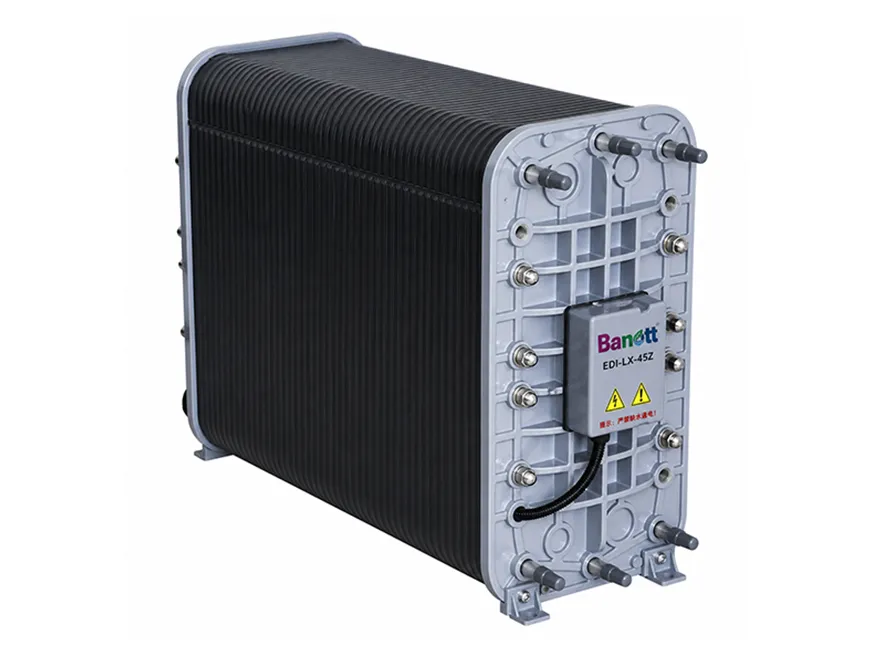
Die EDI-Technologie bietet einen kontinuierlichen, chemiefreien Polierprozess, der stabiles 18,2 MΩ-cm Reinstwasser für die anspruchsvollsten industriellen Anwendungen liefert.
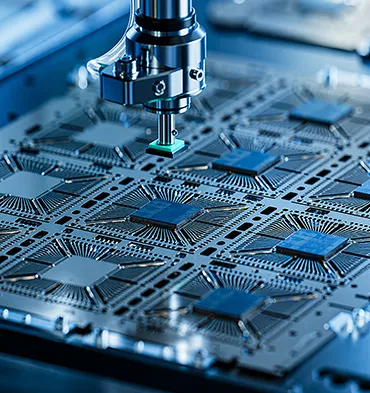
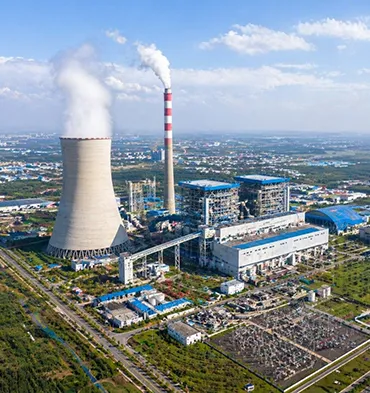
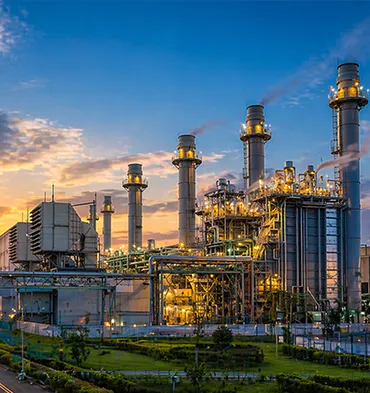
Die Umstellung von herkömmlichen Mischbettharzen auf EDI bietet für die Reinstwasserproduktion entscheidende betriebliche und ökologische Vorteile.
Chemiefreier Betrieb: Keine sauren oder ätzenden Regenerationschemikalien erforderlich.
Kontinuierliche Produktion: Die Gleichstromversorgung ermöglicht eine kontinuierliche Harzregeneration mit weniger Ausfallzeiten.
Hohe Wasserqualität: Erzeugt hochreines Wasser mit bis zu 18,2 MΩ-cm.
Niedrigere Betriebskosten: Geringere Kosten für Arbeit, Chemikalien und Abfallbehandlung.
Für Anlagen, die eine zuverlässige, sichere und kontinuierliche Versorgung mit Reinstwasser benötigen, ist EDI der bewährte und moderne Ersatz für die traditionelle Mischbett-Polierung.
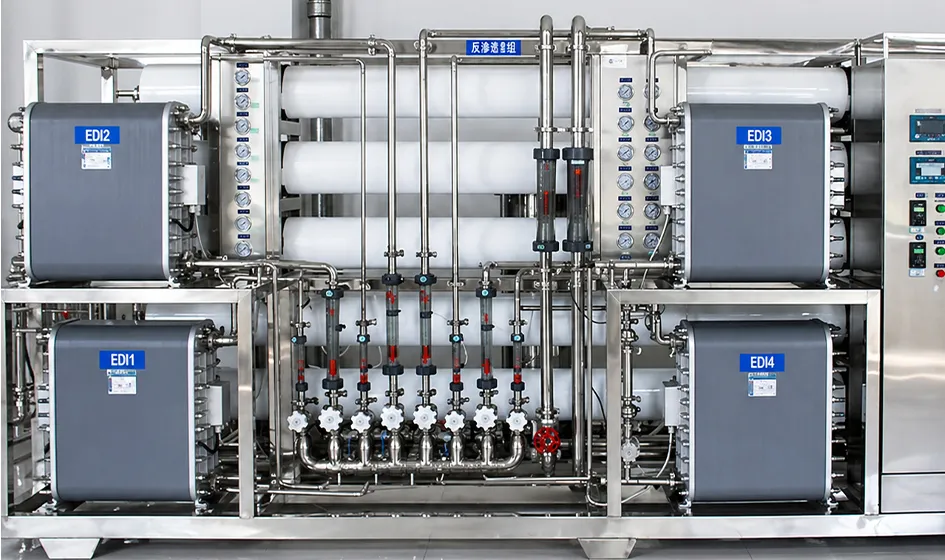
Verwendet eine mehrschichtige Polyamidstruktur, um die Wasserdurchlässigkeit zu maximieren und gleichzeitig eine außergewöhnlich hohe Barriere für gelöste Salze aufrechtzuerhalten.
Ein elektrisches Feld spaltet die Wassermoleküle auf und regeneriert das Harzbett kontinuierlich und ohne chemischen Eingriff.
Die robuste Modulkonstruktion gewährleistet einen leckagefreien Betrieb und schützt empfindliche Geräte in High-Tech-Anlagen.
Kompatibel mit Standard-SPS- und SCADA-Systemen zur Echtzeitüberwachung von Widerstand, Spannung und Durchflussraten.
Herstellung & QualitätEinführung: Als werkseigener Hersteller kontrollieren wir die Herstellung der Membranen, die Modulmontage und die Inspektion im Rahmen eines dokumentierten Qualitätssystems.
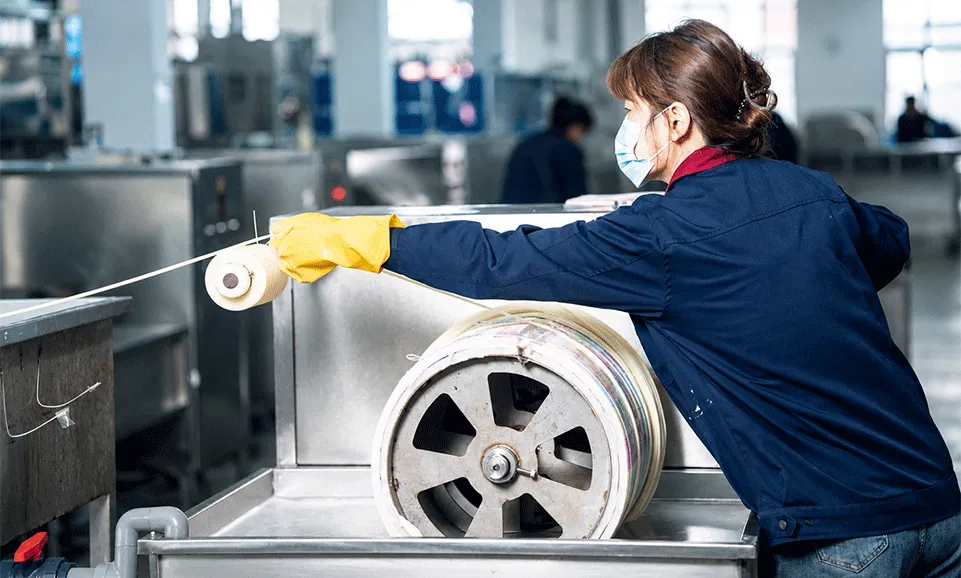
-konsistente Membranherstellung und Modulmontage.
-Inspektion und Integritätsprüfung vor dem Versand.
-Stabile Leistung von Charge zu Charge für Projektkonsistenz.
Unterstützung für kundenspezifische Modulabmessungen und -konfigurationen.
Diese Fertigungskontrolle hilft EPC-Teams und Betreibern, Unsicherheiten bei der Installation und Inbetriebnahme zu verringern.
Entdecken Sie reale Wasseraufbereitungsprojekte für verschiedene Anwendungen, die unsere Erfahrung mit Membransystemen, Reinigungsverfahren und Abwasserlösungen zeigen.
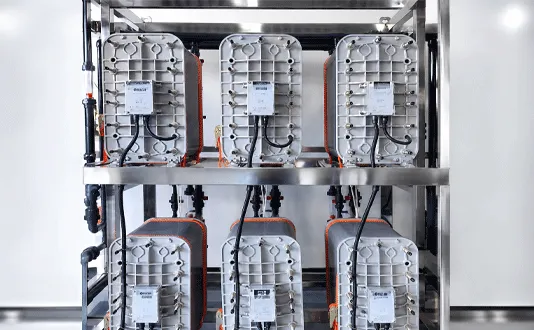
Ein Tiefbrunnen-Wasseraufbereitungssystem mit Umkehrosmose und Ionenaustausch zur Erfüllung der Trinkwasseranforderungen.
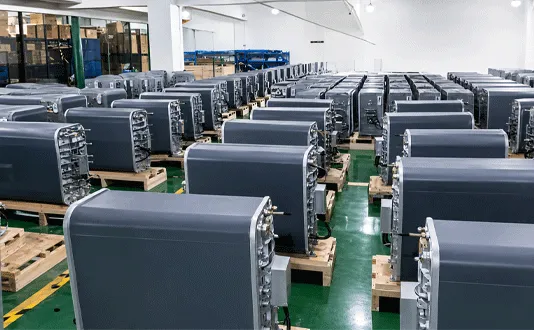
Kombinierte UF- und RO-Behandlung zur Reinigung von Brunnenwasser in einem Containersystem.
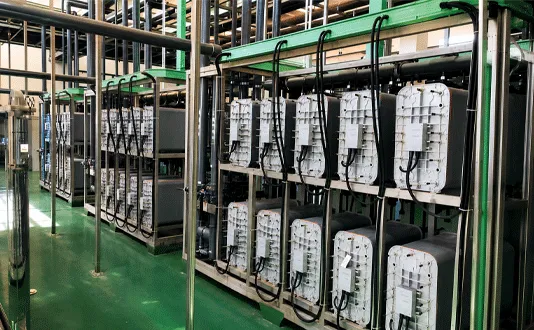
Großes UF-Vorbehandlungsprojekt zur Unterstützung der Qualität des nachgeschalteten RO-Speisewassers.
UF-Hohlfasermembranen werden in der Regel in die folgenden Lösungen integriert:
.webp.webp)
Wir unterstützen Ihr Baustellenteam bei der Inbetriebnahme und der Vorbereitung der Inbetriebnahme, einschließlich
Der Hauptunterschied besteht darin, wie das Ionenaustauschharz regeneriert wird. Bei herkömmlichen Mischbetten muss das System vom Netz genommen und mit gefährlichen Säuren und Laugen gespült werden. EDI verwendet einen elektrischen Strom (Gleichstrom), um das Harz kontinuierlich zu regenerieren, während das System läuft, wodurch die Handhabung von Chemikalien und Ausfallzeiten entfallen.
EDI-Systeme reagieren sehr empfindlich auf die Qualität des Speisewassers und müssen als Aufbereitungsstufe eingesetzt werden. Bei dem Speisewasser handelt es sich in der Regel um das Permeat aus einer Ein- oder Zweifach-Umkehrosmoseanlage (RO), die bereits den größten Teil der Schwebstoffe, organischen Stoffe und gelösten Salze entfernt hat.
Ja. Wenn sie mit dem richtigen RO-Permeat-Speisewasser versorgt und innerhalb der angegebenen Spannungs- und Durchflussparameter betrieben werden, können unsere EDI-Module durchgängig und kontinuierlich Reinstwasser produzieren, das den theoretischen maximalen Widerstand von 18,2 MΩ-cm erreicht.
Teilen Sie uns Ihre Projektanforderungen mit, und unser Team wird Ihnen eine geeignete EDI-Konfiguration und Integrationsmethode empfehlen.