Small communities often face a difficult wastewater challenge: aging infrastructure, limited budgets, changing population needs, and strict discharge requirements. Extending large sewer networks is not always practical. The right small wastewater treatment solution can provide reliable sewage management while protecting local water resources.
Small wastewater systems collect and treat domestic or community wastewater for a limited service area. Depending on population, wastewater flow, available land, discharge standards, and operating resources, suitable options include individual septic systems, shared cluster systems, lagoons, and compact mechanical treatment plants using biological or membrane technologies.
Small and Rural Wastewater Systems: Choosing the Right Wastewater Treatment System for Small Communities
Article Outline
- What Are Small Wastewater Systems and Who Needs Them?
- Why Is Wastewater Treatment Important for Small Communities?
- Centralized vs. Decentralized Wastewater Systems: What Is the Difference?
- Which Wastewater Treatment Technologies Are Suitable for Small Communities?
- Lagoon, Septic, or Mechanical Treatment Plant: Which Is Better?
- How Do You Design and Size a Small Wastewater Treatment System?
- When Should Small Wastewater Systems Use MBBR or MBR Technology?
- What Should Communities Consider for Daily Operation and Maintenance?
- How Can Small Communities Manage Wastewater Treatment Costs?
- How to Choose the Right Wastewater Treatment Plant Manufacturer?
1. What Are Small Wastewater Systems and Who Needs Them?
Small wastewater systems are facilities designed to collect, treat, and manage wastewater generated by a limited number of people, buildings, or businesses. Unlike large urban sewage treatment plants, these systems serve smaller service areas and often need more flexible designs.
According to the U.S. Environmental Protection Agency (EPA), a small community generally has 10,000 or fewer people and an average daily wastewater flow of less than one million gallons. This definition provides a useful reference for understanding small community wastewater infrastructure in the United States, although actual design requirements depend on local regulations and project conditions. Nearly one in four U.S. households relies on an individual septic system or small community cluster system.
Small wastewater infrastructure is particularly important in locations where a conventional municipal sewer network is unavailable or too expensive to extend.
Typical applications include:
- Rural villages and residential communities.
- Small towns and suburban developments.
- Hotels, resorts, and tourist facilities.
- Schools, hospitals, and public buildings.
- Farms and agricultural communities.
- Industrial parks and small manufacturing facilities.
- Remote infrastructure and construction projects.
For these applications, residential wastewater treatment must consider both the amount of sewage generated and the available resources for operating the facility.
The goal is not simply to build a smaller version of a large treatment plant. It is to develop a treatment system that matches local conditions, provides stable performance, and remains manageable throughout its service life.
2. Why Is Wastewater Treatment Important for Small Communities?
Reliable wastewater treatment is essential for public health, environmental protection, and sustainable community development.
Wastewater from residential buildings contains organic pollutants, suspended solids, nutrients, and microorganisms. If untreated sewage enters rivers, lakes, or groundwater, it can create serious pollution problems and affect nearby drinking water sources.
Many rural communities face additional difficulties. The EPA identifies limited financial resources, geographically dispersed populations, and shortages of trained operators as major barriers to effective wastewater services. Extreme weather, difficult terrain, and geographic isolation can make infrastructure projects even more challenging.
Research by the University of North Carolina Environmental Finance Center has also examined water and wastewater infrastructure funding gaps and service capacity in Appalachia.
These challenges are not limited to one region. Tribal communities, Alaska Native villages, and communities along the U.S.-Mexico border may also experience difficulties accessing basic wastewater services.
For these areas, inadequate wastewater treatment systems can create long-term environmental and financial problems.
A properly designed facility helps communities:
- Reduce pollutants before discharge.
- Protect groundwater and surface water.
- Improve sanitation and public health.
- Support residential and commercial development.
- Meet applicable environmental requirements.
- Create opportunities for water reuse.
Reliable wastewater infrastructure is a basic requirement for sustainable community development, not simply an additional public utility.
3. Centralized vs. Decentralized Wastewater Systems: What Is the Difference?
Choosing between centralized and decentralized systems is one of the first decisions in wastewater management.
Both approaches can provide effective wastewater treatment, but their suitability depends on population density, geographical conditions, infrastructure investment, and long-term operating capacity.
Centralized Wastewater Systems
Centralized systems collect sewage through underground sewer networks and transport it to a shared treatment plant.
This approach is common in cities and densely populated towns because many households can use the same collection and treatment infrastructure.
However, extending a municipal sewer to remote locations can require substantial investment in pipelines, pumping stations, land preparation, and construction.
Decentralized Wastewater Systems
Decentralized systems treat wastewater near the source instead of transporting all wastewater to one large facility.
They may serve an individual property, several buildings, or an entire small community.
The main options include individual septic systems, shared cluster facilities, and compact mechanical treatment plants.
The EPA recognizes decentralized wastewater as an effective alternative where distance, terrain, or other local conditions make centralized infrastructure impractical.
Centralized vs. Decentralized Systems
| Evaluation Factor |
Centralized System |
Decentralized System |
| Service area |
Large urban areas |
Individual or small service areas |
| Collection |
Extensive sewer network |
Shorter collection networks |
| Land requirements |
Central treatment site |
Multiple or local treatment sites |
| Infrastructure investment |
Potentially high pipeline costs |
Can reduce long-distance collection costs |
| Operation |
Centralized management |
Local or shared management |
| Expansion |
Requires network planning |
Can be expanded in stages |
| Suitable applications |
Cities and dense towns |
Rural communities and remote developments |
There is no universal winner. Some small towns may benefit from a centralized community facility, while geographically dispersed residential areas may be better served by decentralized wastewater infrastructure.
The decision should consider the entire project lifecycle rather than comparing equipment purchase prices alone.
Small and Rural Wastewater Systems: Choosing the Right Wastewater Treatment System for Small Communities
4. Which Wastewater Treatment Technologies Are Suitable for Small Communities?
Modern wastewater treatment technologies provide several options for different flow rates, pollutant levels, and discharge requirements.
A typical treatment process may include several stages.
| Treatment Stage |
Main Equipment or Process |
Purpose |
| Preliminary treatment |
Screens and grit removal |
Remove large particles and debris |
| Primary treatment |
Settling and separation |
Reduce suspended solids |
| Biological treatment |
AO, SBR, A2O, or MBBR |
Reduce biodegradable organic pollutants |
| Membrane separation |
MBR or UF |
Separate fine suspended solids |
| Advanced treatment |
Additional filtration or disinfection |
Meet specific final water quality targets |
| Sludge management |
Sludge collection and dewatering |
Manage treatment residuals |
Biological Treatment
Biological treatment uses microorganisms to break down organic pollutants in wastewater.
Aerobic treatment supplies oxygen to support microorganisms that consume biodegradable substances. Different biological processes can be selected according to influent characteristics and required treatment performance.
Common options include:
- AO (Anaerobic-Anoxic-Oxic).
- SBR (Sequencing Batch Reactor).
- A2O (Anaerobic-Anoxic-Oxic).
- MBBR (Moving Bed Biofilm Reactor).
These processes are widely used in sewage treatment plants and compact treatment facilities.
Membrane Filtration
Membrane technology provides an additional separation step for projects requiring better suspended-solids removal and more consistent effluent quality.
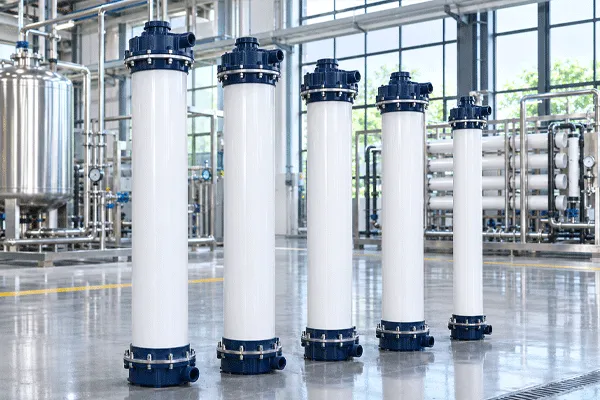
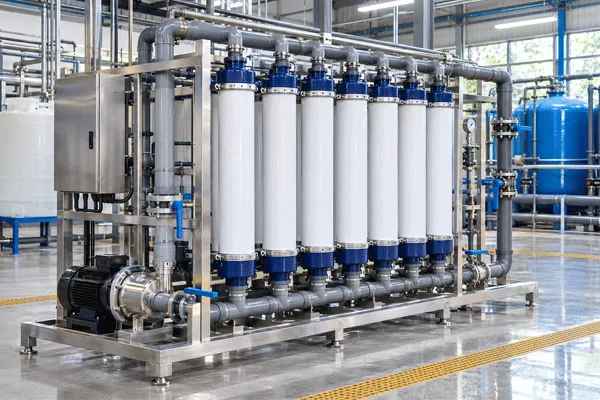
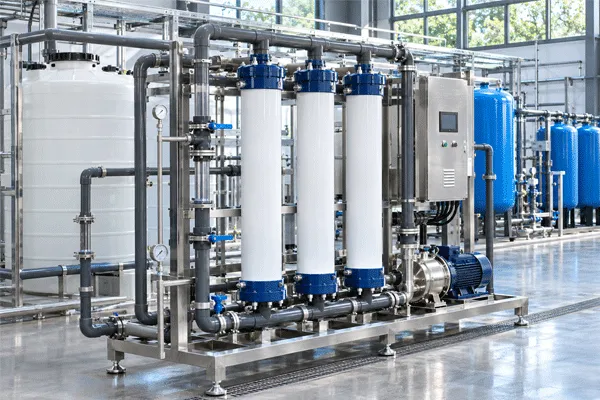
MBR systems combine biological treatment with membrane separation, while UF membranes can be used for filtration and other suitable treatment applications.
For small and medium-sized projects, the selected process should balance treatment performance, footprint, energy consumption, cleaning requirements, and operator capability.
At Banott, we integrate biological and membrane technologies into customized water treatment systems based on actual project requirements rather than applying one fixed process to every application.
5. Lagoon, Septic, or Mechanical Treatment Plant: Which Is Better?
Three common approaches to small community wastewater treatment are lagoons, septic systems, and compact mechanical treatment plants.
Each has different advantages and limitations.
Lagoon Wastewater Treatment
A lagoon is an engineered pond that uses natural biological processes to break down organic pollutants.
Some lagoons also use mechanical aeration to increase oxygen availability and improve treatment performance.
The EPA identifies lagoon systems as an established option for small, rural, and Tribal communities. They can provide relatively low-maintenance treatment when properly designed and operated. However, nutrient removal and ammonia control may require additional processes to meet specific discharge permits.
Advantages:
- Relatively simple operation.
- Limited mechanical equipment in basic configurations.
- Suitable for locations with sufficient land.
- Natural biological treatment processes.
Limitations:
- Requires considerable land.
- Performance can be affected by seasonal conditions.
- Sludge accumulation requires management.
- Additional treatment may be needed for stricter discharge standards.
Septic Systems
A septic system typically serves individual houses or small properties that are not connected to public sewer systems.
A conventional septic tank separates solids from wastewater. The liquid then flows to a suitable soil-based treatment and dispersal area.
This option can work well for low-density residential developments where soil conditions and groundwater protection requirements permit installation.
However, it is not automatically suitable for larger community wastewater loads or locations with unsuitable soil conditions.
Compact Mechanical Treatment Plants
Mechanical treatment plants combine several treatment units into a relatively small facility.
Depending on the process, they may include equalization, biological reactors, sedimentation, membrane filtration, and sludge handling equipment.
They are useful where land is limited or where a more controlled treatment process is needed.
For example, Banott’s integrated wastewater treatment plant configurations support AO (SBR), A2O, AO+MBR, and MBBR processes, with compact integrated equipment and automated operation options.
This approach can provide a practical alternative to basic disposal systems when communities require more controlled treatment performance.
Small and Rural Wastewater Systems: Choosing the Right Wastewater Treatment System for Small Communities
6. How Do You Design and Size a Small Wastewater Treatment System?
Correct sizing is essential for reliable operation.
A plant that is too small may experience hydraulic overload, unstable biological performance, or poor effluent quality. An oversized facility may increase capital investment, energy consumption, and maintenance costs.
Engineers should begin by understanding the actual wastewater flow and pollutant characteristics.
Important Design Information
| Parameter |
Why It Matters |
| Average daily flow |
Determines basic plant capacity |
| Peak hourly flow |
Helps size pumps and hydraulic units |
| COD |
Measures chemically oxidizable pollution |
| BOD5 |
Indicates biodegradable organic load |
| TSS |
Measures suspended solids |
| pH |
Affects biological and chemical processes |
| Ammonia nitrogen |
Helps determine nitrogen removal requirements |
| Total nitrogen and phosphorus |
Indicates nutrient removal requirements |
| Temperature |
Affects biological activity |
| Site conditions |
Determines layout, installation, and material selection |
The wastewater flow should reflect actual usage patterns, not just the number of residents.
For example, a village with a seasonal tourist population may experience much higher flow during certain months. A residential development may have morning and evening peak flows. A small industrial facility may release wastewater in batches.
Engineers should also evaluate future population growth, commercial development, and changes in water consumption.
Typical Design Considerations
Before selecting equipment, project owners should confirm:
- Average and maximum wastewater flow.
- Expected pollutant concentrations.
- Required discharge or reuse standards.
- Available land and installation conditions.
- Power supply and water management requirements.
- Operator availability and maintenance capacity.
- Future expansion requirements.
This information helps determine the correct treatment capacity and process configuration.
A good design should also leave sufficient access for equipment inspection, membrane replacement, sludge removal, and routine maintenance.
7. When Should Small Wastewater Systems Use MBBR or MBR Technology?
MBBR and MBR are two important technologies for compact wastewater treatment.
They both support biological treatment, but they use different methods to separate treated water from solids.
MBBR Technology
Moving Bed Biofilm Reactor (MBBR) technology uses specially designed plastic carriers that provide surfaces for microorganisms to grow.
These carriers move within the biological treatment tank, allowing microorganisms to break down organic pollutants.
MBBR is suitable for applications requiring compact biological treatment and can also be considered for upgrading existing facilities.
Its main benefits include:
- High biological surface area.
- Flexible process configuration.
- Compact reactor design.
- Potential for upgrading existing treatment facilities.
MBR Technology
Membrane Bioreactor (MBR) technology combines biological treatment with membrane filtration.
Instead of relying only on conventional sedimentation, membrane modules separate suspended solids from treated water.
This can provide:
- Consistent solid-liquid separation.
- Lower suspended solids in treated effluent.
- Compact treatment layouts.
- Potential support for downstream water reuse processes.
However, membrane systems require suitable aeration, cleaning procedures, operating pressure or suction control, and regular performance monitoring.
MBBR vs. MBR
| Factor |
MBBR |
MBR |
| Main technology |
Biological biofilm treatment |
Biological treatment + membrane separation |
| Separation method |
Usually downstream settling |
Membrane filtration |
| System structure |
Biological reactor with carriers |
Bioreactor with membrane modules |
| Footprint |
Compact biological process |
Often compact overall treatment layout |
| Maintenance |
Carrier and biological process management |
Membrane cleaning and replacement |
| Typical use |
Biological wastewater treatment |
High-quality effluent and reuse-oriented projects |
For projects requiring additional filtration, UF membranes may also be considered as part of a suitable treatment train.
RO is generally considered when dissolved salts or other dissolved contaminants must be reduced for a specific reuse requirement. It is not necessary for every small community wastewater project.
At Banott, our product range includes hollow fiber MBR membranes, flat sheet MBR membranes, hollow fiber UF membranes, and integrated treatment equipment.
The selection depends on the required effluent quality, available space, operating conditions, and project budget.
A Practical Project Reference
Banott has completed a 40 m³/day pharmaceutical wastewater treatment project in Thailand using an integrated biological MBBR process.
The system included anaerobic, anoxic, and oxic tanks, followed by sedimentation and clean-water storage. It also incorporated sludge handling equipment.
Although this was an industrial wastewater project rather than a municipal community project, it demonstrates how a relatively small treatment facility can use an integrated biological process to address defined wastewater characteristics and discharge requirements.
Project reference: 40m³/d Pharmaceutical Wastewater Treatment Project in Thailand.
8. What Should Communities Consider for Daily Operation and Maintenance?
Selecting equipment is only the first step. A wastewater system must also operate reliably after installation.
Small communities may not have access to a large technical team, so the system should be designed around realistic operator skills and available resources.
Important maintenance needs include:
- Checking pumps, blowers, and valves.
- Monitoring flow and tank levels.
- Inspecting biological treatment conditions.
- Checking membrane pressure and filtration performance.
- Managing sludge accumulation and disposal.
- Cleaning filters and membrane modules according to operating requirements.
- Recording operating data and alarms.
Regular maintenance helps prevent equipment failures and reduces the risk of unexpected shutdowns.
Automation can also make daily operation easier. PLC-based controls can manage pumps, aeration, dosing, and alarms. Remote monitoring can help technical teams identify operating problems without always visiting the treatment site.
For small systems, automation should remain practical. A complicated control system is not necessarily better if local operators cannot understand or maintain it.
A good supplier should provide clear operating manuals, maintenance schedules, spare parts recommendations, and technical guidance.
The long-term objective is to ensure that wastewater is treated consistently without creating an unreasonable operating burden for the community.
9. How Can Small Communities Manage Wastewater Treatment Costs?
The initial investment is only one part of the total cost of wastewater infrastructure.
A complete financial evaluation should consider:
| Cost Category |
Main Considerations |
| Initial investment |
Equipment, tanks, construction, and installation |
| Collection infrastructure |
Sewer pipelines and pumping stations |
| Energy |
Pumps, blowers, and control equipment |
| Chemicals |
Disinfection and process chemicals where required |
| Sludge management |
Collection, dewatering, transportation, and disposal |
| Maintenance |
Spare parts, cleaning, and inspections |
| Replacement |
Membranes, pumps, instruments, and other components |
A low purchase price does not always mean an affordable wastewater solution over the long term.
For example, a low-cost lagoon may require more land and additional treatment in the future. A compact mechanical facility may require higher equipment investment but reduce land requirements and provide better process control.
Communities should compare the total cost of ownership over the expected operating period, including the potential cost of replacing major components.
Funding and Community Assistance
In the United States, the EPA identifies several funding channels that may support small wastewater infrastructure.
These include:
- Clean Water State Revolving Fund (CWSRF).
- USDA Rural Development Water and Environmental Programs.
- Community Development Block Grants.
- Clean Water Indian Set-Aside Program.
- Alaska Native Villages and Rural Communities Grant Program.
- U.S.-Mexico Border Water Infrastructure Grant Program.
Eligibility, application requirements, and funding availability vary by program and project. Communities should confirm current conditions with the relevant agencies.
The EPA also provides technical assistance resources to help local governments and operators evaluate wastewater treatment technologies and infrastructure improvements.
Good financial planning should connect engineering design with community development goals. A treatment plant must be affordable not only to construct but also to operate, maintain, and upgrade.
10. How to Choose the Right Wastewater Treatment Plant Manufacturer?
Choosing a manufacturer is an important decision because the supplier’s engineering capability affects system performance, installation, and long-term maintenance.
A reliable manufacturer should provide more than individual equipment. It should understand the complete treatment process and how different units work together.
What Should Buyers Evaluate?
| Evaluation Area |
What to Check |
| Engineering capability |
Process selection and system design |
| Product range |
MBR, MBBR, UF, and integrated equipment |
| Manufacturing |
Factory production and assembly |
| Customization |
Capacity, layout, and material options |
| Automation |
PLC, HMI, and remote monitoring |
| Documentation |
Technical drawings and operating manuals |
| Installation |
Commissioning and technical guidance |
| After-sales support |
Spare parts and long-term service |
At Banott, we focus on integrated water and wastewater treatment solutions for industrial, municipal, and decentralized projects.
Our capabilities cover:
- Hollow fiber MBR and flat sheet MBR membranes.
- Hollow fiber UF membranes.
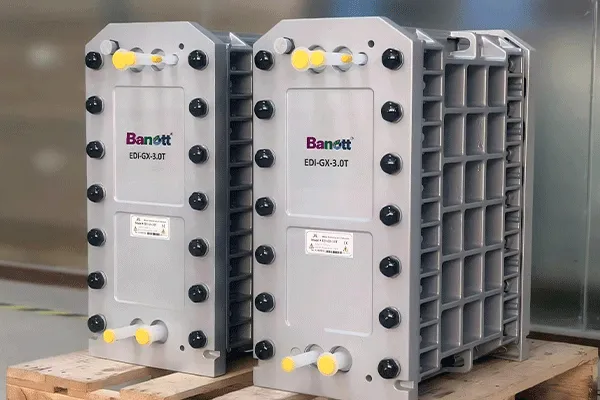
- RO membranes and EDI modules.
- Integrated wastewater treatment plants.
- Pure water and ultrapure water systems.
- Customized skid-mounted and containerized equipment.
- Process engineering and system integration.
Our integrated wastewater equipment supports AO (SBR), A2O, AO+MBR, and MBBR configurations. Depending on project requirements, tank materials include carbon steel and PP new material, while automated operation and remote network monitoring can support daily management.
For EPC contractors, engineering companies, and community infrastructure developers, this means the project can be evaluated as a complete treatment process rather than a collection of unrelated equipment.
We recommend beginning with wastewater analysis, average and peak flow, discharge requirements, site information, and available operating resources.
Based on these details, our engineering team can help evaluate suitable treatment technologies, system layout, membrane requirements, and equipment configuration.
A successful small wastewater project starts with the right engineering decisions, not simply the smallest equipment package.
If you are planning a new community facility, upgrading an existing plant, or evaluating decentralized treatment options, contact Banott to discuss your project requirements.
Frequently Asked Questions
What is considered a small wastewater system?
In the U.S. EPA context, a small community generally has 10,000 or fewer people and an average daily wastewater flow below one million gallons. Other countries and regions may use different definitions and design standards.
What is the best wastewater treatment system for a small community?
There is no single best option. Septic systems may suit individual properties, lagoons may work where sufficient land is available, and compact mechanical plants may be more suitable where space is limited or more controlled treatment is required.
Are MBR systems suitable for small wastewater treatment plants?
Yes. MBR technology combines biological treatment and membrane separation in one integrated process. It can be suitable for projects requiring consistent effluent quality and a compact layout, provided membrane operation and maintenance requirements can be properly managed.
What is the difference between MBBR and MBR?
MBBR uses moving biofilm carriers to support biological treatment, while MBR combines biological treatment with membrane filtration. MBBR mainly supports pollutant reduction, whereas MBR also provides membrane-based solid-liquid separation.
Can a small wastewater treatment plant support future expansion?
Yes. Engineers can consider modular equipment, additional treatment units, and reserved installation space during the initial design. However, future expansion should be planned around expected flow, pollutant loading, and discharge requirements.
What information is needed to request a wastewater treatment proposal?
Buyers should prepare the following information:
- Average and peak daily wastewater flow.
- Influent water quality analysis.
- Required discharge or reuse standards.
- Project location and available installation space.
- Wastewater source and operating schedule.
- Preferred installation type, if known.
- Expected future capacity.
These details help engineers recommend a suitable process and prepare a more accurate technical proposal.
Key Takeaways
- Small wastewater systems provide essential sanitation services for rural communities, residential developments, and remote facilities.
- Centralized and decentralized systems should be evaluated according to population density, geographical conditions, and lifecycle costs.
- Septic systems, lagoons, MBBR, and MBR technologies serve different treatment requirements.
- Correct system sizing depends on actual wastewater flow, pollutant concentrations, and discharge standards.
- Automation, operator training, and regular maintenance are essential for long-term reliability.
- Modular and integrated treatment plants can provide flexible options where land and infrastructure are limited.
- Working with an experienced manufacturer helps reduce engineering risks and improve project coordination.
Looking for a customized wastewater treatment solution?
Banott provides membrane products, integrated wastewater treatment plants, and engineering support for industrial and municipal water treatment projects. Contact our team with your wastewater analysis and project requirements to discuss a suitable treatment configuration.











 09:47