Eine schlechte Wasserqualität kann Anlagen beschädigen, die Produktion beeinträchtigen, die Betriebskosten in die Höhe treiben und die Wasserwiederverwendung erschweren. Die Auswahl von Aufbereitungsanlagen ohne Kenntnis der Eigenschaften des Zulaufwassers kann das Problem noch verschlimmern. Ein fachgerecht ausgelegtes Umkehrosmose-System bietet eine zuverlässige Möglichkeit, gelöste Verunreinigungen abzutrennen und saubereres Wasser zu erzeugen.
Bei einer Umkehrosmoseanlage wird Wasser unter Druck durch eine halbdurchlässige RO-Membran gepresst. Wassermoleküle passieren die Membran als aufbereitetes Permeat, während ein Großteil der gelösten Salze und anderer zurückgehaltener Stoffe in einem konzentrierten Strom abgeführt wird. Die Umkehrosmose wird in großem Umfang für Trinkwasser, industrielles Prozesswasser, Entsalzung, Wasserwiederverwendung und die Vorbehandlung von hochreinem Wasser eingesetzt.
Was ist eine Umkehrosmoseanlage? Wie funktioniert die RO-Wasserfilterung?
Gliederung des Artikels
- Was ist Umkehrosmose?
- Wie funktioniert das Umkehrosmoseverfahren?
- Aus welchen Komponenten besteht eine Umkehrosmoseanlage?
- Welche Schadstoffe können durch Umkehrosmose entfernt werden?
- Was beeinflusst die Wasserqualität bei der Umkehrosmose?
- Welche Arten von Umkehrosmoseanlagen gibt es?
- Warum ist die Vorbehandlung vor einer RO-Membran so wichtig?
- Wie viel Abwasser fällt bei einer Umkehrosmoseanlage an?
- Wie schneidet die Umkehrosmose (RO) im Vergleich zu UF, MBR und EDI ab?
- Wie entwerfen Ingenieure eine industrielle Umkehrosmoseanlage?
- Wie sollte eine Umkehrosmoseanlage gewartet werden?
- Wo wird die Umkehrosmose eingesetzt?
- Häufig gestellte Fragen
- Wichtige Punkte, die man beachten sollte
Was ist Umkehrosmose und warum wird sie in der Wasseraufbereitung eingesetzt?
Die Umkehrosmose, meist mit „RO“ abgekürzt, ist ein membranbasiertes Wasseraufbereitungsverfahren. Bei der natürlichen Osmose fließt Wasser durch eine halbdurchlässige Membran in Richtung der Lösung mit der höheren Konzentration an gelösten Stoffen. Bei der Umkehrosmose wird genügend Druck ausgeübt, um den natürlichen Fluss umzukehren und das Wasser von der Seite mit der höheren Konzentration zur reineren Seite zu drücken.
Die Weltgesundheitsorganisation beschreibt die Umkehrosmose als ein Hochdruck-Membranverfahren, bei dem ein aufbereiteter Wasserstrom und ein stärker konzentrierter Abwasserstrom entstehen. Die WHO weist darauf hin, dass die Umkehrosmose insbesondere bei Anwendungen wie der Brackwasser- und Meerwasserentsalzung von großer Bedeutung ist.
Die Grundidee ist einfach:
Speisewasser
    │
    ▼
Vorbehandlung
    │
    ▼
Hochdruckpumpe
    │
    ▼
┌───────────────────────┐
│ RO-Membran     │
└───────────────────────┘
 │ │
 ▼ ▼
   Permeat Konzentrat
 Aufbereitetes Wasser   Rücklaufwasser
Durch den Druck werden Wassermoleküle durch die Membran gedrückt, während viele gelöste Stoffe auf der Zufuhrseite zurückbleiben. Der Prozess funktioniert nicht wie ein einfaches Sieb, das nur sichtbare Partikel zurückhält. Das Trennverhalten einer Umkehrosmosemembran hängt von der Membranchemie, dem Betriebsdruck, der Zusammensetzung des Speisewassers, der Temperatur, der Rückgewinnungsrate und anderen Betriebsbedingungen ab.
Für EPC-Auftragnehmer und Betreiber von Industrieanlagen ist diese Unterscheidung von Bedeutung. Die Auswahl einer Umkehrosmoseanlage sollte nicht allein anhand der Durchflussrate erfolgen. Die Systemauslegung muss sich nach der Analyse des Rohwassers und den Anforderungen an die Qualität des Endwassers richten.
Wie funktioniert das Umkehrosmoseverfahren?
Um zu verstehen, wie die Umkehrosmose funktioniert, stellen Sie sich zwei Wasserströme vor, die durch eine halbdurchlässige Membran voneinander getrennt sind. Unter natürlichen Bedingungen neigt das Lösungsmittel dazu, sich in Richtung der Seite mit der höheren Konzentration zu bewegen. Ein Umkehrosmose-System übt einen Druck aus, der größer ist als der osmotische Druck, sodass sich die Richtung umkehrt.
Die FDA beschreibt die Umkehrosmose (RO) als ein Verfahren, bei dem eine unter Druck stehende Membran relativ reines Wasser von einer weniger reinen Lösung trennt. Das Wasser fließt durch die Membran, während viele gelöste und suspendierte Stoffe zurückbleiben.
Ein typischer Umkehrosmose-Prozess umfasst vier Hauptschritte:
- Das Speisewasser gelangt in die Aufbereitungsanlage.
- Durch die Vorbehandlung werden Stoffe entfernt oder unter Kontrolle gehalten, die die Membran verschmutzen oder beschädigen könnten.
- Eine Hochdruckpumpe fördert Wasser durch die Membranelemente.
- Das Wasser wird in Permeat und Rücklaufwasser, auch Konzentrat oder Sole genannt, getrennt.
Das als Permeat anfallende Wasser weist in der Regel einen deutlich geringeren Gehalt an gelösten Stoffen auf als das zugeführte Speisewasser. Das Konzentrat enthält eine höhere Konzentration der zurückgehaltenen Salze und Verunreinigungen.
Umkehrosmose im Vergleich zur herkömmlichen Filtration
| Merkmal |
Herkömmlicher Filter |
Umkehrosmose |
| Haupttrennmechanismus |
Rückhaltung physikalischer Partikel |
Membrantrennung unter Druck |
| Typisches Ziel |
Schwebstoffe |
Gelöste Ionen sowie zahlreiche weitere Verunreinigungen |
| Treibende Kraft |
Druck/Durchfluss |
Druck über dem osmotischen Bedarf |
| Produktströme |
In der Regel eine Hauptsteckdose |
Permeat + Konzentrat |
| Notwendigkeit einer Vorbehandlung |
Hängt von der Anwendung ab |
In der Regel wichtig |
Der Wasserfilterprozess umfasst daher weit mehr als nur den Einbau einer Membran. Für eine gute Leistung muss die gesamte Aufbereitungsanlage als Ganzes zusammenwirken.
Was gehört zu einer Umkehrosmoseanlage?
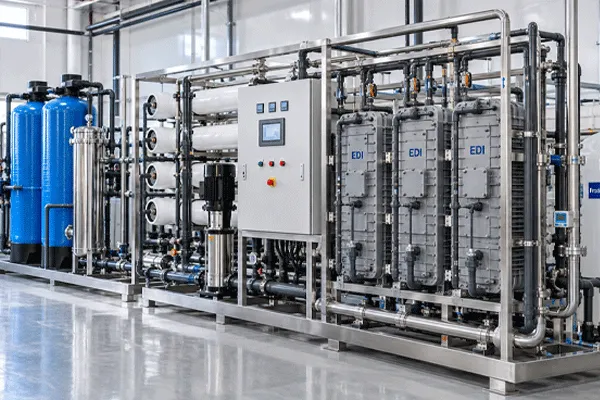
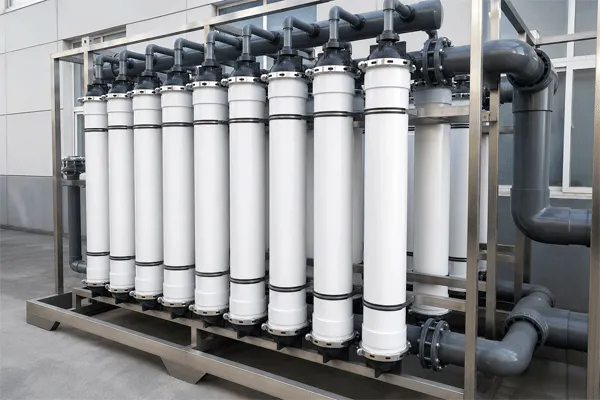
Eine Umkehrosmoseanlage umfasst mehrere Komponenten. Ein kleines Gerät für den Endverbraucher kann nur wenige Stufen enthalten, während eine Industrieanlage unter anderem eine Chemikaliendosierung, eine Multimedia-Filtration, eine Enthärtung, Patronenfilter, mehrere Membrandruckbehälter, Messtechnik, Reinigungsanlagen, Tanks, SPS-Steuerungen und eine Nachbehandlung umfassen kann.
Eine typische industrielle Umkehrosmoseanlage kann Folgendes umfassen:
- Rohwassertank
- Förderpumpe
- Multimedia- oder Medienfilter
- Gegebenenfalls Aktivkohlefilter
- Dosierung von Wasserenthärtern oder Antiskalantien
- Patronenfilter
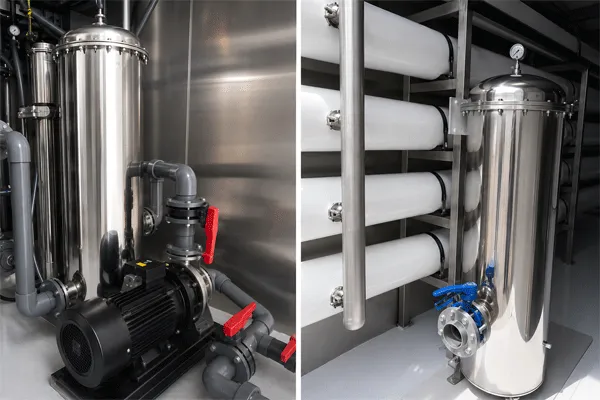
- Hochdruckpumpe
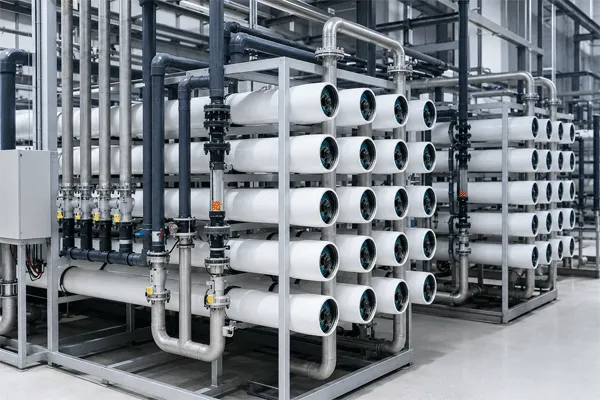
- RO-Membran-Druckbehälter
- Leitfähigkeitsmessgeräte
- Durchfluss- und Druckmessgeräte
- Permeatbehälter
- CIP-Reinigungssystem
- Chemikaliendosieranlagen
- SPS-/HMI- oder SCADA-Steuerungen
Die RO-Membran ist das Herzstück des Trennprozesses, doch die umgebenden Anlagen schützen sie und sorgen für einen stabilen Betrieb. Eine unzureichende Vorbehandlung kann die Lebensdauer der Membran verkürzen, selbst wenn die Membran selbst von hoher Qualität ist.
Was ist eine Umkehrosmoseanlage? Wie funktioniert die RO-Wasserfilterung?
Was geschieht im Membranstadium?
                    ┌──────── Permeat / RO-Wasser
 │
Zulaufwasser ──► [ RO-Membran ]
 │
 └──────── Konzentrat / Rücklauf
Das Verhältnis zwischen Permeatdurchfluss und Speisewasserdurchfluss wird als Rückgewinnungsgrad bezeichnet.
Ausbeute (%) = Permeatdurchfluss ÷ Zulaufdurchfluss × 100
Eine Anlage, die 10 m³/h Speisewasser verarbeitet und 7,5 m³/h Permeat erzeugt, hat eine Nennrückgewinnung von 75%.
Das bedeutet jedoch nicht, dass jede Umkehrosmoseanlage mit 75% betrieben werden sollte. Die chemische Zusammensetzung des Speisewassers, das Risiko der Kalkablagerung, die Membrankonfiguration, die Temperatur und die erforderliche Wasserqualität bestimmen einen sicheren Betriebsgrad.
Was wird durch Umkehrosmose aus dem Wasser entfernt?
Ein Grund für den breiten Einsatz der Umkehrosmosefiltration ist ihre Fähigkeit, viele gelöste Stoffe zu reduzieren, die herkömmliche Partikelfilter nicht wirksam entfernen können.
Je nach Membrantyp, Betriebsbedingungen, Vorbehandlung und Systemzertifizierung kann die Umkehrosmose folgende Stoffe reduzieren:
- Gelöste Salze
- Härtebestimmende Ionen
- Natrium
- Chlorid
- Sulfat
- Nitrat
- Einige Metalle
- Viele organische Verbindungen
- Bestimmte Mikroorganismen
- Gesamtgehalt an gelösten Feststoffen
Die EPA gibt an, dass Umkehrosmoseanlagen am Verbrauchsort potenziell Schadstoffe wie Blei, bestimmte flüchtige organische Verbindungen, PFAS, Arsen, Bakterien und Viren reduzieren können. Die EPA betont jedoch auch, dass nachgewiesene Angaben zur Schadstoffentfernung auf Systemtests und Zertifizierungen beruhen sollten.
Diese Einschränkung ist wichtig. Bei der Umkehrosmose werden verschiedene Verunreinigungen mit unterschiedlicher Effizienz entfernt, und kein seriöser Anbieter sollte behaupten, dass jede Membran jede Verunreinigung im gleichen Maße entfernt.
Was RO allein nicht löst
Eine Umkehrosmoseanlage ist kein universeller Ersatz für jede Aufbereitungstechnologie.
Möglicherweise fehlt noch Folgendes:
- Sedimententfernung
- Behandlung mit Eisen und Mangan
- Chlorregelung
- Härteüberwachung
- Biologische Schädlingsbekämpfung
- Entfernung von Öl
- Reduzierung der organischen Belastung
- pH-Einstellung
- Abschließende Desinfektion
- Remineralisierung
So kann es beispielsweise sein, dass stark verschmutztes Industrieabwasser eine Koagulation, eine biologische Behandlung, MBR, UF, Aktivkohle oder andere Verfahren durchlaufen muss, bevor das Wasser die Umkehrosmose-Stufe erreicht.
Bei technischen Projekten lautet die richtige Frage daher nicht:
“Können wir Umkehrosmose einsetzen?”
Es lautet:
“Mit welchem Aufbereitungsprozess lässt sich die erforderliche Wasserqualität bei stabilen Betriebskosten erreichen?”
Wovon hängt die Wasserqualität bei der Umkehrosmose ab?
Die endgültige Wasserqualität bei der Umkehrosmose hängt von weit mehr als nur dem Membranmodell ab.
Zu den wichtigen Faktoren zählen:
| Faktor |
Warum das wichtig ist |
| TDS-Wert des Speisewassers |
Änderungen des osmotischen Drucks und des erforderlichen Betriebsdrucks |
| Temperatur |
Beeinflusst den Wasserfluss durch die Membran |
| pH-Wert |
Beeinflusst die Bildung von Ablagerungen und das Verhalten von Verunreinigungen |
| Härte |
Kann Mineralablagerungen verursachen |
| Kieselsäure |
Kann die Genesung beeinträchtigen |
| Eisen und Mangan |
Kann verschmutzte Membranen |
| SDI / Schwebstoffe |
Weist auf Verschmutzungsgefahr hin |
| Bio-Produkte |
Kann zur Membranverschmutzung beitragen |
| Chlor |
Kann einige gängige Umkehrosmosemembranen beschädigen |
| Erholung |
Eine höhere Ausbeute führt zu einer stärkeren Salzkonzentration |
| Membranalter |
Bewuchs und Verschleiß beeinträchtigen die Leistung |
| Druck |
Einflüsse prägen die Produktion |
Aus diesem Grund sollte ein Ingenieur vor der Fertigstellung einer Industrieanlage eine vollständige Speisewasseranalyse in Auftrag geben.
Bei Leitungswasser kann die Vorbehandlung relativ einfach sein, sofern die kommunale Wasserversorgung stabil ist. Brunnenwasser erfordert unter Umständen eine zusätzliche Aufbereitung hinsichtlich Eisen, Mangan, Härte, Trübung oder anderer standortspezifischer Inhaltsstoffe.
Auch Wasser mit hoher Härte erfordert besondere Aufmerksamkeit. Vor der Membran können ein Wasserenthärter, ein Antiscalant-System, eine pH-Einstellung oder eine andere Strategie zur Kalkbekämpfung erforderlich sein.
Die beste Umkehrosmose-Konfiguration ist daher nicht das größte System oder das mit dem höchsten Nenndruck. Es ist das System, das den tatsächlichen Anforderungen an die Wasseraufbereitung entspricht.
Welche Arten von Umkehrosmoseanlagen gibt es?
Umkehrosmoseanlagen reichen von kompakten Geräten für Privathaushalte bis hin zu großen Industrieanlagen.
1. Umkehrosmose am Verbrauchsort
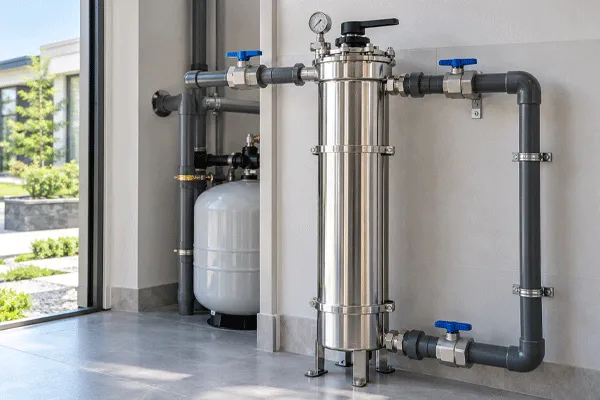
Eine Umkehrosmoseanlage am Verbrauchsort bereitet Wasser an einer einzelnen Armatur auf, in der Regel unter der Küchenspüle.
Die EPA definiert ein RO-System am Verbrauchsort als ein Gerät, das an eine einzelne Armatur angeschlossen ist und mithilfe von Druck und einer semipermeablen Membran aufbereitetes Wasser und Konzentrat erzeugt.
Ein typisches Umkehrosmose-System für den Endverbraucher kann Folgendes umfassen:
- Sedimentvorfilter
- Kohlefilter
- RO-Membran
- Lagertank
- Nachfilter für Kohlefilter
- Trinkwasserhahn
Mit dieser Anlage lässt sich zu Hause Trinkwasser bereitstellen, ohne das gesamte Haushaltswasser aufbereiten zu müssen.
2. Kommerzielle Umkehrosmose
Kommerzielle Systeme kommen unter anderem in folgenden Anwendungsbereichen zum Einsatz:
- Hotels
- Restaurants
- Laboratorien
- Kleine Fabriken
- Getränkeherstellung
- Landwirtschaftliche Betriebe
- Wäschereien
- Großküchen
Die Kapazität ist in der Regel deutlich größer als die einer Haushaltsanlage, aber geringer als die einer großen Industrieanlage.
3. Industrielle Umkehrosmose
Industrielle Umkehrosmoseanlagen können täglich mehrere Kubikmeter bis hin zu Hunderten oder Tausenden von Kubikmetern aufbereitetes Wasser produzieren.
Zu den Anwendungsbereichen gehören:
- Vorbehandlung des Kesselspeisewassers
- Prozesswasser
- Lebensmittel- und Getränkefabriken
- Vorbehandlung von Wasser für pharmazeutische Zwecke
- Elektronikfertigung
- Nachspeisung des Kühlturms
- Textilproduktion
- Chemiewerke
- Wiederverwendung von Abwasser
- Entsalzung
Bei diesen Projekten ist die technische Unterstützung ebenso wichtig wie die Membran selbst.
Warum ist die Vorbehandlung vor einer RO-Membran so wichtig?
Bei einer Umkehrosmoseanlage werden Verunreinigungen auf einer Seite der Membran konzentriert. Daher ist eine Vorbehandlung unerlässlich.
Ohne geeignete Vorbehandlung können bei Membranen folgende Probleme auftreten:
- Skalierung
- Biologische Verschmutzung
- Kolloidale Verschmutzung
- Biologisches Wachstum
- Eisenablagerung
- Membranoxidation
- Hoher Druckabfall
- Ausfall des Permeatflusses
- Geringere Salzausscheidung
Stellen Sie sich eine Industrieanlage vor, die hartes Speisewasser mit hohem Kalzium- und Alkalitätsgehalt verwendet. Während das Umkehrosmose-System Permeat produziert, steigt die Salzkonzentration im verbleibenden Wasser an. Übersteigt deren Konzentration die Löslichkeitsgrenzen, kann sich Kalk auf der Membranoberfläche ablagern.
Dadurch steigen der Betriebsdruck und die Reinigungshäufigkeit.
Gängige Vorbehandlungsmethoden
| Problem mit der Wasserqualität |
Möglicher Behandlungsansatz |
| Schwebstoffe |
Medienfiltration, UF, Patronenfiltration |
| Härte |
Wasserenthärter oder Antiskalant |
| Chlor |
Aktivkohle oder chemische Entchlorung |
| Eisen / Mangan |
Oxidation und Filtration |
| Organische Belastung |
Biologische Behandlung, Aktivkohle, UF oder andere Vorbehandlungsverfahren |
| Hohe Trübung |
Klärung / Koagulation / Filtration |
| Mikrobieller Bewuchs |
Angemessene Desinfektion und Anlagenhygiene |
Der richtige Ansatz muss auf einer Wasseranalyse basieren.
Als Hersteller von RO-Membranen, UF-Membranen, MBR-Membranen, EDI Bei Modulen, Reinwasseranlagen und integrierten Wasseraufbereitungssystemen betrachten wir die Vorbehandlung und die Umkehrosmose oft als einen einzigen Prozess und nicht als separate Produkte. Dieser technische Ansatz ist besonders wichtig bei der Abwasserwiederverwendung und bei komplexen Industrieprojekten.
Wie viel Abwasser fällt bei einer Umkehrosmoseanlage an?
Bei der Umkehrosmose entstehen zwei Wasserströme, sodass ein Teil des Speisewassers als Konzentrat austritt.
Die Höhe hängt stark von der Systemauslegung ab.
Bei kleinen Haushaltsgeräten kann die Effizienz stark variieren. Die EPA berichtet, dass ein typisches RO-System am Verbrauchsort pro Gallone aufbereitetem Wasser fünf Gallonen oder mehr als Abwasser ableitet, während ineffiziente Produkte bis zu zehn Gallonen Abwasser pro Gallone aufbereitetem Wasser erzeugen können. Systeme mit dem WaterSense-Siegel müssen einen Grenzwert von höchstens 2,3 Gallonen Abwasser pro Gallone aufbereitetem Wasser einhalten.
Aus diesem Grund sollten Käufer eine Umkehrosmose-Wasserfilteranlage für den Hausgebrauch nicht allein anhand des Kaufpreises beurteilen.
Was ist eine Umkehrosmoseanlage? Wie funktioniert die RO-Wasserfilterung?
Die industrielle Umkehrosmose ist anders
Industrielle Anlagen werden in der Regel eher auf die Verwertung als auf ein festes Verhältnis von Abfall zu Produkt ausgelegt.
Zum Beispiel:
| Feed |
Permeat |
Konzentrieren |
Erholung |
| 10 m³/h |
5 m³/h |
5 m³/h |
50% |
| 10 m³/h |
7,5 m³/h |
2,5 m³/h |
75% |
| 10 m³/h |
8 m³/h |
2 m³/h |
80% |
Eine höhere Rückgewinnungsrate kann den Wasserverbrauch senken, doch wird die Rückgewinnung zu stark vorangetrieben, kann dies zu vermehrten Kalkablagerungen, Verschmutzungen, erhöhtem Druck und einem höheren Reinigungsaufwand für die Membranen führen.
Das Ziel besteht nicht einfach darin, die Abwassermenge zu minimieren. Das Ziel ist es, ein ausgewogenes Verhältnis zwischen folgenden Faktoren zu finden:
- Wasserrückgewinnung
- Membranstabilität
- Energieverbrauch
- Einsatz von Chemikalien
- Entsorgung von Konzentrat
- Endgültige Wasserkosten
In einigen industriellen Wiederverwertungsanlagen wird ein Teil des Konzentrats möglicherweise weiterbehandelt. Ob dies sinnvoll ist, hängt von den örtlichen Einleitungsvorschriften, der Wasserchemie und der Wirtschaftlichkeit des Projekts ab.
Wie schneidet die Umkehrosmose (RO) im Vergleich zu den Wasseraufbereitungsverfahren UF, MBR und EDI ab?
Ein häufiger Fehler besteht darin, RO, UF, MBR und EDI so zu vergleichen, als müsse eine der Technologien die anderen ersetzen. In Wirklichkeit werden sie jedoch oft gemeinsam eingesetzt.
Umkehrosmose vs. Membranfiltration
Die Ultrafiltration zielt hauptsächlich auf Schwebstoffe, Kolloide und viele Mikroorganismen ab. Die Umkehrosmose geht noch einen Schritt weiter und scheidet einen hohen Anteil der gelösten Ionen ab.
Die WHO stuft die Umkehrosmose als Hochdruck-Membranverfahren ein, während die Ultrafiltration ein Niederdruck-Membranverfahren mit anderen Trenneigenschaften ist.
RO vs. MBR
Ein MBR kombiniert die biologische Abwasserbehandlung mit der Membrantrennung. Es handelt sich in erster Linie um eine Technologie zur Abwasserbehandlung.
Für Wiederverwendungsprojekte:
Industrieabwasser
 ↓
Biologische Behandlung / MBR
 ↓
Abwasser in UF-Qualität
 ↓
Umkehrosmoseanlage
 ↓
Hochwertiges wiederaufbereitetes Wasser
Das MBR-Verfahren reduziert zunächst die organische Belastung und die Schwebstoffe. Anschließend entfernt die Umkehrosmose (RO) einen Großteil der verbleibenden gelösten Stoffe.
RO gegen EDI
EDI – Elektrodeionisation – wird häufig nach der Umkehrosmose (RO) installiert, wenn für das Projekt eine sehr geringe Ionenbelastung erforderlich ist.
Ein typischer Reinstwasser-Prozessablauf könnte wie folgt aussehen:
Vorbehandlung
 ↓
RO-Stufe 1
 ↓
RO-Stufe 2
 ↓
EDI
 ↓
Hochreines / ultrareines Wasser
Dies ist in der Pharma-, Elektronik- und Halbleiterindustrie sowie in Laboren und in hochreinen industriellen Anwendungen üblich.
| Technologie |
Hauptrolle |
| MBR |
Biologische Abwasserbehandlung + Feststoffabscheidung mittels Membranen |
| UF |
Reduzierung von Schwebstoffen / Kolloiden |
| RO |
Reduzierung des Gehalts an gelösten Salzen und Entsalzung |
| EDI |
Abschließende Ionenpolierung für hochreines Wasser |
Die Auswahl eines Wasseraufbereitungssystems hängt daher von der erforderlichen Qualität des Zulaufs und des Ablaufs ab.
Wie entwerfen Ingenieure ein industrielles Umkehrosmose-System?
Ein zuverlässiges industrielles Umkehrosmose-Filtersystem beginnt mit Daten.
Vor der Auswahl der Ausrüstung sollten Ingenieure Folgendes wissen:
- Speisewasserquelle
- Umfassende Wasseranalyse
- Erforderliche Kapazität
- Erforderliche Permeatqualität
- Öffnungszeiten
- Temperaturbereich des Einsatzmaterials
- Bedingungen für die Einleitung von Abwasser
- Verfügbare Grundfläche
- Stromversorgung
- Anforderungen an die Automatisierung
- Lokale Standards
- Zukünftiger Kapazitätsausbau
Auf dieser Grundlage entwickelt der Ingenieur den Aufbereitungsprozess.
Typischer Arbeitsablauf im Industriedesign
Wasseranalyse
 ↓
Festlegung des Produktwasserstandards
 ↓
Auswahl der Vorbehandlung
 ↓
Membranauslegung
 ↓
Auswahl von Pumpen und Druck
 ↓
Optimierung der Rückgewinnung
 ↓
Messtechnik und Steuerung
 ↓
CIP-Auslegung
 ↓
SPS-/SCADA-Integration
 ↓
Montage und Prüfung im Werk
 ↓
Inbetriebnahme
Auch für einen EPC-Auftragnehmer ist die Dokumentation wichtig.
Ein professionelles Paket könnte Folgendes enthalten:
- P&ID
- Prozessablaufdiagramm
- Übersichtszeichnung
- Ausstattungsliste
- Schaltplan
- Instrumentenliste
- Membranberechnung
- Bedienungsanleitung
- Wartungsvorgang
- Ersatzteilliste
Wir fertigen und integrieren Systeme für die industrielle Abwasserbehandlung, kommunale Abwasserprojekte, die Reinstwasseraufbereitung, die Wasserwiederverwendung, containerisierte Anlagen sowie auf Fahrgestellen montierte Aufbereitungssysteme. Für diese Projekte können wir Hohlfaser-MBR, Hohlfaser-UF, Flachmembran-MBR, RO-Membrananlagen, EDI, Dosieranlagen, Pumpen, Behälter, Mess- und Regeltechnik sowie SPS-/SCADA-Steuerungen zu einer technischen Gesamtlösung kombinieren.
Für einen EPC-Auftragnehmer ist dies in der Regel wertvoller, als einzelne Komponenten zu kaufen und dann vor Ort zu versuchen, Schnittstellenprobleme zu lösen.
Wie sollte eine Umkehrosmoseanlage gewartet werden?
Umkehrosmoseanlagen müssen regelmäßig überwacht werden. Wenn man wartet, bis die Wasserqualität stark nachlässt, erhöht sich in der Regel die Ausfallzeit und die Reinigungskosten.
Die Betreiber sollten Folgendes aufzeichnen:
- Zufuhrdruck
- Konzentrationsdruck
- Permeatdruck
- Futterdurchsatz
- Permeatdurchfluss
- Konzentratdurchfluss
- Leitfähigkeit des Futters
- Leitfähigkeit des Permeats
- Druckabfall
- Temperatur
- pH-Wert
- Chemikaliendosierung
Diese Werte helfen den Betreibern, Veränderungen zu erkennen, bevor sie schwerwiegende Folgen haben.
Häufige Warnzeichen
| Symptom |
Mögliche Ursache |
| Der Permeatdurchfluss nimmt ab |
Verschmutzung, Kalkablagerungen, niedrige Temperaturen |
| Die Leitfähigkeit des Permeats steigt |
Membranschäden, Undichtigkeiten, Verschmutzungen |
| Der Druckabfall steigt |
Verschmutzung oder Verstopfung des Abstandhalters |
| Erforderliche Druckerhöhungen |
Kalkablagerungen oder Membranverschmutzung |
| Änderungen bei der Wiederherstellung |
Problem mit einem Ventil, dem Durchfluss oder der Messtechnik |
Bei der Membranreinigung sollten die vom Membranhersteller angegebenen Betriebs- und Chemikaliengrenzwerte eingehalten werden.
Zu einer ordnungsgemäßen Wartung der Anlage gehört auch die Beachtung der Vorbehandlung. Der wiederholte Austausch einer Umkehrosmosemembran löst keine Probleme wie einen defekten Enthärter, einen erschöpften Aktivkohlefilter, einen mangelhaften UF-Betrieb oder unkontrolliertes biologisches Wachstum.
Die WaterSense-Spezifikation der EPA für Endverbrauchsanlagen sieht als Leistungskriterium eine Mindestlebensdauer der Membran von mindestens einem Jahr vor; die Lebensdauer von Industriemembranen hängt jedoch stark von der Anwendung, den Betriebsbedingungen, den Reinigungsverfahren und der Vorbehandlung ab.
Wo wird die Umkehrosmose eingesetzt?
Die Umkehrosmose bietet eine flexible Plattform für viele Arten der Wasseraufbereitung.
Trinkwasser und Wasser für gewerbliche Zwecke
Die Umkehrosmose kann die Qualität von Trinkwasser verbessern, wenn die Quelle Verunreinigungen enthält, für deren Reduzierung das ausgewählte und zertifizierte System ausgelegt ist. Die FDA erkennt die Umkehrosmose zudem als ein Aufbereitungsverfahren an, mit dem Wasser hergestellt wird, das bei Erfüllung der gesetzlichen Anforderungen als „gereinigtes Flaschenwasser“ gekennzeichnet werden darf.
Reinwasser für industrielle Zwecke
Fabriken setzen Umkehrosmose ein, um den Mineralgehalt vor folgenden Prozessen zu reduzieren:
- Kesselbetrieb
- Beschichtung
- Waschen
- Mischen
- Arzneimittelherstellung
- Lebensmittel- und Getränkeverarbeitung
- Reinigung von Elektronikgeräten
Wiederverwendung von Abwasser
Industrie- und kommunale Anlagen kombinieren zunehmend biologische Abwasserbehandlung, Membranfiltration und Umkehrosmose, wenn sie das behandelte Wasser wiederverwenden möchten, anstatt es vollständig einzuleiten.
Entsalzung
RO ist eine wichtige Entsalzungstechnologie für Brackwasser und Meerwasser. Die USGS beschreibt die membranbasierte Umkehrosmose als ein führendes Entsalzungsverfahren und weist darauf hin, dass RO-Membransysteme im Allgemeinen weniger Energie verbrauchen als thermische Entsalzungstechnologien.
Hochreines Wasser
Eine Zwei-Stufen-Umkehrosmose in Kombination mit EDI kann hochreines Wasser für anspruchsvolle Anwendungen liefern.
Dieses breite Anwendungsspektrum erklärt, warum die Umkehrosmose eine zentrale Wasseraufbereitungstechnologie ist, aber es erklärt auch, warum es keine einheitliche RO-Anlage gibt, die für jedes Projekt geeignet ist.
Anwendungsbeispiel: Vom Industrieabwasser zum wiederverwendbaren Prozesswasser
Stellen Sie sich eine Fabrik vor, die ihren Frischwasserverbrauch senken möchte.
Das Abwasser wird zwar bereits biologisch gereinigt, doch das gereinigte Wasser enthält nach wie vor Schwebstoffe und gelöste Feststoffe, die eine direkte Wiederverwendung in empfindlichen Prozessen verhindern.
Anstatt lediglich eine Umkehrosmoseanlage zu installieren, entwirft das Ingenieurteam:
Abwasser
   ↓
Biologische Behandlung
   ↓
MBR
   ↓
Pufferbehälter
   ↓
Umkehrosmose
   ↓
Wiederverwendbares Prozesswasser
Der MBR reduziert die Schwebstoffe und die organische Belastung. Die RO-Stufe zielt anschließend auf gelöste Salze ab.
Sollte eine noch höhere Reinheit erforderlich sein, kann ein zweiter Umkehrosmose-Durchlauf oder eine EDI hinzugefügt werden:
MBR → RO → RO im zweiten Durchlauf → EDI
Dies verdeutlicht eine wichtige Erkenntnis für industrielle Einkäufer:
Ein erfolgreiches RO-Projekt ist in der Regel eine komplette Wasseraufbereitungslösung und nicht nur eine Membrananlage.
Das konkrete System muss auf der Grundlage von Labordaten und der geforderten Wiederverwendbarkeitsnorm ausgelegt werden.
Was sollten EPC-Auftragnehmer und industrielle Einkäufer bei einem Hersteller von Umkehrosmoseanlagen erfragen?
Achten Sie beim Vergleich von Umkehrosmose-Lösungen nicht nur auf den Preis der Anlagen.
Frage:
- Welche Speisewasseranalysen sind erforderlich?
- Welche Durchlässigkeitsqualität kann das vorgeschlagene System erreichen?
- Welche Design-Wiederherstellung wird verwendet?
- Welches Membranmodell und welcher Druckbehälter sind vorgesehen?
- Welche Vorbehandlung ist enthalten?
- Wie wird die Skalierung gesteuert?
- Sind CIP-Anlagen im Lieferumfang enthalten?
- Welche Instrumente sind im Lieferumfang enthalten?
- Ist eine SPS- oder SCADA-Steuerung verfügbar?
- Kann das System auf einem Fahrgestell montiert oder in einem Container untergebracht werden?
- Welche Zeichnungen und technischen Unterlagen werden bereitgestellt?
- Ist eine Ferninbetriebnahme oder eine Inbetriebnahme vor Ort möglich?
- Welche Ersatzteile werden empfohlen?
- Wie wird die Anlage auf saisonale Veränderungen des Speisewassers reagieren?
Anhand dieser Fragen lässt sich feststellen, ob Sie eine komplette technische Lösung oder lediglich zusammengebaute Hardware erwerben.
Als professioneller Hersteller und technikorientierter Anbieter von Wasseraufbereitungslösungen in China unterstützen wir EPC-Auftragnehmer, kommunale Anlagen, Industriebetriebe, Systemintegratoren, Hotels, landwirtschaftliche Betriebe und internationale Vertriebspartner mit:
- Umkehrosmoseanlagen
- Kleine Umkehrosmoseanlagen
- Hohlfaser-UF-Membranen
- Hohlfaser-MBR-Membranen
- Flachmembranen vom Typ MBR
- EDI-Module
- Reinwasseranlagen
- Kläranlagen
- Systeme zur Wasserwiederverwendung
- Containersysteme
- Auf einem Fahrgestell montierte Anlagen
- SPS-/SCADA-Automatisierung
- OEM-/ODM-Entwicklung
Bei einem gewerblichen Projekt senden Sie bitte zunächst die Rohwasseranalyse, die angestrebte Wasserqualität, die erforderliche Durchflussmenge, die Betriebsstunden und den Projektstandort. Anhand dieser fünf Angaben können die Ingenieure ein weitaus zuverlässigeres technisches Angebot erstellen.
Häufig gestellte Fragen
Was ist eine Umkehrosmoseanlage?
Eine Umkehrosmoseanlage ist eine Wasseraufbereitungsanlage, bei der Wasser unter Druck durch eine halbdurchlässige Membran geleitet wird. Dabei entstehen ein salzarmer Permeatstrom und ein stärker konzentrierter Rücklaufstrom.
Wird Wasser durch Umkehrosmose vollständig gereinigt?
Keine Aufbereitungstechnologie sollte so beschrieben werden, als würde sie unter allen Bedingungen absolut schadstofffreies Wasser erzeugen. Die Umkehrosmose (RO) kann viele gelöste Stoffe erheblich reduzieren, doch die Leistung hängt von der Membran, der Systemkonfiguration, dem Speisewasser, den Betriebsbedingungen und den nachgewiesenen Angaben zur Schadstoffreduktion ab.
Ist RO Ist dieses Wasser dasselbe wie destilliertes Wasser?
Nein. Bei der Destillation kommen Verdampfung und Kondensation zum Einsatz. RO-Wasser wird durch Membrantrennung unter Druck gewonnen. Beide Verfahren können den Gehalt an gelösten Mineralien reduzieren, nutzen jedoch unterschiedliche Technologien.
Ist Umkehrosmose bei hartem Wasser sinnvoll?
Die Umkehrosmose kann viele Härteionen reduzieren, jedoch kann sehr hartes Wasser zu Ablagerungen auf der Membran führen. Eine Vorbehandlung mit einem Wasserenthärter, einem Antiscalant oder einem anderen Verfahren zur Verhinderung von Ablagerungen kann erforderlich sein.
Verschwendet eine Umkehrosmoseanlage Wasser?
Bei der Umkehrosmose (RO) entsteht Konzentrat, sodass nicht das gesamte Speisewasser zu Permeat wird. Der Wirkungsgrad hängt vom jeweiligen System ab. Die EPA berichtet von großen Unterschieden bei Produkten für den privaten Gebrauch am Verbrauchsort, während Industrieanlagen auf eine Zielrückgewinnungsrate ausgelegt sind, die sich nach der chemischen Zusammensetzung des Speisewassers richtet.
Wie oft sollte eine RO-Membran ausgetauscht werden?
Es gibt keinen allgemeingültigen Zeitrahmen für jede Industrieanlage. Die Lebensdauer der Membranen hängt von der Qualität des Zulaufwassers, der Vorbehandlung, dem Betriebsdruck, der Reinigung, Verschmutzungen, Kalkablagerungen, der Oxidationsbelastung und der Wartung ab. Betreiber sollten sich eher auf normierte Leistungsdaten stützen, anstatt die Membranen lediglich aufgrund ihres kalendarischen Alters auszutauschen.
Wichtige Punkte, die man beachten sollte
- Die Umkehrosmose ist ein druckgesteuertes, membranbasiertes Wasseraufbereitungsverfahren.
- Eine Umkehrosmoseanlage trennt das Speisewasser in aufbereitetes Permeat und konzentriertes Rücklaufwasser.
- Die Membran kann viele gelöste Salze und andere Verunreinigungen reduzieren, doch die tatsächliche Leistung hängt vom Gesamtsystem ab.
- Die Umkehrosmose unterscheidet sich von der einfachen Partikelfiltration.
- Die Vorbehandlung ist entscheidend für die Verringerung von Ablagerungen, Verschmutzungen, Oxidation und Membranschäden.
- Die Analyse des Speisewassers sollte vor der Auswahl der Anlagen erfolgen.
- Hartes Wasser muss möglicherweise enthärtet oder mit einem Antiskalant behandelt werden.
- Endverbrauchsanlagen und industrielle Umkehrosmoseanlagen weisen sehr unterschiedliche Kapazitäten und Rückgewinnungsstrategien auf.
- Eine höhere Rückgewinnungsrate ist nicht immer besser, wenn sie zu starker Kalkablagerung oder Verschmutzung führt.
- RO wird häufig in Kombination mit UF, MBR und EDI eingesetzt, anstatt diese zu ersetzen.
- MBR + RO ist ein gängiges Konzept für die fortgeschrittene Abwasserwiederverwendung.
- RO + EDI wird häufig eingesetzt, wenn Wasser mit höherer Reinheit benötigt wird.
- Industriekunden sollten Membranen, Pumpen, Vorbehandlung, Rückgewinnung, Steuerungen, CIP, Dokumentation und Inbetriebnahme gemeinsam prüfen.
- Eine SPS-/SCADA-Automatisierung kann den Betrieb und die Datentransparenz in größeren Kläranlagen verbessern.
- Ein zuverlässiges Projekt beginnt mit dem Rohwasser, der erforderlichen Kapazität, der angestrebten Wasserqualität und den Betriebsbedingungen.
- Bei EPC-, Industrie-, kommunalen, Wiederverwendungs- und Reinwasserprojekten ist ein maßgeschneiderter technischer Ansatz sicherer als die Auswahl einer Umkehrosmoseanlage allein anhand der Nennfördermenge.











 17:47
17:47