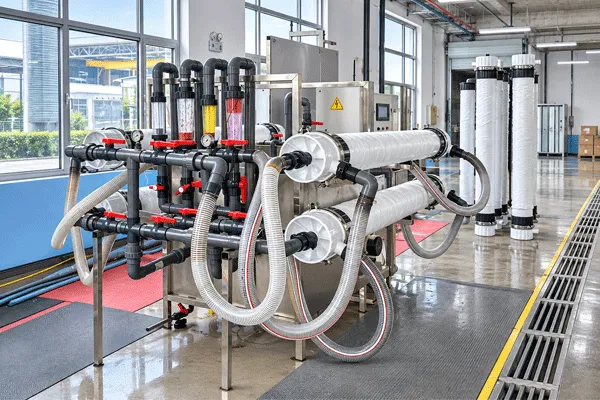
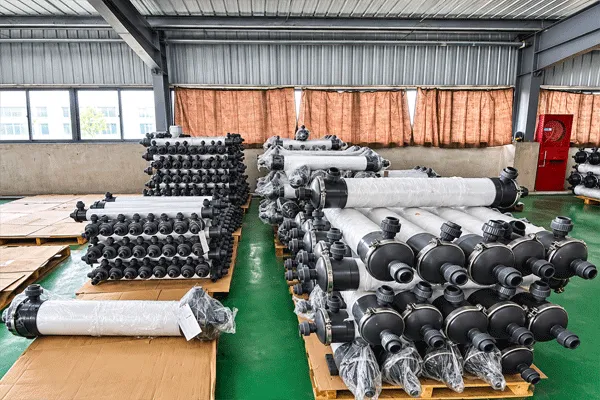
Untreated wastewater can carry solids, organic pollution, nutrients, and pathogens. If these pollutants reach rivers or groundwater, they can damage ecosystems and create health risks. A properly designed wastewater treatment process removes them step by step before discharge or reuse.
The 3 stages of wastewater treatment are primary, secondary, and tertiary treatment. Primary treatment physically removes large and settleable solids. Secondary treatment uses microorganisms to break down biodegradable organic matter. Tertiary treatment provides advanced polishing through filtration, nutrient removal, membrane treatment, and disinfection so the final effluent can meet stricter discharge or water reuse requirements.
What Are the 3 Stages of Wastewater Treatment? How Sewage Moves Through Primary, Secondary and Tertiary Treatment
Article Outline
- What are the three stages of wastewater treatment?
- What happens before primary treatment at a sewage treatment plant?
- How does primary treatment remove solids?
- How does secondary treatment use biological processes?
- What role does the activated sludge process play?
- What happens during tertiary treatment?
- How do filtration and disinfection improve effluent quality?
- Where does MBR fit into the wastewater treatment process?
- How are municipal and industrial wastewater treatment different?
- How do the treatment stages change for water reuse?
- How should a wastewater treatment plant be designed?
- Frequently asked questions
What Are the Three Stages of Wastewater Treatment?
The three stages of wastewater treatment are usually described as:
- Primary treatment – physical removal of solids
- Secondary treatment – biological removal of dissolved and suspended organic pollution
- Tertiary treatment – advanced polishing, nutrient removal, filtration, and disinfection
Each stage of wastewater treatment prepares the water for the next one.
The first stage removes material that can be separated physically. The second relies heavily on a microorganism population to consume biodegradable pollutants. The third improves the final effluent when stricter water quality is required.
A simple flow looks like this:
Raw Sewage
    ↓
Screening & Grit Removal
    ↓
Primary Treatment
    ↓
Secondary Biological Treatment
    ↓
Tertiary / Advanced Treatment
    ↓
Disinfection
    ↓
Discharge or Reuse
The U.S. Geological Survey describes primary treatment as removing roughly 60% of suspended solids, while secondary treatment can remove more than 90% of suspended solids under typical conditions.
However, these percentages should be viewed as general guidance rather than guaranteed performance for every treatment plant.
Actual performance depends on wastewater composition, hydraulic loading, temperature, process design, equipment condition, and operating control.
What Happens Before Primary Treatment at a Sewage Treatment Plant?
Before the official three treatment stages begin, most sewage treatment plant designs include preliminary treatment.
This section protects downstream pumps, tanks, membranes, and biological equipment.
Raw sewage arriving through a sewer may contain:
- Rags
- Plastic
- Wood
- Paper
- Stones
- Sand
- Food waste
- Fibers
- Other large particles
Screens remove larger objects first.
The wastewater may then enter a grit chamber, where heavy inorganic material such as sand and grit settles while lighter organic material continues forward.
EPA describes screening, primary clarification, biological secondary treatment, and disinfection as common unit processes at municipal wastewater plants.
Is Screening One of the Three Stages?
Usually, no.
In the commonly used 3 stages of wastewater treatment model, screening and grit removal are called preliminary treatment.
They happen before primary treatment.
This distinction matters for EPC contractors and plant owners because preliminary equipment has a major effect on downstream reliability. Poor screening can cause:
- Pump blockage
- Pipe clogging
- Excessive sludge accumulation
- Membrane damage
- Increased maintenance
Good treatment starts before biological treatment begins.
How Does Primary Treatment Remove Solids from Wastewater?
Primary treatment relies mainly on physical separation.
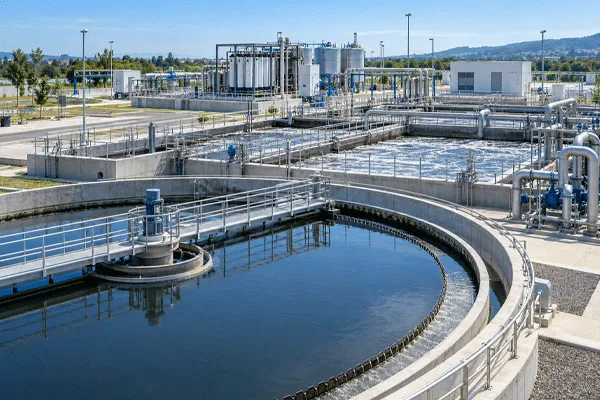
After preliminary screening, wastewater normally enters a primary clarifier or sedimentation tank. Flow slows down so heavier solids settle to the bottom while grease and floating matter rise to the surface.
The settled material forms primary sludge.
Mechanical scrapers collect this solid material for further sludge handling.
Floating material can be skimmed from the surface.
The water leaving primary clarification is called primary effluent.
It still contains:
- Fine suspended solids
- Dissolved organic matter
- Nutrients
- Microorganisms
- Other contaminants
So primary treatment alone is rarely enough for modern municipal discharge requirements.
The purpose is to reduce the load before biological treatment.
What Happens to Primary Sludge?
Primary sludge may be:
- Thickened
- Dewatered
- Stabilized
- Sent to anaerobic digestion
- Combined with waste biological sludge
During anaerobic digestion, microorganisms break down organic material without oxygen and can produce biogas.
This is an important part of many treatment works, but it belongs to the sludge treatment line, not the three main liquid-treatment stages.
What Are the 3 Stages of Wastewater Treatment? How Sewage Moves Through Primary, Secondary and Tertiary Treatment
How Does Secondary Treatment Work?
Secondary treatment focuses mainly on biodegradable organic pollution that remains after primary clarification.
This stage uses biological treatment.
Microorganisms consume organic matter in the wastewater and convert part of it into:
- New biomass
- Carbon dioxide
- Water
- Other biological end products
One of the most widely used processes is the activated sludge process.
Other biological technologies include:
- Moving bed biofilm reactors
- Sequencing batch reactors
- Biological contact systems
- Trickling filters
- Anaerobic reactors
- MBR systems
EPA’s secondary treatment requirements for publicly owned treatment works are expressed in terms of parameters including five-day biochemical oxygen demand, suspended solids, and pH.
Why Is Oxygen Important?
In an aerobic treatment process, microorganisms need oxygen to break down organic waste.
Air is introduced through diffusers or mechanical aeration equipment.
The biological reactor therefore has to balance:
- Oxygen supply
- Organic loading
- Biomass concentration
- Hydraulic retention
- Sludge age
- Temperature
- Nutrient availability
Poor control can reduce treatment efficiency.
For example, insufficient oxygen may increase biological oxygen demand in the final water or cause unstable biological performance.
What Role Does the Activated Sludge Process Play?
The activated sludge process is one of the best-known secondary treatment technologies.
Wastewater enters an aeration tank and mixes with a concentrated population of microorganisms called activated sludge.
Air provides oxygen while mixing keeps the biomass in contact with pollutants.
EPA describes activated sludge as a process in which wastewater and biological floc are mixed and aerated so dissolved and colloidal material can be converted into a form that can later be separated.
After aeration, the mixed liquor normally enters secondary clarifiers.
The biomass settles.
Some sludge is returned to the aeration tank to maintain a healthy microorganism population.
Excess sludge is removed for treatment.
The basic cycle is:
Primary Effluent
      ↓
Aeration Reactor
      ↓
Secondary Clarifier
      ↓
Treated Effluent

         ↑
Return Activated Sludge
What Does Activated Sludge Remove?
A well-operated activated sludge system can reduce:
- Biodegradable organic matter
- BOD
- Suspended solids
- Some nitrogen, depending on process configuration
Modified biological systems can also target:
- Ammonia
- Total nitrogen
- Phosphorus
This is why the design of a secondary reactor depends heavily on the required discharge standard.
What Happens During Tertiary Treatment?
Tertiary treatment is the advanced treatment or polishing stage after primary and secondary treatment.
Its purpose is to remove contaminants that remain after conventional biological treatment.
Depending on the project, tertiary processes may include:
- Sand filtration
- Disc filtration
- Membrane filtration
- Ultrafiltration
- Activated carbon
- Nutrient removal
- Advanced oxidation
- Disinfection
- Reverse osmosis for high-grade reuse
USGS defines tertiary wastewater treatment as additional biological, physical, or chemical separation beyond primary and secondary processes to obtain higher-quality effluent.
Not every wastewater treatment plant uses exactly the same tertiary process.
The required equipment depends on:
- Discharge regulations
- Receiving water bodies
- Reuse target
- Industrial process requirements
- Nitrogen and phosphorus limits
- Pathogen requirements
- Turbidity target
Is Tertiary Treatment Always Required?
No.
Some facilities only need to meet secondary treatment discharge standards.
Others require extensive advanced treatment.
If the final water will be used as reclaimed water, a much stronger polishing and disinfection system may be necessary.
This is why “tertiary treatment” describes a treatment level rather than one fixed machine.
How Do Filtration and Disinfection Improve Effluent Quality?
Filtration removes fine particles that remain after biological treatment and clarification.
Common options include:
Better suspended-solids removal also improves downstream disinfection because particles can sometimes protect microorganisms from disinfectants or UV exposure.
Disinfection then focuses on reducing pathogen risk before treated water is discharged or reused.
Common methods include:
EPA notes that filtration plus appropriate disinfection forms an important part of tertiary recycled-water treatment for applications requiring stronger microbial control.
Does Disinfection Make Wastewater Drinking Water?
Not by itself.
Disinfection is only one barrier.
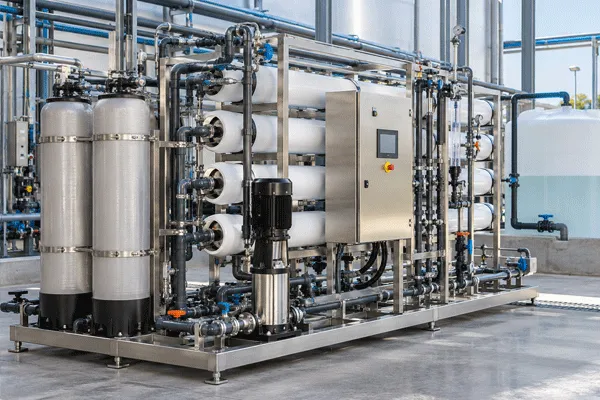
Producing potable or very high-grade recycled water may require much more advanced treatment, such as:
UF → RO → UV / Advanced Oxidation → Final Polishing
The final design depends on applicable regulations and the intended reuse.
What Are the 3 Stages of Wastewater Treatment? How Sewage Moves Through Primary, Secondary and Tertiary Treatment
Where Does MBR Fit Into the Wastewater Treatment Process?
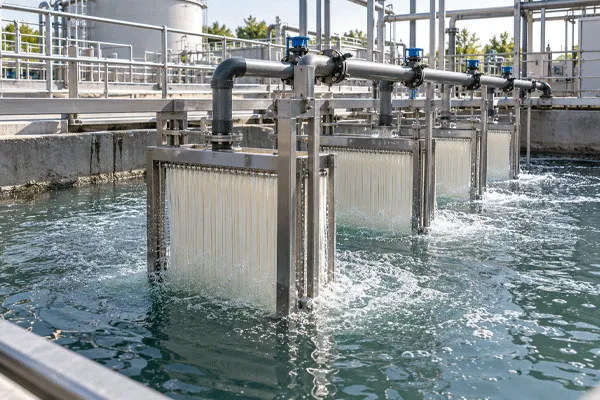
A membrane bioreactor, or MBR, combines biological wastewater treatment with membrane separation.
In a traditional activated sludge system, a secondary clarifier separates biomass from treated water.
An MBR replaces or greatly reduces reliance on that gravity-settling step by using membrane filtration.
A simplified comparison looks like this:
| Conventional Activated Sludge |
MBR |
| Biological reactor |
Biological reactor |
| Secondary clarifier |
Membrane module |
| Gravity solids separation |
Physical membrane separation |
| May need tertiary filtration |
Produces low-suspended-solids effluent directly |
MBR can therefore blur the traditional line between secondary and tertiary treatment.
Biological degradation occurs in the reactor, while the membrane creates a strong solids barrier.
For projects with limited space, strict effluent treatment requirements, or water reuse goals, MBR can be attractive.
As a manufacturer of hollow fiber MBR membranes, flat sheet MBR membranes, and integrated wastewater treatment systems, we typically evaluate:
- Influent COD and BOD
- Suspended solids
- Nitrogen requirements
- Membrane flux
- Aeration demand
- Tank volume
- Cleaning strategy
- Reuse target
The membrane itself cannot replace proper biological engineering.
A strong MBR system still depends on stable reactor conditions.
How Are Municipal and Industrial Wastewater Treatment Different?
Municipal wastewater mainly comes from homes, commercial buildings, and public sewage systems.
It contains a relatively familiar mix of:
- Human waste
- Food residues
- Detergents
- Suspended solids
- Nutrients
- Microorganisms
A municipal wastewater treatment plant can often use proven biological process configurations.
Industrial wastewater can be much more variable.
A textile plant may have color and chemicals.
A food factory may have high organic loading.
A chemical plant may contain compounds that inhibit biological treatment.
A pharmaceutical facility may require specialized polishing.
This means industrial wastewater treatment should be based on actual wastewater analysis.
Important parameters may include:
- COD
- BOD
- TSS
- pH
- Salinity
- Oils
- Heavy metals
- Nitrogen
- Phosphorus
- Toxic or refractory compounds
One Treatment System Does Not Fit Every Factory
An industrial treatment train may include:
Equalization
   ↓
pH Adjustment
   ↓
Coagulation / Flocculation
   ↓
Primary Separation
   ↓
Anaerobic or Aerobic Reactor
   ↓
MBR
   ↓
UF / RO
   ↓
Reuse
Another factory may need a very different design.
That is why we treat wastewater engineering as a process-integration task rather than simply choosing equipment from a catalog.
How Do the Stages Change When Water Reuse Is the Goal?
If the objective is only compliant discharge, secondary or tertiary treatment may be enough.
If the objective is water reuse, the required process can become more demanding.
EPA defines water reuse as treating wastewater and using it again for beneficial purposes. Recycled water can reduce demand on conventional freshwater water sources and provide additional supply for communities and industries.
Possible uses include:
- Landscape irrigation
- Industrial cooling
- Washing
- Process water
- Boiler pretreatment
- Agricultural use
- Municipal non-potable reuse
The more sensitive the application, the stronger the treatment barriers usually become.
Example Reuse Treatment Train
Secondary Effluent
      ↓
MBR or UF
      ↓
Reverse Osmosis
      ↓
Disinfection
      ↓
Recycled Water Tank
For lower-risk reuse, RO may not be necessary.
For demanding industrial water reuse, membrane polishing may help control dissolved contaminants.
This is where integrated membrane technologies provide flexibility.
MBR can remove suspended solids.
UF can provide further membrane filtration.
RO can remove dissolved salts.
The correct sequence depends on the final water quality target.
How Should a Wastewater Treatment Plant Be Designed?
An effective wastewater treatment system starts with influent data and final treatment goals.
Do not begin by selecting a reactor or membrane.
Start with questions.
1. What Wastewater Must Be Treated?
Determine:
- Source
- Daily flow
- Peak flow
- COD
- BOD
- TSS
- pH
- Nutrients
- Salinity
- Temperature
- Toxic contaminants
2. What Is the Final Standard?
Is the treated water intended for:
- Direct discharge?
- Irrigation?
- Industrial reuse?
- Cooling?
- RO feed?
- Higher-grade reclaimed water?
The required treatment level changes dramatically.
3. What Site Constraints Exist?
Consider:
- Available land
- Tank construction
- Climate
- Power supply
- Operator skill
- Sludge handling
- Expansion requirements
4. What Level of Automation Is Required?
Modern treatment facilities may use PLC and SCADA controls to monitor:
- Flow
- Dissolved oxygen
- pH
- Tank levels
- Pump status
- Membrane pressure
- Turbidity
- Conductivity
- Alarms
For international EPC projects, factory-built skid-mounted or containerized systems can simplify installation and commissioning.
As an engineering-oriented provider, we can integrate biological reactors, MBR membranes, UF, RO, dosing systems, pumps, tanks, electrical controls, and technical documentation into one coordinated treatment system.
That matters because a successful plant is not simply a collection of machines.
It is a process.
Why Effective Wastewater Treatment Matters Beyond Compliance
The goal of effective wastewater treatment is not only to pass a discharge test.
Poorly treated wastewater can reduce oxygen in receiving waters, carry pathogens, add nutrients, and introduce toxic contaminants.
USGS notes that decaying solids use oxygen needed by aquatic plants and animals, while wastewater can also introduce pathogens and metals into the environment.
Treatment helps protect:
- Rivers
- Lakes
- Groundwater
- Coastal areas
- Aquatic ecosystems
It can also convert used water into a resource.
When wastewater is sufficiently treated, industries and communities can use recycled water instead of relying entirely on fresh water supply.
That changes wastewater from a disposal problem into a potential resource.
Frequently Asked Questions About the Stages of Wastewater Treatment
What are the 3 stages of wastewater treatment?
The three main stages are primary treatment, secondary treatment, and tertiary treatment. Primary treatment removes settleable solids, secondary treatment uses biological processes to remove biodegradable pollution, and tertiary treatment provides advanced polishing such as filtration, nutrient removal, and disinfection.
Is screening part of primary treatment?
Screening is usually classified as preliminary treatment rather than primary treatment.
It removes large objects before the wastewater enters primary clarification.
What is the most important stage of wastewater treatment?
There is no single most important stage.
Each stage protects or prepares the next one. Primary separation reduces solids loading, biological secondary treatment removes organic pollution, and tertiary treatment addresses stricter effluent or reuse requirements.
What is secondary wastewater treatment?
Secondary treatment is mainly a biological process.
Microorganisms consume biodegradable pollutants in wastewater. Common technologies include activated sludge, biofilm reactors, sequencing batch reactors, and MBR systems.
Is MBR secondary or tertiary treatment?
MBR combines functions from both areas.
Its biological reactor performs secondary biological treatment, while its membrane provides advanced solid-liquid separation that can produce much cleaner effluent than conventional secondary clarification.
The final regulatory classification depends on the treatment objective and applicable standards.
Can treated wastewater be reused?
Yes.
Properly treated wastewater treated to the required standard can be reused for applications such as irrigation, industrial processes, cooling, washing, and other approved purposes.
The amount of advanced treatment needed depends on the end use and local regulations.
Final Thoughts: The Three Treatment Stages Work as One System
The answer to “What are the three types of wastewater treatment?” is simple:
Primary → Secondary → Tertiary
But designing a reliable plant is more complex.
Primary treatment removes physical solids.
Secondary treatment uses biological processes to reduce organic pollution.
Tertiary treatment improves the final water through advanced removal, membrane filtration, nutrient control, and disinfection.
Each stage supports the next.
Modern plants can also combine technologies in new ways. MBR, for example, integrates biological treatment and membrane separation. UF and RO can then be added when reclaimed water or higher-quality reuse is required.
For EPC contractors, municipal projects, industrial plants, environmental engineering companies, and system integrators, the best process therefore depends on wastewater characteristics, discharge limits, reuse goals, footprint, automation, and operating cost.
As a manufacturer and engineering-oriented provider of MBR membranes, UF membranes, RO membranes, EDI modules, wastewater treatment plants, and integrated membrane systems, we approach each project from the complete process—not from one standalone product.
Key Things to Remember
- The 3 stages of wastewater treatment are primary, secondary, and tertiary treatment.
- Screening and grit removal normally happen before primary treatment.
- Primary treatment uses physical separation to remove settleable and floating solids.
- Secondary treatment relies mainly on microorganisms to break down biodegradable organic waste.
- The activated sludge process uses aeration, biological biomass, and solids separation.
- Tertiary treatment provides additional polishing when stricter effluent quality is needed.
- Filtration helps remove fine suspended matter.
- Disinfection reduces pathogen risk before discharge or reuse.
- MBR combines biological wastewater treatment with membrane separation.
- Municipal and industrial wastewater require different design approaches.
- Anaerobic digestion usually belongs to sludge treatment rather than the three main liquid-treatment stages.
- Water reuse often requires stronger treatment than ordinary discharge.
- UF and RO can be added when higher-quality reclaimed water is needed.
- Effective wastewater treatment protects water bodies and reduces pollution.
- The right treatment process should be designed from influent data and final water-quality requirements—not from equipment alone.











 18:24