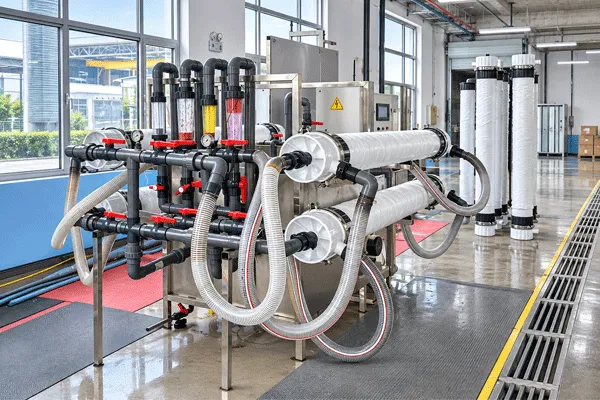
A treatment plant that looks right on paper can still fail to meet discharge limits, struggle with changing influent, or cost too much to operate. These problems often start before equipment is purchased. The solution is to select the right process based on real wastewater data and project conditions.
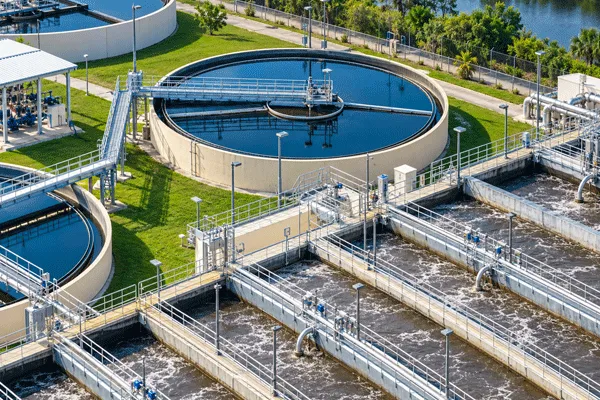
A wastewater treatment plant is an engineered system that collects, treats, and manages used water to meet specific discharge or reuse requirements. Its design depends on wastewater characteristics, treatment capacity, required effluent quality, available space, operating costs, and future expansion needs.
Atık Su Arıtma Tesisi Tasarımı: Doğru Atık Su Arıtma Yöntemlerinin Seçimi
Makale Özeti
- What Should an Industrial Wastewater Treatment Plant Achieve?
- What Data Is Needed Before Selecting a Wastewater Treatment Process?
- How Do You Select the Right Treatment Processes for Industrial Wastewater?
- How Do Flow Rate and Pollutant Load Affect Plant Design?
- What Treatment Equipment Should a Complete Plant Include?
- When Should MBR, UF, RO, and EDI Technologies Be Used?
- How Does Automation Improve Wastewater Treatment Plant Performance?
- How Should Sludge, Residuals, and Final Discharge Be Managed?
- How Do You Evaluate a Wastewater Treatment Plant Manufacturer?
- What Should Buyers Consider Before Installation and Commissioning?
1. What Should an Industrial Wastewater Treatment Plant Achieve?
An industrial treatment facility has a bigger responsibility than simply making dirty water look clean. It must reduce pollutants, maintain stable operation, meet local environmental requirements, and support the daily needs of the factory.
Different industries produce different types of used water. A food factory may generate wastewater with high organic material, oil, and grease. Textile production can release color, chemicals, and suspended solids. Pharmaceutical and chemical facilities may produce wastewater containing complex organic compounds, salts, and substances that affect biological activity.
For this reason, every wastewater treatment project should start with clearly defined objectives.
The main objectives usually include:
- Regulatory compliance: Meet the required effluent limits before discharge.
- Stable performance: Maintain consistent water quality when influent conditions change.
- Resource recovery: Support reuse where the treated water meets the required standards.
- Space efficiency: Fit the treatment system into the available site area.
- Operating efficiency: Control energy, chemical, maintenance, and sludge management costs.
- Long-term reliability: Provide equipment and controls that support continuous operation.
The scale of the challenge is significant. According to the U.S. Environmental Protection Agency (EPA), wastewater treatment facilities in the United States process approximately 34 billion gallons of wastewater every day. This shows why reliable treatment infrastructure is important for communities and industries alike.
A suitable design must consider the entire wastewater system, from collection and pretreatment to final discharge or recovery.
2. What Data Is Needed Before Selecting a Wastewater Treatment Process?
Choosing equipment before understanding the incoming water is one of the most common design mistakes. Two factories with the same daily flow may require completely different treatment processes because their pollutants and production conditions are different.
Before selecting a wastewater treatment process, engineers should collect representative samples and review the production process.
The most important water quality parameters include:
| Parametre |
Neden Önemli? |
| Nakit Ödeme |
Indicates the amount of chemically oxidizable pollution |
| BOD5 |
Helps evaluate biodegradable organic pollution |
| TSS |
Measures suspended solids in the water |
| pH |
Affects biological activity and chemical reactions |
| Oil and Grease |
May require separation before biological treatment |
| Ammonia Nitrogen |
Helps determine biological nitrogen removal requirements |
| Total Nitrogen |
Indicates the need for nutrient control |
| Total Phosphorus |
Helps determine phosphorus removal requirements |
| TDS |
Indicates dissolved salt content |
| Sıcaklık |
Affects biological and membrane performance |
Engineers should also understand how water is generated during production.
For example, a factory may release wastewater continuously during normal operation but discharge a large volume during equipment cleaning. A chemical production facility may have several separate wastewater streams with different pollutant concentrations.
These differences affect equalization tank sizing, chemical dosing, biological loading, and equipment selection.
A good design review should collect:
- Average and peak daily flow.
- Maximum hourly flow.
- Wastewater composition from different production lines.
- Batch discharge schedules.
- Seasonal changes in production.
- Required discharge or reuse standards.
- Available installation space and utility conditions.
The U.S. EPA’s guidance on peak flows at sewage treatment plants explains how changing inflow can affect treatment performance. This is also an important consideration for industrial projects with variable production schedules.
3. How Do You Select the Right Treatment Processes for Industrial Wastewater?
There is no universal process suitable for every factory. The correct configuration depends on the pollutants that must be removed, the final water quality target, and the operating conditions.
Some wastewater streams require physical separation before biological treatment. Others need chemical pretreatment to reduce toxic substances, adjust pH, or remove specific contaminants.
Common treatment options include:
| Wastewater Condition |
Possible Treatment Technology |
Temel Amaç |
| Large particles and debris |
Tarama |
Protect downstream equipment |
| Sand and heavy particles |
Grit removal |
Prevent abrasion and blockage |
| Oil and suspended solids |
DAF |
Separate floating materials |
| High organic pollution |
Biyolojik arıtma |
Reduce biodegradable pollutants |
| Variable wastewater flow |
Eşitleme |
Stabilize hydraulic and pollutant loading |
| İnce askıda katı maddeler |
UF or MBR |
Improve solid-liquid separation |
| Çözünmüş tuzlar |
RO |
Reduce dissolved contaminants |
| High-purity water requirements |
RO + EDI |
Produce high-purity process water |
For example, a food processing factory may use screening, grease separation, biological treatment, and membrane filtration. A textile facility may need equalization, pH adjustment, chemical treatment, biological treatment, and membrane separation.
A pharmaceutical project may require more detailed wastewater characterization before engineers decide whether conventional biological processes are suitable.
The important point is that treatment processes should work together. Adding more equipment does not automatically improve performance. Each unit should have a clear function and a measurable design purpose.
The selected process may include conventional physical and biological units, advanced membrane separation, or a combination of both. The final configuration should reflect the actual project requirements rather than follow a fixed equipment package.
Atık Su Arıtma Tesisi Tasarımı: Doğru Atık Su Arıtma Yöntemlerinin Seçimi
4. How Do Flow Rate and Pollutant Load Affect Plant Design?
Treatment capacity is one of the first figures buyers discuss with suppliers. However, daily flow alone cannot determine the correct equipment size.
A plant receiving 500 m³/day of relatively low-strength domestic wastewater may need a different configuration from one receiving the same volume of concentrated industrial wastewater.
Engineers must consider both hydraulic loading and pollutant loading.
A basic pollutant load calculation is:
Pollutant Load (kg/day) = Flow Rate (m³/day) × Concentration (mg/L) ÷ 1,000
For example, if a factory produces 500 m³/day of wastewater with a COD concentration of 1,000 mg/L:
500 × 1,000 ÷ 1,000 = 500 kg COD/day.
This figure provides a more useful basis for process evaluation than flow rate alone.
Important capacity considerations
Average flow: The normal daily volume entering the plant.
Peak flow: The highest expected flow over a defined period.
Organic loading: The amount of biodegradable or chemically oxidizable material entering the biological process.
Hydraulic retention time: The time wastewater remains in a particular treatment unit.
Future expansion: Additional capacity that may be required as production increases.
For municipal projects, a sanitary sewer system may receive additional stormwater runoff through combined or defective collection networks. This can create an overflow risk during heavy rainfall.
Industrial projects face different challenges, including production shutdowns, cleaning cycles, and sudden batch discharges.
A practical design should therefore consider equalization, pumping capacity, standby equipment, and process flexibility.
5. What Treatment Equipment Should a Complete Plant Include?
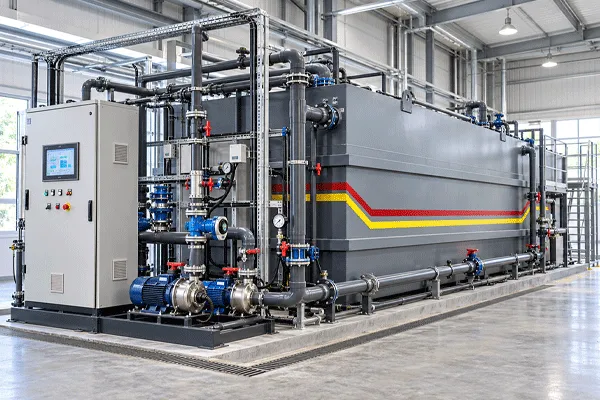
A complete plant is made up of several connected units. Each component has a specific role, and the equipment must work as one coordinated system.
The exact configuration varies, but a typical industrial installation may include the following equipment.
Preliminary and Physical Treatment Equipment
This equipment protects downstream units and removes materials that could interfere with the main treatment process.
Common equipment includes:
- Mechanical screens.
- Grit chamber.
- Equalization tanks.
- Transfer pumps.
- Oil-water separators.
- DAF equipment.
- Chemical dosing systems.
If the selected design includes sedimentation, the water may be pumped into sedimentation tanks. Heavy particles settle while lighter materials can be separated from the liquid.
Biological Treatment Equipment
Biological units use a microorganism population to break down biodegradable pollutants.
Depending on wastewater characteristics and project targets, engineers may select:
- Activated sludge process.
- A/O systems.
- A2/O systems.
- SBR systems.
- MBBR systems.
- MBR systems.
These options have different requirements for tank volume, aeration, sludge management, and operation.
Advanced Filtration and Purification Equipment
Additional treatment equipment may be required when the project needs low suspended solids, improved clarity, or water suitable for further purification.
Yaygın seçenekler arasında şunlar yer alır:
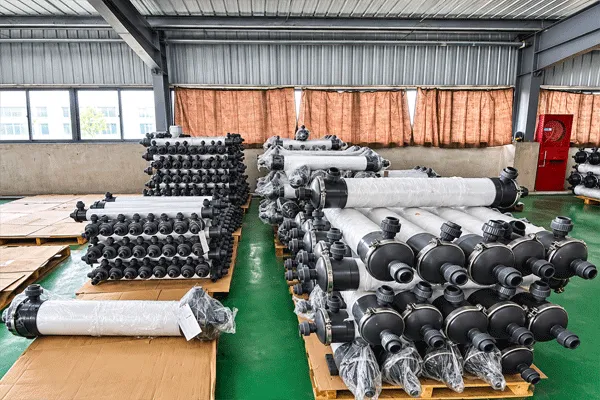
- Hollow fiber UF membrane modules.
- Hollow fiber MBR membrane modules.
- Flat sheet MBR membranes.
- RO membrane systems.
- EDI modules for high-purity water applications.
The final equipment list should be supported by process calculations, equipment datasheets, and a clear process flow diagram.
6. When Should MBR, UF, RO, and EDI Technologies Be Used?
Membrane technology plays an important role in modern water and wastewater projects. However, different membranes perform different functions. Buyers should not treat MBR, UF, RO, and EDI as interchangeable technologies.
MBR for Biological Wastewater Treatment
Membrane bioreactor technology combines biological treatment with membrane separation.
It can replace conventional secondary clarification in suitable designs and provides effective separation of biomass and treated water.
MBR is especially useful when a project requires:
- Compact installation.
- Low suspended solids in the effluent.
- Stable solid-liquid separation.
- High-quality water for further treatment.
- Integration with water recovery systems.
Banott supplies both hollow fiber and flat sheet MBR membrane solutions for customized projects.
UF for Fine Filtration and Pretreatment
Ultrafiltration removes suspended particles, colloids, and microorganisms through membrane separation.
It is often used before RO to protect downstream membranes and improve feed water stability.
RO for Dissolved Contaminant Removal
Reverse osmosis uses pressure to separate water from many dissolved salts and other contaminants.
For industrial projects, RO may be used after biological treatment and suitable pretreatment when the objective is to recover water for production or other applications.
EDI for High-Purity Water Production
EDI combines ion exchange materials and electrical separation to remove residual ions from pretreated water.
It is commonly installed after RO in applications that require high-purity water, such as pharmaceutical manufacturing and electronics production.
| Teknoloji |
Ana İşlev |
Tipik Konum |
| MBR |
Biological treatment and membrane separation |
Wastewater treatment |
| UF |
Fine filtration |
Pretreatment or polishing |
| RO |
Dissolved salt removal |
Water recovery and purification |
| EDI |
High-purity deionization |
Downstream of RO |
Not every project needs all four technologies. A professional engineering team should determine which combination is technically necessary and economically reasonable.
7. How Does Automation Improve Wastewater Treatment Plant Performance?
Automation helps operators manage complex treatment facilities with fewer manual adjustments and better access to operating information.
A modern control system can monitor pumps, blowers, valves, chemical dosing, membrane filtration, and other equipment.
A typical control architecture may include:
- PLC for process control.
- HMI for local operator interaction.
- SCADA for centralized monitoring.
- Online flow and pressure sensors.
- pH and dissolved oxygen monitoring.
- Turbidity and conductivity measurement.
- Alarm and equipment protection functions.
For example, a PLC can adjust pump operation according to tank levels and control blower output according to process demand. Membrane systems can also use programmed filtration, relaxation, backwashing, or cleaning sequences according to their design.
Disinfection may involve the use of chemicals such as chlorine, while ultraviolet systems provide another option depending on the required application and water characteristics.
Automation is not only about reducing labor. It also helps operators identify unusual operating conditions before they cause major problems.
For EPC contractors and industrial owners, a well-designed control system should come with electrical drawings, control descriptions, alarm lists, and clear operating instructions.
Atık Su Arıtma Tesisi Tasarımı: Doğru Atık Su Arıtma Yöntemlerinin Seçimi
8. How Should Sludge, Residuals, and Final Discharge Be Managed?
The liquid stream is only one part of a treatment project. The process also produces residual materials that must be handled safely.
These may include screenings, grit, chemical precipitates, biological sludge, and membrane cleaning waste.
Sludge management should be considered during the initial design stage rather than after the plant has been installed.
A typical sludge management arrangement may include:
- Sludge collection.
- Sludge thickening.
- Sludge storage.
- Mechanical dewatering.
- Approved transport and disposal or recovery.
Depending on its composition and local regulations, dewatered sludge may be sent for permitted beneficial use, further processing, or landfill disposal.
The liquid stream also requires final verification. The effluent must meet the applicable limits before it is released back into the environment or sent for further reuse treatment.
For municipal projects, the publicly owned treatment works must follow the applicable discharge permit. In the United States, the EPA establishes federal requirements, while federal and state governments have different responsibilities in permitting and environmental oversight.
The final step should include appropriate sampling and testing for the parameters specified in the project requirements.
Good residual management reduces environmental risk and helps prevent unnecessary operating costs.
9. How Do You Evaluate a Wastewater Treatment Plant Manufacturer?
Selecting a manufacturer is an important purchasing decision. A low equipment quotation does not always mean a low project cost.
Buyers should evaluate the supplier’s engineering capability, manufacturing quality, technical documentation, and after-sales support.
Here are eight important checks.
| Evaluation Area |
What Buyers Should Check |
| Engineering experience |
Ability to evaluate actual wastewater data |
| Process design |
Clear process flow and technical justification |
| Manufacturing |
In-house fabrication and assembly capability |
| Equipment quality |
Suitable materials, components, and inspection |
| Membrane technology |
Appropriate membrane materials and configuration |
| Otomasyon |
PLC, HMI, SCADA, and monitoring functions |
| Belgeler |
PFD, P&ID, datasheets, and O&M manuals |
| After-sales support |
Commissioning, training, and spare parts |
A reliable supplier should explain why a particular treatment configuration is suitable for the project.
At Banott, we provide membrane products and integrated water and wastewater treatment solutions for EPC contractors, engineering companies, industrial owners, and international distributors.
Our capabilities cover:
- Hollow fiber MBR membranes.
- Flat sheet MBR membranes.
- Hollow fiber UF membranes.
- RO membranes.
- EDI modules.
- Integrated wastewater treatment plants.
- Pure water and ultrapure water systems.
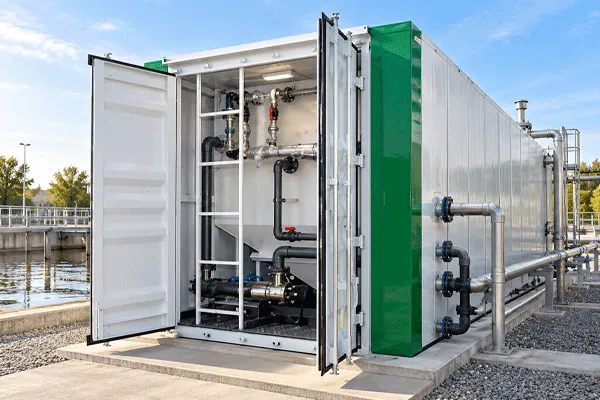
- Skid-mounted and containerized systems.
- Customized engineering and system integration.
We also support process evaluation, equipment integration, PLC-based automation, technical documentation, commissioning preparation, and long-term technical cooperation.
Explore our Wastewater Treatment Plant, Atık Su Arıtma Çözümü, and Engineering & System Integration capabilities.
10. What Should Buyers Consider Before Installation and Commissioning?
A well-designed system still needs proper manufacturing, installation, and commissioning to achieve its intended performance.
Before production begins, buyers should confirm the technical scope and review the engineering documents.
Important documents include:
- Process flow diagram (PFD).
- Piping and instrumentation diagram (P&ID).
- General arrangement drawings.
- Equipment datasheets.
- Electrical drawings.
- Instrument lists.
- Control system descriptions.
- Operation and maintenance manuals.
Factory inspection is another important step. Where required, the supplier should conduct factory acceptance testing (FAT) to check equipment assembly, electrical functions, control logic, and agreed inspection points.
During installation and commissioning, the project team should verify:
- Equipment positioning and foundations.
- Piping and electrical connections.
- Pump and blower operation.
- Instrument calibration.
- PLC and SCADA functions.
- Water flow and hydraulic conditions.
- Process startup and stabilization.
- Final effluent testing.
An illustrative example is a food processing factory that plans to increase production capacity. Its existing plant may have enough tank volume for the average flow but insufficient equalization and pumping capacity during cleaning operations.
Rather than simply purchasing a larger biological tank, engineers should first review the actual production schedule, peak flow, pollutant load, and available equipment. The solution may involve improved equalization, additional pretreatment, and a revised biological or membrane configuration.
This is why engineering review is important before equipment procurement.
For long-term operation, buyers should also confirm spare parts availability, maintenance schedules, operator training, and technical support arrangements.
Sık Sorulan Sorular
What factors determine the cost of an industrial wastewater treatment plant?
The main cost factors include treatment capacity, influent characteristics, required effluent quality, process configuration, equipment materials, automation level, installation conditions, and sludge management. Operating costs should also include electricity, chemicals, maintenance, and membrane replacement where applicable.
Can one treatment plant handle different types of industrial wastewater?
Yes, but the design must account for the characteristics of each wastewater stream. Some streams can be combined after equalization, while others require separate pretreatment to prevent chemical reactions or biological inhibition.
Is an MBR system suitable for every industrial wastewater project?
No. MBR is suitable for many projects requiring effective biological treatment and membrane separation, but wastewater toxicity, oil content, salinity, temperature, and organic loading must be evaluated before selection.
Can treated wastewater be reused in industrial production?
Yes. Depending on the final water quality requirements, additional UF, RO, disinfection, or other polishing technologies may be necessary. The required treatment level depends on the intended application.
What is the difference between a containerized and a conventional wastewater treatment system?
A containerized system integrates equipment into a transportable structure, which can reduce onsite construction and simplify installation. A conventional system may use larger civil tanks and buildings. The better choice depends on capacity, site conditions, transportation limits, and future expansion plans.
How long does it take to design and install a wastewater treatment system?
The timeline depends on project complexity, equipment manufacturing, civil construction, shipping, installation, and commissioning. A compact packaged system may require less onsite work, while a large industrial or municipal project needs more detailed engineering and coordination.
Unutulmaması Gereken Önemli Noktalar
- A successful wastewater treatment plant starts with accurate influent analysis and clearly defined treatment targets.
- Flow rate and pollutant loading must both be considered during system sizing.
- Treatment processes should match the wastewater characteristics and required effluent quality.
- MBR, UF, RO, and EDI have different functions and should be selected according to project requirements.
- Sludge handling, automation, and maintenance planning are important parts of the overall design.
- Factory inspection, technical documentation, and commissioning support help reduce project risks.
- Choosing an experienced manufacturer provides access to equipment, engineering, system integration, and long-term technical support.
Planning a new wastewater treatment project or upgrading an existing facility?
Share your wastewater analysis, daily treatment capacity, required discharge standards, and site conditions with Banott. Our engineering team can evaluate the project and recommend a customized treatment process, membrane configuration, and integrated equipment solution.











 10:11