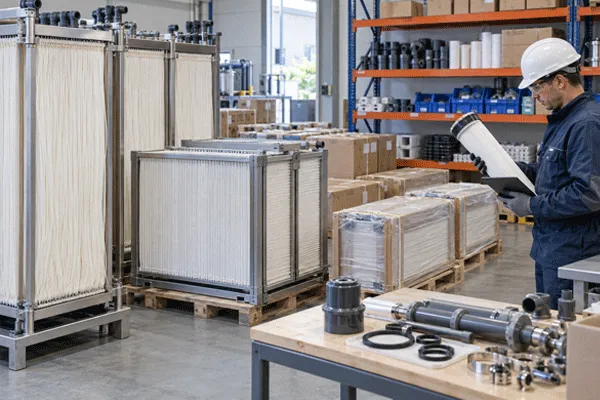
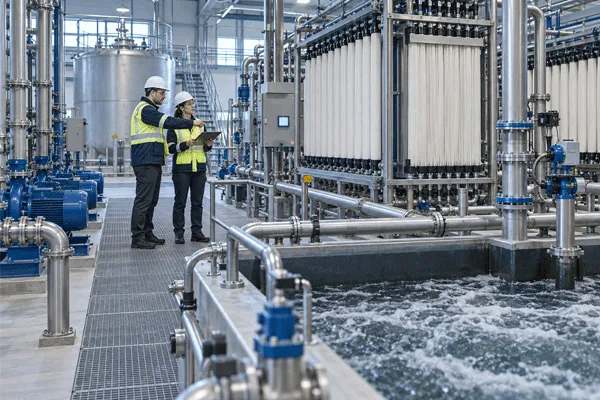
Wastewater challenges are growing as industries and cities demand cleaner discharge, stricter environmental compliance, and better water reuse solutions. Traditional treatment methods may struggle with limited space, unstable effluent quality, and increasing operating costs. Banott provides advanced membrane bioreactor solutions that help customers achieve reliable wastewater treatment performance with compact, customized systems.
A membrane bioreactor (MBR) is an advanced wastewater treatment technology that combines biological treatment and membrane filtration in one process. Compared with conventional activated sludge systems, MBR systems provide higher effluent quality, better removal of suspended solids, and excellent potential for water reuse in municipal, industrial, and commercial applications.
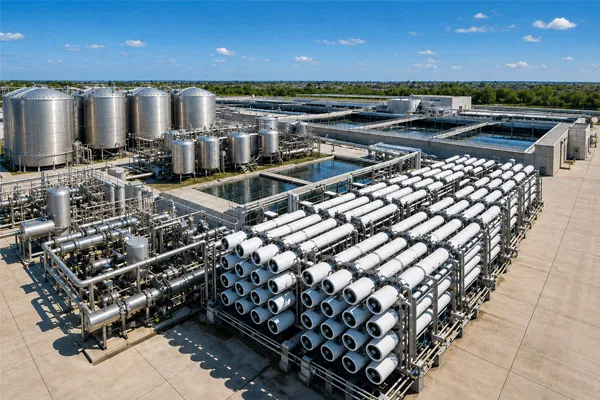
Atık Su Arıtımı için Membran Biyoreaktör: Verimli Su Geri Kullanımı için Gelişmiş MBR Sistemleri
What Is a Membrane Bioreactor and How Does It Work?
A membrane bioreactor is a modern wastewater treatment process that integrates a biological reactor with a membrane separation unit. It uses microorganisms to break down organic pollutants while a membrane module physically separates treated water from biomass.
Unlike conventional wastewater treatment systems, where sedimentation tanks are used to separate activated sludge, an MBR system uses membrane filtration to achieve more accurate solid-liquid separation. The membrane pores block suspended solids, bacteria, and other contaminants while allowing treated water to pass through.
At Banott, we develop customized membrane bioreactor systems based on different wastewater characteristics, including industrial wastewater treatment, municipal wastewater treatment, and decentralized wastewater treatment projects. Our solutions combine membrane technology, engineering design, automation control, and project support.
How Does the Membrane Bioreactor Process Work?
The basic MBR process includes several important treatment stages:
| Treatment Stage |
Ana İşlev |
| Ön işlem |
Removes large particles and protects downstream equipment |
| Biological Reactor |
Uses microorganisms for organic matter removal |
| Membrane Filtration |
Separates biomass and produces high-quality effluent |
| Dezenfeksiyon |
Provides additional treatment when required |
| Water Reuse System |
Enables recycling and secondary applications |
The core of the process is the combination of biological and membrane technologies. Inside the biological reactor, microorganisms consume organic matter contained in the wastewater. The growing biomass remains inside the reactor while treated water passes through the membrane surface.
This approach allows MBR sistemis to maintain a higher concentration of biomass compared with conventional activated sludge processes. The result is a more stable wastewater treatment process with improved treatment efficiency.
Why Are Membrane Bioreactors Used in Wastewater Treatment?
The demand for advanced wastewater treatment technology continues to increase worldwide. Industries, municipalities, and engineering companies require treatment systems that provide stable performance while reducing space requirements.
The main reason customers choose membrane bioreactors for wastewater treatment is their ability to deliver excellent effluent quality in a compact design.
Advantages of Membrane Bioreactors
1. Higher Effluent Quality
One of the biggest advantages of MBR technology is its ability to produce high-quality treated water.
The membrane filtration process effectively removes:
- Askıda kalan katı maddeler
- Microorganisms
- Organic pollutants
- Fine particles
Because the membrane acts as a physical barrier, the final effluent has lower turbidity and improved consistency compared with many conventional treatment processes.
For industries requiring strict discharge standards or water reuse applications, stable effluent quality is a critical requirement.
2. Compact Footprint
Space is often limited in industrial facilities, hotels, factories, and urban areas.
Compared with conventional activated sludge systems, an MBR system requires a smaller footprint because it combines biological treatment and filtration into one integrated process.
This makes MBR particularly suitable for:
- Urban wastewater treatment
- Sanayi parkları
- Remote communities
- Factory expansion projects
Banott provides modular and containerized wastewater treatment solutions that help customers install efficient treatment systems where traditional construction may be difficult.
3. Better Biomass Control
In conventional activated sludge treatment, maintaining stable biomass concentration can be challenging.
The MBR process keeps biomass within the biological reactor, allowing operators to maintain higher microorganism concentrations. This improves the biological degradation process and helps treat wastewater with higher organic loads.
The controlled environment inside the bioreactor supports stable operation and reduces the risk of poor treatment performance caused by sludge loss.
What Are the Main Applications of Membrane Bioreactors?
Şu membran biyoreaktörlerinin uygulamaları cover a wide range of industries and environmental projects. From small decentralized systems to large municipal facilities, MBR technology provides flexible treatment options.
Banott designs MBR solutions according to wastewater characteristics, project capacity, discharge requirements, and reuse goals.
Applications of Membrane Bioreactors in Municipal Wastewater Treatment
Municipal wastewater treatment is one of the most common applications of MBR technology.
Cities and communities face increasing pressure to improve wastewater management while reducing land requirements. Traditional wastewater treatment plants often require large areas for sedimentation and clarification tanks.
An MBR system provides an alternative solution by combining a biological reactor with membrane filtration.
Typical applications include:
- Belediye atık su arıtma tesisleri
- Residential communities
- Rural sewage treatment
- Decentralized wastewater treatment projects
For municipal projects, MBR systems offer:
- Stable treated water quality
- Reduced footprint
- Easier automation
- Potential water reuse opportunities
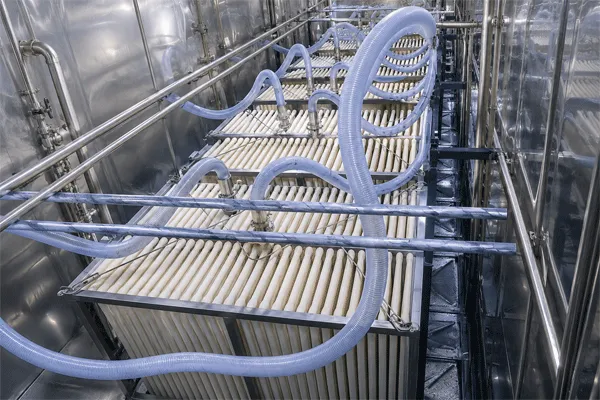
Atık Su Arıtımı için Membran Biyoreaktör: Verimli Su Geri Kullanımı için Gelişmiş MBR Sistemleri
Applications in Industrial Wastewater Treatment
Industrial wastewater often contains complex pollutants that require customized treatment solutions.
Industries such as:
- Food and beverage manufacturing
- Tekstil ve boyama fabrikaları
- İlaç üretimi
- Kimya tesisleri
- Elektronik üretimi
require reliable wastewater treatment systems to meet environmental regulations.
MBR technology is widely used in industrial wastewater treatment because it can handle fluctuating wastewater conditions while maintaining consistent effluent quality.
For example, food and beverage wastewater usually contains high organic loads. An MBR process helps microorganisms remove organic matter while membrane filtration ensures stable water quality.
What Makes Banott MBR Systems Different?
As a professional manufacturer and engineering-oriented provider, Banott focuses on complete water and wastewater treatment solutions rather than only supplying individual components.
Our capabilities include:
- İçi boş fiber MBR membranları
- İçi boş fiber UF membranları
- Düz tabaka MBR membranları
- RO membrane systems
- EDI water treatment systems
- Entegre membran filtrasyon sistemleri
- Customized wastewater treatment plants
We support customers from initial project analysis to system design, manufacturing, installation guidance, commissioning support, and long-term technical service.
| Capability |
Customer Benefit |
| Customized membrane bioreactor design |
Fits different wastewater characteristics |
| Factory manufacturing |
Stable quality and reliable delivery |
| Modular system structure |
Faster installation and easier expansion |
| Engineering support |
Helps EPC partners complete projects efficiently |
| Automation integration |
Supports PLC/SCADA monitoring |
| Technical documentation |
Simplifies operation and maintenance |
What Are the Different Types of MBR Systems?
Different projects have different wastewater characteristics, capacity requirements, and installation conditions. Therefore, selecting the right membrane bioreactor configuration is an important step in achieving stable treatment performance.
Based on membrane structure and installation methods, common MBR systems include submerged MBR membrane systems, external circulation MBR systems, hollow fiber MBR systems, and flat sheet MBR membrane systems. Banott provides customized solutions according to project requirements, including industrial wastewater treatment, municipal wastewater treatment, and decentralized treatment applications.
Submerged MBR Membrane System
A submerged MBR membrane system places the membrane module directly inside the biological reactor. The wastewater is treated by microorganisms, while the membrane separates treated water from the biomass.
This design reduces energy consumption because it avoids additional external pumping systems. The continuous aeration around the membrane surface also helps control membrane fouling and maintain stable operation.
Main advantages include:
- Compact system design
- Lower energy requirements
- Yüksek membran dolgu yoğunluğu
- Suitable for small and medium wastewater treatment projects
The immersed membrane bioreactor configuration is widely applied in municipal wastewater treatment, commercial buildings, and industrial applications where space efficiency is important.
Flat Sheet MBR Membrane
Flat sheet MBR membranes use a plate-style membrane structure. Compared with hollow fiber designs, flat sheet membranes offer a rigid structure and stable mechanical performance.
They are often selected for applications requiring:
Long-term operation stability
Easy maintenance
Strong resistance to physical stress
Flat sheet membrane modules are commonly used in municipal and industrial wastewater treatment projects where reliable operation is essential.
| MBR Type |
Structure |
Main Advantages |
Typical Applications |
| Hollow Fiber MBR |
Fiber-shaped membrane bundles |
High membrane area, compact design |
Industrial wastewater, municipal projects |
| Flat Sheet MBR |
Plate-style membrane modules |
Stable structure, easy maintenance |
Municipal and commercial wastewater |
| External MBR |
External filtration unit |
Flexible operation |
Large-scale engineering projects |
Choosing the correct membrane type depends on wastewater quality, project scale, operating conditions, and maintenance requirements.
How Does Membrane Filtration Improve Wastewater Treatment Efficiency?
The success of an MBR system depends on the combination of biological treatment and membrane filtration. While the biological reactor removes organic pollutants, the membrane provides precise separation and produces high-quality treated water.
Unlike conventional wastewater treatment systems, membrane filtration does not rely on gravity sedimentation. Instead, the membrane surface acts as a physical barrier that controls what can pass through.
Role of Membrane Filtration in MBR Systems
During operation, wastewater enters the biological reactor where microorganisms break down organic matter. The activated sludge remains inside the reactor because the membrane pores prevent biomass from passing through.
The treated water moves through the membrane while solids remain concentrated inside the biological reactor.
What Factors Affect the Efficiency of MBR Systems?
The efficiency of MBR depends on several factors, including wastewater characteristics, membrane selection, biological conditions, and operating management.
A properly designed MBR system can deliver reliable performance for many years. However, engineering design and operation control are essential.
Why Are MBR Systems Suitable for Water Reuse Projects?
Water scarcity and environmental regulations are encouraging industries to improve water efficiency. Many companies now focus not only on wastewater discharge but also on wastewater recovery and reuse.
An MBR system can produce treated water suitable for applications such as:
Landscape irrigation
Endüstriyel proses suyu
Cooling system makeup water
Facility cleaning
By combining biological treatment and membrane filtration, MBR technology helps companies reduce freshwater consumption and improve sustainability.
| Benefit |
Business Value |
| Reduced freshwater demand |
Lower operating costs |
| Less wastewater discharge |
Better environmental performance |
| Stable treated water |
Reliable reuse applications |
| Compact system design |
Suitable for limited space |
For factories, industrial parks, and municipal projects, MBR provides a practical pathway toward circular water management.
Atık Su Arıtımı için Membran Biyoreaktör: Verimli Su Geri Kullanımı için Gelişmiş MBR Sistemleri
How Does MBR Technology Compare with Conventional Wastewater Treatment Methods?
For decades, conventional activated sludge systems have been widely used in wastewater treatment plants. They provide reliable biological treatment, but they often require large settling tanks, more land area, and additional treatment steps to achieve higher water quality standards.
A membrane bioreactor improves this traditional approach by combining biological degradation with advanced membrane filtration. Instead of depending on gravity separation, the membrane module provides a physical barrier that retains biomass and produces cleaner effluent.
The comparison below shows why many EPC contractors, industrial companies, and municipalities are choosing MBR technology for modern wastewater treatment projects.
| Özellik |
Geleneksel Aktif Çamur Yöntemi |
Membrane Bioreactor (MBR) |
| Katı-sıvı ayrıştırma |
Secondary sedimentation tank |
Membran filtrasyonu |
| Ayak izi |
Requires larger area |
Az yer kaplayan tasarım |
| Effluent quality |
Depends on settling performance |
Stable and high-quality effluent |
| Suspended solids removal |
Orta |
Çok yüksek |
| Suyun yeniden kullanım potansiyeli |
Requires additional treatment |
Better suited for reuse |
| Biomass control |
More difficult |
Better controlled inside bioreactor |
| Otomasyon |
Requires additional systems |
Easier integration with PLC/SCADA |
The advantages of membrane bioreactors become especially important when projects require strict discharge standards, limited installation space, or water reuse goals.
For example, industrial parks and factories often need treatment systems that can handle changing wastewater loads while maintaining consistent performance. An MBR system provides the flexibility required for these demanding applications.
How Does Banott Design Customized MBR Wastewater Treatment Systems?
Every wastewater project has different requirements. A successful MBR system depends on accurate engineering design, suitable membrane selection, and proper operating conditions.
At Banott, we focus on complete water and wastewater treatment solutions rather than supplying only individual components.
Our engineering process includes:
1. Wastewater Analysis
We evaluate:
- Wastewater composition
- Akış hızı
- Organic loading
- Taburculuk koşulları
- Reuse objectives
This information helps determine the correct treatment process.
2. Membrane Selection
Different applications require different membrane technologies.
Banott provides:
- Hollow fiber MBR membrane
- Flat sheet MBR membrane
- Hollow fiber UF membrane
- RO membrane systems
- EDI modülleri
The correct membrane type depends on:
- Water quality
- Arıtma kapasitesi
- Operating environment
- Maintenance requirements
3. System Integration
A complete MBR system may include:
Biological reactor
Membran modülü
Havalandırma sistemi
Dosing system
Cleaning system
Disinfection system
Automation control
Banott supports skid-mounted systems and containerized wastewater treatment plants for customers requiring fast installation and flexible deployment.
FAQ:
What is a membrane bioreactor used for?
A membrane bioreactor is used for advanced wastewater treatment by combining biological treatment and membrane filtration. It is widely applied in municipal wastewater treatment, industrial wastewater treatment, water reuse projects, and decentralized treatment systems.
MBR ile geleneksel aktif çamur arasında ne gibi bir fark vardır?
The main difference is the separation method. Conventional activated sludge uses settling tanks, while MBR uses membrane filtration to separate treated water from biomass. This allows MBR systems to achieve higher effluent quality and require a smaller footprint.
How long does an MBR membrane last?
The service life of an MBR membrane depends on wastewater characteristics, operating conditions, cleaning frequency, and maintenance practices. Proper operation and regular membrane cleaning can help extend membrane performance.
Can MBR systems be used for industrial wastewater treatment?
Yes. MBR systems are widely used for industrial wastewater treatment applications, including food processing, textile, pharmaceutical, chemical, and manufacturing industries.
Is treated water from an MBR system suitable for reuse?
Yes. MBR-treated water can be suitable for reuse applications such as irrigation, industrial cleaning, and process water supply when designed according to specific reuse requirements.
Does Banott provide complete wastewater treatment solutions?
Yes. Banott provides complete engineering-oriented solutions, including membrane products, wastewater treatment plants, system integration, technical documentation, commissioning support, and long-term service.











 10:03
10:03