Unsafe water quality is a growing concern for homes, commercial facilities, and industrial users. Contaminated water may contain harmful microorganisms such as E. coli, viruses, and other bacteria that can affect human health. Choosing the wrong filter may leave dangerous contaminants behind.
A reverse osmosis filter can remove E. coli from drinking water when the system is properly designed, maintained, and operated. Reverse osmosis uses pressure to force water through a semi-permeable membrane, allowing water molecules to pass while blocking bacteria, viruses, suspended solids, heavy metals, and many dissolved contaminants.
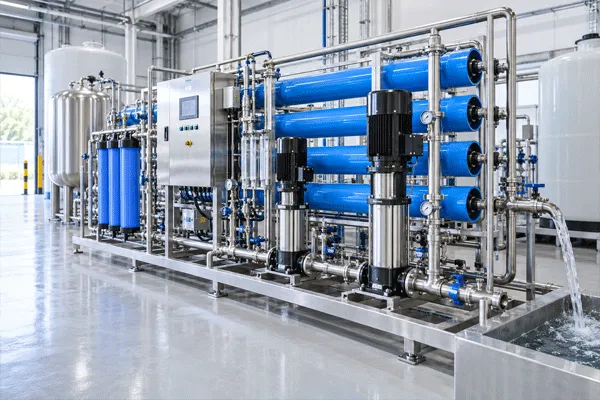
Will RO Filter Remove E. coli? Complete Guide to Reverse Osmosis Remove Bacteria from Drinking Water
План статьи
- What Is a Reverse Osmosis Filter and How Does It Work?
- Does Reverse Osmosis Remove E. coli From Drinking Water?
- How Does Reverse Osmosis Remove Bacteria and Viruses?
- What Contaminants Can a Reverse Osmosis Water Filter Remove?
- Can an RO System Remove All Types of Bacteria?
- Is Reverse Osmosis Water Safe for Drinking?
- Reverse Osmosis Filter vs Other Water Filtration Methods
- How to Choose the Right Reverse Osmosis Water Treatment System?
- How to Maintain an RO Filter for Better Water Quality?
- Why Choose a Professional Reverse Osmosis Water Treatment Manufacturer?
What Is a Reverse Osmosis Filter and How Does It Work?
A reverse osmosis filter is an advanced water filtration technology designed to improve drinking water quality by removing unwanted substances from a water source. It is widely used in home water purification, commercial drinking water systems, and industrial water treatment applications.
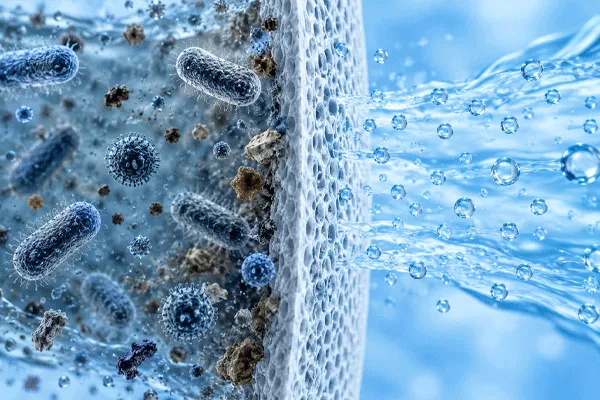
Unlike ordinary filters that mainly remove larger particles, a reverse osmosis system uses a special reverse osmosis membrane with extremely small pores. The system applies pressure to force water through a semi-permeable membrane. The membrane separates clean water from contaminants.
During this process:
- Feed water enters the RO system.
- Pressure pushes water through the membrane.
- Pure water molecules pass through.
- Contaminants are rejected and discharged.
A typical RO system includes several filtration stages:
| Stage |
Компонент |
Основная функция |
| 1 |
Sediment filter |
Removes sand, rust, and suspended particles |
| 2 |
Activated carbon filter |
Removes chlorine and organic compounds |
| 3 |
Reverse osmosis membrane |
Removes dissolved solids, bacteria, and many contaminants |
| 4 |
Фильтр после угольного фильтра |
Improves taste and quality |
| 5 |
Storage tank / UV system |
Provides additional protection when required |
Because of its high purification capability, reverse osmosis is commonly used in:
- Производство питьевой воды
- Bottled water plants
- Industrial pure water systems
- Pharmaceutical water treatment
- Laboratory water purification
- Переработка продуктов питания и напитков
As a professional water treatment manufacturer, we provide customized RO systems, pure water treatment plants, and complete membrane filtration solutions for global customers requiring stable water quality and reliable operation.
Will RO Filter Remove E. coli? Complete Guide to Reverse Osmosis Remove Bacteria from Drinking Water
Does Reverse Osmosis Remove E. coli From Drinking Water?
Yes, reverse osmosis can remove E. coli from drinking water because the reverse osmosis membrane acts as a physical barrier that blocks microorganisms larger than the membrane pores.
E. coli (Escherichia coli) is a type of bacteria commonly used as an indicator of water contamination. It can enter water supplies through:
- Agricultural runoff
- Animal waste
- Sewage contamination
- Poor sanitation systems
- Damaged water infrastructure
A properly designed reverse osmosis water filtration system can effectively remove E. coli and other bacteria from contaminated water.
However, the performance depends on:
- Membrane quality
- Проектирование системы
- Рабочее давление
- Maintenance condition
- Pretreatment quality
A complete water treatment system usually combines multiple technologies to improve safety. For example:
- Sediment filtration removes particles
- Carbon filtration protects the membrane
- Reverse osmosis removes microorganisms and dissolved contaminants
- UV disinfection provides additional microbial protection
For industrial and commercial projects, engineers often evaluate the entire water source before selecting the correct filtration system.
How Does Reverse Osmosis Remove Bacteria and Viruses?
Many customers ask: How does reverse osmosis remove bacteria and viruses from water?
The answer lies in the structure of the membrane.
The reverse osmosis membrane contains extremely small filtration channels. During operation, pressure forces water through the membrane while larger contaminants remain on the feed side.
The membrane can block:
- Бактерии
- Вирусы
- Взвешенные твердые частицы
- Heavy metals
- Растворенные соли
- Some chemicals
The separation process works because:
- Water molecules are very small
- Microorganisms are much larger
- Many contaminants cannot pass through the membrane structure
Compared with standard water filters, reverse osmosis provides a much finer level of filtration.
| Filtration Method |
Removes E. coli |
Removes Viruses |
Removes Dissolved Solids |
| Sediment filter |
No |
No |
No |
| Угольный фильтр |
Ограниченный |
Ограниченный |
No |
| UV system |
Yes (kills microorganisms) |
Yes |
No |
| Обратный осмос |
Yes |
Yes (many types) |
Yes |
However, it is important to understand that reverse osmosis does not replace every treatment method. In some applications, combining RO with UV sterilization or ozone treatment provides additional protection.
What Contaminants Can a Reverse Osmosis Water Filter Remove?
A high-quality reverse osmosis water filter is designed to remove many unwanted substances from water.
Common contaminants reduced by RO include:
Microorganisms
A reverse osmosis system can help remove:
- E. coli
- Coliform bacteria
- Some viruses
- Other microorganisms
Dissolved Minerals
RO can reduce:
- Lead
- Arsenic
- Mercury
- Фторид
- Нитрат
- Salt
Chemical Contaminants
Depending on the pretreatment system, RO can also reduce:
- Chlorine-related compounds
- Organic chemicals
- Industrial contaminants
Suspended Particles
The filtration system can remove:
- Sediment
- Dirt
- Rust
- Fine particles
A comparison:
| Загрязняющее вещество |
RO Removal Ability |
| E. coli |
Excellent |
| Бактерии |
Excellent |
| Вирусы |
Высокий |
| Heavy metals |
Высокий |
| Salt |
Excellent |
| Взвешенные твердые частицы |
Excellent |
| Хлор |
Requires carbon filter |
This makes reverse osmosis water suitable for many applications requiring high purity.
Will RO Filter Remove E. coli? Complete Guide to Reverse Osmosis Remove Bacteria from Drinking Water
Can an RO System Remove All Types of Bacteria?
Although an RO system can effectively remove many bacteria, it is important to understand its limitations.
Different types of bacteria behave differently depending on:
- Size
- Water conditions
- Состояние мембраны
- System operation
An RO membrane is designed to remove bacteria from water by physical separation, but poor maintenance can reduce performance.
For example, problems may occur when:
- The membrane becomes damaged
- The filter cartridges are overdue for replacement
- The system is contaminated internally
- The storage tank is not properly maintained
For this reason, professional water filtration systems often include:
- Automatic flushing
- UV sterilization
- Online monitoring
- Regular maintenance schedules
Industrial customers especially require reliable designs because their water needs may include:
- Производство полупроводников
- Фармацевтическое производство
- Food processing
- Laboratory applications
A professional RO manufacturer evaluates the complete water source before designing the system.
Is Reverse Osmosis Water Safe for Drinking?
Many people choose a reverse osmosis water filter because they want safer and cleaner drinking water. When properly designed and maintained, an RO system can produce high-quality water by reducing microorganisms, dissolved contaminants, and unwanted chemicals.
The safety of reverse osmosis water depends on several factors:
- Quality of the original water source
- Condition of the reverse osmosis membrane
- Filter replacement schedule
- System sanitation
- Storage tank cleanliness
A properly maintained reverse osmosis water purification system can provide reliable drinking water for homes, businesses, and industrial applications.
For areas with uncertain water quality, such as private wells or regions where the public water system has contamination risks, RO filtration provides an additional protection layer.
Why Is RO Water Considered Safe?
The main reason RO is effective is that it does not simply trap particles. Instead, it uses a membrane separation process.
The reverse osmosis membrane allows water molecules to pass while blocking many unwanted substances.
A quality RO system can reduce:
- E. coli
- Coliform bacteria
- Heavy metals
- Растворенные соли
- Nitrates
- Chemical contaminants
However, RO water should always be evaluated based on the actual water source.
Например:
- Municipal water supplies usually have basic treatment before reaching consumers.
- Well water may contain bacteria, minerals, and agricultural contaminants.
- Industrial water sources may require customized treatment solutions.
Before designing a system, professional engineers often recommend customers test your water to understand contamination levels and determine the correct filtration combination.
Reverse Osmosis Filter vs Other Water Filtration Methods
There are many ways to improve water quality, but different filtration technologies solve different problems.
A common misunderstanding is that every water filter provides the same protection. In reality, filtration technologies have different functions.
Reverse Osmosis vs Carbon Filter
An activated carbon filter is excellent for improving taste and reducing chlorine.
However, carbon filters usually cannot effectively remove:
- Растворенные соли
- Heavy metals
- Многие бактерии
- Вирусы
A carbon filter is often used as pretreatment before an RO membrane because chlorine can damage the membrane.
Reverse Osmosis vs UV Sterilization
UV systems use ultraviolet light to destroy microorganisms.
Advantages:
- Effective against many bacteria and viruses
- No chemicals added
- Simple operation
Limitations:
- Does not remove dissolved contaminants
- Does not remove heavy metals
- Requires clear water for best performance
Many advanced water treatment systems combine UV and RO technologies.
Reverse Osmosis vs Ultrafiltration
Ultrafiltration uses a membrane with larger pores compared with RO.
UF can remove:
- Взвешенные твердые частицы
- Бактерии
- Large particles
But RO provides deeper purification because it can remove dissolved substances.
| Технологии |
Bacteria Removal |
Dissolved Salt Removal |
Main Application |
| Угольный фильтр |
Ограниченный |
No |
Taste improvement |
| UV sterilization |
Excellent |
No |
Microbial control |
| Ультрафильтрация |
Высокий |
Ограниченный |
Particle removal |
| Обратный осмос |
Excellent |
Excellent |
Вода высокой чистоты |
How to Choose the Right Reverse Osmosis Water Treatment System?
Choosing the correct RO system requires more than selecting a filter size. A professional solution should consider the entire water treatment process.
К важным факторам относятся:
1. Analyze the Water Source
Different water sources create different treatment requirements.
Public Water System
Municipal water is generally treated but may still contain:
- Хлор
- Фторид
- Heavy metals
- Aging pipe contaminants
Well Water
Well water may contain:
- Iron
- Manganese
- Bacteria in water
- Hardness minerals
- Agricultural pollutants
Industrial Water Source
Industrial applications may require advanced treatment because wastewater or process water can contain complex contaminants.
2. Determine Required Water Capacity
A small household system and an industrial water plant have completely different requirements.
Среди областей применения:
- Home drinking water
- Рестораны
- Отели
- Schools
- Bottled water factories
- Фармацевтические предприятия
- Производство электроники
A commercial or industrial RO system могут включать:
- Pretreatment units
- High-pressure pumps
- RO membrane modules
- Control panels
- Storage tanks
- Monitoring systems
3. Select the Correct RO Configuration
Professional RO systems can be customized according to water quality and production needs.
Common configurations include:
Малая машина обратного осмоса
Suitable for:
- Offices
- Рестораны
- Small commercial buildings
Commercial RO System
Suitable for:
- Отели
- Food factories
- Производство напитков
Industrial RO Plant
Suitable for:
- Фармацевтическое производство
- Заводы по производству электроники
- Large manufacturing facilities
Containerized RO Water Treatment System
Suitable for:
- Remote projects
- Emergency water supply
- Infrastructure projects
As a manufacturer of water treatment equipment, we provide customized RO solutions including:
How to Maintain an RO Filter for Better Water Quality?
Regular maintenance is essential for keeping an RO filtration system working effectively.
Even the best membrane can lose performance without proper care.
Replace Filters Regularly
Pre-filters protect the RO membrane.
Common replacement components include:
- Sediment filters
- Carbon filters
- RO membrane elements
- Post filters
A blocked filter can reduce system pressure and decrease water production.
Clean the Reverse Osmosis Membrane
Over time, contaminants may accumulate on the membrane surface.
This can cause:
- Lower water flow
- Higher operating pressure
- Reduced purification efficiency
Professional systems use membrane cleaning procedures to restore performance.
Monitor Water Quality
Regular testing helps confirm system performance.
К важным показателям относятся:
- TDS level
- Проводимость
- Расход
- Давление
- Microbial condition
For industrial users, automated monitoring through PLC and SCADA systems provides better control.
Why Choose a Professional Reverse Osmosis Water Treatment Manufacturer?
Selecting an experienced supplier is important because water treatment is not only about selling equipment. It requires engineering knowledge.
A reliable manufacturer should understand:
- Water chemistry
- Membrane technology
- System integration
- Project requirements
- Long-term operation
Our company specializes in customized water treatment solutions for:
- Производство питьевой воды
- Industrial water treatment
- Установки по производству чистой воды
- Очистка сточных вод
- Проекты по повторному использованию воды
- EPC engineering projects
Мы предлагаем:
✔ RO system design
✔ Membrane selection
✔ Equipment manufacturing
✔ Installation guidance
✔ Technical documentation
✔ Commissioning support
✔ Spare parts supply
✔ Long-term technical service
Our solutions serve:
- EPC contractors
- Water treatment companies
- Industrial factories
- Муниципальные проекты
- International distributors
From a small RO machine to a large industrial reverse osmosis plant, we help customers achieve stable and reliable water quality.
Frequently Asked Questions About Reverse Osmosis and E. coli
Does reverse osmosis remove E. coli from water?
Yes. A properly designed reverse osmosis system can remove E. coli because the reverse osmosis membrane blocks bacteria and other microorganisms during filtration.
Can an RO filter remove all bacteria and viruses?
A high-quality RO filter can remove many bacteria and viruses, but performance depends on membrane quality, system maintenance, and operating conditions. Additional UV disinfection may be used for enhanced protection.
Is reverse osmosis water safe for daily drinking?
Yes. Properly maintained reverse osmosis water systems can provide safe drinking water by reducing contaminants that affect water quality.
Does reverse osmosis remove chemicals from water?
Yes. Reverse osmosis can remove many dissolved chemicals, heavy metals, and salts. However, the exact removal performance depends on the chemical type and system design.
Do I need an RO system for tap water?
It depends on your local water quality. If your tap water contains unwanted contaminants or you want higher purification, an RO system can provide additional treatment.
Can reverse osmosis treat well water?
Yes. Many well water applications use reverse osmosis, but pretreatment may be required to remove sediment, iron, hardness, or other contaminants before the RO membrane.
Основные моменты, о которых следует помнить
- A reverse osmosis filter can remove E. coli and many harmful contaminants from drinking water.
- Reverse osmosis works by forcing water through a semi-permeable membrane that blocks larger contaminants.
- RO systems can reduce bacteria, viruses, dissolved salts, heavy metals, and many chemicals.
- The effectiveness of an RO system depends on membrane quality, maintenance, and water source conditions.
- Combining RO with carbon filtration, UV sterilization, or other treatment methods can improve water safety.
- Professional water treatment design ensures better performance, reliability, and long-term operation.
- Customized reverse osmosis systems are suitable for homes, commercial facilities, and industrial water treatment projects.











 16:44
16:44