La scelta di una tecnologia a membrana inadeguata può comportare una scarsa qualità dell’acqua, un rapido accumulo di incrostazioni, un elevato consumo energetico o un impianto sovradimensionato. Il problema è che i sistemi MBR e RO vengono spesso considerati in concorrenza tra loro. In realtà, svolgono funzioni diverse e, spesso, danno il meglio di sé se utilizzati in combinazione.
La differenza principale tra MBR e RO è che un MBR combina processi biologici trattamento mediante filtrazione a membrana per rimuovere sostanze organiche, biomassa e solidi sospesi dalle acque reflue. L'osmosi inversa (RO) utilizza la pressione e una membrana semipermeabile per rimuovere sali disciolti, ioni e molti contaminanti di piccole dimensioni. Il sistema MBR tratta le acque reflue con un processo biologico; l'osmosi inversa (RO) purifica ulteriormente l'acqua per il riutilizzo o per applicazioni che richiedono un elevato grado di purezza.
MBR vs RO: qual è la differenza nel trattamento delle acque reflue?
Struttura dell'articolo
- Cosa sono i sistemi a membrana MBR e RO?
- Come funziona un bioreattore a membrana?
- Come funziona l'osmosi inversa?
- Qual è la differenza principale tra MBR e RO?
- Quali contaminanti è in grado di rimuovere ciascun processo a membrana?
- L'MBR è migliore rispetto al sistema convenzionale a fanghi attivi?
- Quando è opportuno combinare i sistemi MBR e RO?
- Quali sono le cause dell'intasamento delle membrane nei sistemi MBR e RO?
- Come si confrontano i consumi energetici e i costi di esercizio?
- In che modo gli ingegneri dovrebbero scegliere il processo di trattamento più adeguato?
- Cosa dovrebbero specificare gli appaltatori EPC prima di richiedere un preventivo?
- Domande frequenti
- Punti chiave da ricordare
Cosa sono i sistemi a membrana MBR e RO?
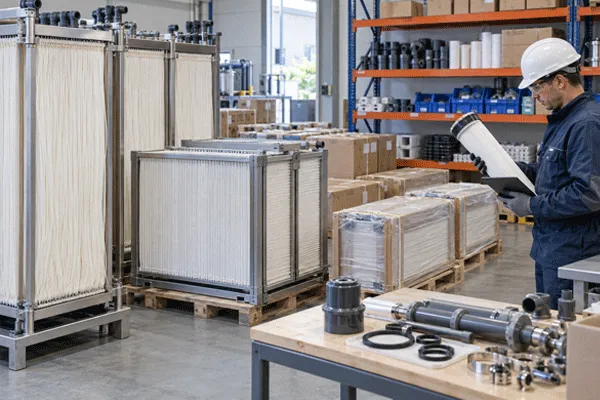
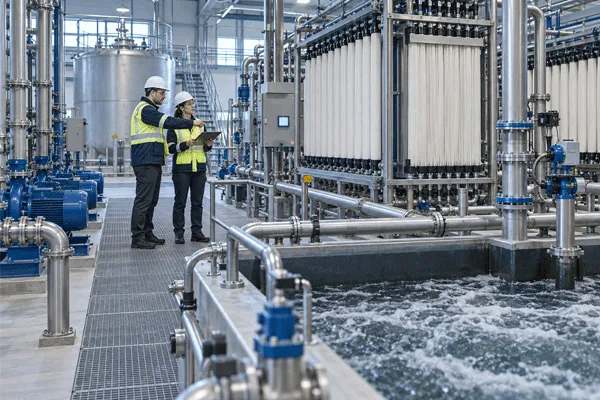
Un MBR, ovvero un bioreattore a membrana, è un processo di trattamento delle acque reflue che combina un reattore biologico a fanghi attivi con una barriera fisica a membrana. I microrganismi degradano gli inquinanti biodegradabili, mentre la membrana dell’MBR separa l’acqua trattata dai fanghi attivi, dai batteri e dai solidi sospesi.
L'osmosi inversa (RO) è un processo a membrana basato sulla pressione. Consiste nel far passare l'acqua attraverso una membrana semipermeabile a pori molto fini, trattenendo così gran parte dei sali disciolti, degli ioni, dei metalli e di altri piccoli contaminanti. RO viene impiegato nella produzione di acqua pura, nella desalinizzazione, nei sistemi di acqua di processo, nella preparazione dell’acqua di alimentazione delle caldaie, nella produzione di componenti elettronici e nel riutilizzo avanzato delle acque reflue.
Le due tecnologie di trattamento affrontano quindi problemi diversi relativi alla qualità dell'acqua:
| Tecnologia |
Funzione principale del trattamento |
| MBR |
Degradazione biologica e separazione solido-liquido |
| RO |
Rimozione dei sali disciolti e dei piccoli contaminanti disciolti |
| MBR + RO |
Trattamento avanzato delle acque reflue e riutilizzo di acqua di alta qualità |
L'Agenzia per la protezione dell'ambiente degli Stati Uniti (EPA) descrive gli impianti MBR come sistemi che combinano un reattore biologico a crescita sospesa con la rimozione dei solidi tramite filtrazione a membrana. L'EPA sottolinea inoltre che gli impianti MBR sono in grado di garantire un elevato grado di rimozione della domanda biochimica di ossigeno, dei solidi sospesi, dei batteri e, se progettati correttamente, dei nutrienti.
Come funziona un bioreattore a membrana?
Un tipico impianto MBR riceve le acque reflue vagliate in un bacino biologico. Viene immessa aria per favorire l'attività dei microrganismi che consumano gli inquinanti organici. A seconda degli obiettivi di trattamento, l'impianto può comprendere zone anaerobiche, anossiche e aerobiche per il controllo dell'azoto e del fosforo.
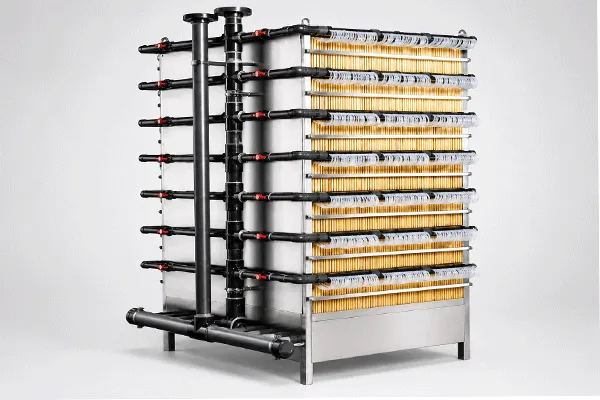
Il liquame misto entra quindi in contatto con un modulo a membrana a fibra cava o a foglio piatto. L'acqua passa attraverso i pori della membrana, mentre i fanghi attivi e i solidi sospesi rimangono nella vasca biologica. Il permeato raccolto costituisce l'effluente dell'impianto MBR.
Un processo MBR semplificato si presenta così:
Acque reflue grezze
 ↓
Vagliatura e equalizzazione
 ↓
Vasca di trattamento biologico
 ↓
Aerazione e separazione a membrana
 ↓
Disinfezione o trattamento supplementare
 ↓
Acqua trattata o riutilizzo dell'acqua
La membrana fisica sostituisce il chiarificatore secondario utilizzato in un impianto convenzionale a fanghi attivi. Ciò consente al processo MBR di trattenere la biomassa indipendentemente dalla portata dell'acqua trattata e spesso di funzionare con una concentrazione del liquido misto più elevata.
Il risultato è un impianto dalle dimensioni compatte che garantisce una separazione solido-liquido stabile. Tuttavia, il processo di trattamento biologico richiede comunque un carico adeguato, un’aerazione corretta, un’età ottimale dei fanghi, una temperatura adeguata, un pH corretto, un equilibrio dei nutrienti e un pretrattamento adeguato.
Un MBR non è semplicemente un serbatoio di filtrazione. Si tratta di un sistema di trattamento biologico controllato che si avvale della filtrazione a membrana.
Come funziona l'osmosi inversa?
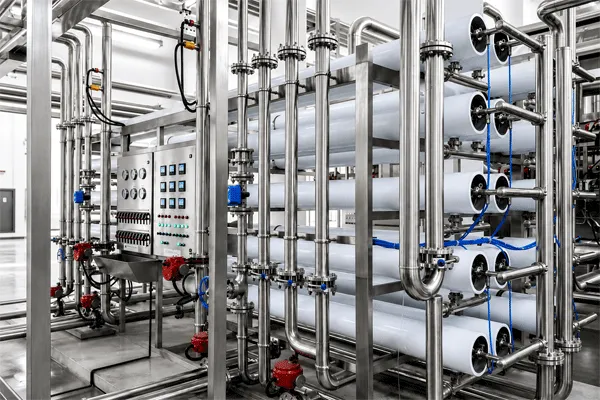
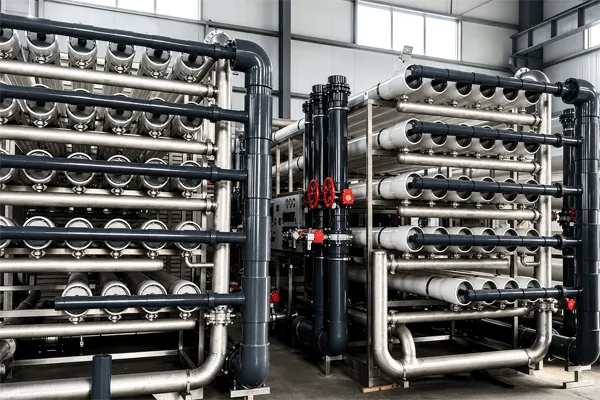
L'osmosi inversa utilizza una pompa per generare pressione sul lato dell'acqua di alimentazione di un Membrana RO. Le molecole d'acqua attraversano la membrana semipermeabile, mentre gran parte delle sostanze disciolte rimane in un flusso di scarto concentrato.
Il processo genera due flussi:
- Permeato: l'acqua purificata che passa attraverso la membrana
- Concentrato: il flusso di scarti contenente sali concentrati e contaminanti
L'EPA spiega che la pressione dell'osmosi inversa spinge l'acqua attraverso una membrana che blocca le sostanze contaminanti, consentendo al contempo il passaggio dell'acqua trattata. A differenza della filtrazione ordinaria, il processo genera anche un flusso di scarto concentrato che deve essere gestito.
Un impianto RO standard può comprendere:
- Serbatoio dell'acqua di alimentazione
- Filtrazione a cartuccia o multimediale
- Dosaggio di sostanze chimiche
- Pompa ad alta pressione
- Serbatoi a pressione per membrane RO
- Serbatoio del permeato
- Sistema di scarico o recupero del concentrato
- Apparecchiature per la pulizia in loco
- Controllo tramite PLC o SCADA
L'osmosi inversa (RO) non si avvale di microrganismi. Si tratta di un processo di separazione fisica. Inoltre, di norma non costituisce la prima fase di trattamento delle acque reflue non trattate o delle acque reflue industriali fortemente inquinate.
Le particelle in sospensione, l’olio, i solidi biologici e gli elevati carichi organici possono intasare rapidamente una membrana RO. Per questo motivo, il sistema RO richiede solitamente un pretrattamento efficace.
MBR vs RO: qual è la differenza nel trattamento delle acque reflue?
Qual è la differenza principale tra MBR e RO?
La differenza principale tra MBR e RO risiede in ciò che ciascun processo rimuove e nel modo in cui lo rimuove.
AL'MBR combina il trattamento biologico mediante filtrazione a membrana. I microrganismi consumano gli inquinanti organici biodegradabili, mentre la membrana trattiene la biomassa e i solidi.
L'osmosi inversa (RO) non degrada biologicamente le sostanze inquinanti. Al contrario, l'acqua viene fatta passare, sotto pressione, attraverso una membrana a pori molto fini che trattiene molte sostanze disciolte.
Tabella comparativa tra MBR e RO
| Punto di confronto |
MBR |
RO |
| Nome completo |
Bioreattore a membrana |
Osmosi inversa |
| Scopo principale |
Trattamento biologico delle acque reflue |
Depurazione e desalinizzazione dell'acqua |
| Meccanismo di azionamento |
Attività biologica abbinata alla filtrazione o all'aspirazione |
Separazione a membrana ad alta pressione |
| Alimentazione tipica |
Acque reflue urbane o industriali |
Acqua pretrattata o effluente MBR |
| Rimuove i solidi in sospensione |
In modo molto efficace |
Il feed dovrebbe già contenerne pochissimi |
| Rimuove le sostanze organiche biodegradabili |
Sì, tramite trattamento biologico |
Alcuni vengono scartati, ma non sottoposti a trattamento biologico |
| Rimuove i sali disciolti |
Limitato |
Sì |
| Elimina gli ioni di durezza |
Limitato |
Sì |
| Produce fango biologico |
Sì |
Assenza di fanghi biologici |
| Produce concentrato |
Di solito non si tratta di un concentrato salino |
Sì |
| Tipo di membrana comune |
Microfiltrazione o ultrafiltrazione |
Membrana RO ad alta densità |
| Pressione di esercizio |
Relativamente basso |
Più alto |
| Posizione comune |
Fase principale del trattamento delle acque reflue |
Fase di lucidatura avanzata |
| Principale rischio di incrostazioni |
Biomassa e deposizione organica |
Depositi, sostanze organiche, colloidi e bioincrostazioni |
I sistemi non sono quindi sostituti diretti. Chiedersi se l’MBR o la RO siano “migliori” equivale a chiedersi se sia migliore un reattore biologico o un impianto di desalinizzazione. La risposta corretta dipende dall’acqua in entrata e dalla qualità richiesta dell’acqua in uscita.
Quali contaminanti possono essere rimossi con i sistemi MBR e RO?
Un sistema MBR è estremamente efficace nella rimozione di solidi sospesi, biomassa, torbidità e materia organica biodegradabile. Con un adeguato progetto biologico, è in grado di rimuovere anche azoto e fosforo.
La barriera a membrana contribuisce a impedire che i fanghi attivi e molti microrganismi vengano espulsi insieme all'acqua trattata. Ciò conferisce generalmente all'effluente dell'impianto MBR una torbidità inferiore e una qualità dei solidi sospesi più stabile rispetto all'effluente proveniente da un chiarificatore secondario convenzionale.
Tuttavia, una membrana MBR non rimuove in modo efficiente tutti i sali disciolti. Nell'acqua possono rimanere sodio, cloruro, conducibilità, durezza e molte altre piccole sostanze disciolte.
Il RO si concentra proprio su questi contaminanti disciolti di dimensioni più piccole.
| Parametro di qualità dell'acqua |
Prestazioni MBR |
Prestazioni RO |
| Solidi sospesi |
Rimozione molto efficace |
Deve essere ridotto al minimo prima della RO |
| Torbidità |
Riduzione molto marcata |
Ulteriore lucidatura |
| Sostanze organiche biodegradabili |
Rimozione biologica |
Rifiuto parziale dei composti rimanenti |
| Batteri |
Forte ritenzione fisica |
Barriera aggiuntiva |
| Sali disciolti |
Rimozione limitata |
Rimozione completa |
| Conduttività |
Di solito una riduzione minima |
Riduzione significativa |
| Durezza |
Limitato |
Forte riduzione |
| Ioni di metalli pesanti |
Dipende dalla forma e dal pretrattamento |
Spesso un forte rifiuto |
| Sostanze nutritive |
Rimozione biologica, se progettata |
Ulteriore rimozione degli ioni disciolti |
| Colore |
Variabile |
Spesso migliora dopo il pretrattamento |
| Olio e grasso |
Deve essere controllato |
Dannoso per la membrana RO |
La scheda informativa dell'EPA sull'MBR afferma che le membrane sono efficaci nel trattenere il materiale solido, ma che i componenti disciolti nelle acque reflue potrebbero richiedere ulteriori fasi di trattamento. Questo è uno dei motivi principali per cui, nei sistemi avanzati di riutilizzo dell'acqua, si installa un sistema di osmosi inversa (RO) a valle dell'MBR.
L'MBR è migliore del sistema convenzionale a fanghi attivi?
Un processo convenzionale a fanghi attivi prevede l'utilizzo di un reattore biologico seguito da un bacino di decantazione secondario. Il funzionamento del bacino di decantazione dipende dalla formazione di fiocchi di fango che si depositano correttamente.
Un MBR utilizza una membrana invece di affidarsi esclusivamente alla sedimentazione per gravità. Una scarsa sedimentabilità dei fanghi ha quindi un effetto meno diretto sui solidi sospesi nell'effluente.
Tra i principali vantaggi dei bioreattori a membrana si possono citare:
- Ingombro ridotto dell'impianto
- Qualità delle acque reflue elevata e stabile
- Contenuto di solidi in sospensione molto basso
- Migliore controllo della ritenzione della biomassa
- Maggiore concentrazione del liquido misto
- Preparazione più semplice per il riutilizzo delle acque reflue
- Espansione modulare della membrana
- Eliminazione di un chiarificatore secondario convenzionale
- Minore sensibilità ai problemi di sedimentazione dei fanghi
Questi vantaggi rendono una soluzione MBR particolarmente indicata per hotel, parchi industriali, strutture comunali, stabilimenti alimentari, impianti farmaceutici, aziende agricole, impianti containerizzati e progetti con disponibilità di terreno limitata.
Tuttavia, il trattamento convenzionale con fanghi attivi può comunque rivelarsi adeguato qualora si disponga di terreno, i requisiti di scarico siano moderati, gli operatori siano esperti e i budget a disposizione per il progetto siano limitati.
L'MBR comporta inoltre ulteriori responsabilità:
- Una selezione accurata è fondamentale.
- Il lavaggio ad aria con membrana comporta un consumo di energia.
- È necessario gestire la pulizia delle membrane.
- Le portate di picco richiedono una progettazione accurata.
- La sostituzione della membrana deve essere inclusa nella pianificazione del ciclo di vita.
- Olio, fibre, capelli e detriti possono causare gravi problemi di funzionamento.
L'EPA sottolinea che i sistemi MBR richiedono un pretrattamento, il controllo dell'incrostazione, la pulizia delle membrane, il lavaggio con aria e l'eventuale sostituzione delle membrane. Raccomanda inoltre di prestare particolare attenzione alla progettazione in vista delle portate idrauliche di picco.
MBR vs RO: qual è la differenza nel trattamento delle acque reflue?
Quando è opportuno combinare i sistemi MBR e RO?
Spesso si opta per un impianto MBR e RO quando un progetto prevede la conversione delle acque reflue in acqua di processo riutilizzabile.
L'MBR rimuove innanzitutto gli inquinanti biodegradabili, la biomassa e i solidi sospesi. Il sistema RO rimuove poi i sali disciolti e gli altri contaminanti disciolti rimanenti. Insieme, questi due sistemi costituiscono un processo di trattamento multistadio.
Un tipico impianto di riciclaggio può seguire questa sequenza:
Acque reflue grezze
 ↓
Vagliatura e equalizzazione
 ↓
Pretrattamento per la rimozione di oli, grassi o sostanze chimiche
 ↓
Trattamento biologico MBR
 ↓
Serbatoio del permeato MBR
 ↓
Pretrattamento RO e dosaggio di sostanze chimiche
 ↓
Osmosi inversa
 ↓
UV, EDI o rifinitura finale
 ↓
Riutilizzo industriale o acqua ad alta purezza
I sistemi MBR e RO possono essere combinati per:
- Riutilizzo delle acque reflue del settore tessile e della tintoria
- Progetti di riciclaggio nei parchi industriali
- Impianti per l'elettronica e i semiconduttori
- Trattamento dell'acqua di alimentazione della caldaia
- Reintegro della torre di raffreddamento
- Recupero dell'acqua di processo nel settore alimentare e delle bevande
- Riutilizzo di hotel ed edifici commerciali
- Ricovero delle acque reflue comunali
- Pretrattamento a scarico zero di liquidi
- Riutilizzo agricolo e paesaggistico
- Acqua di risciacquo di processo
- Alimentazione del sistema di acqua ultrapura
Non si dovrebbe installare un impianto a osmosi inversa (RO) solo perché l’idea di “acqua migliore” sembra allettante. Gli ingegneri devono innanzitutto definire i valori di conduttività, solidi disciolti totali, durezza, silice, boro, materia organica, agenti patogeni e lo standard finale di riutilizzo.
Se l'utilizzo finale è l'irrigazione dei giardini o lo scarico dei WC, potrebbe essere sufficiente un effluente MBR di alta qualità seguito da disinfezione. Se l'acqua è destinata ad alimentare caldaie, processi di produzione di precisione o un modulo EDI, potrebbe essere necessaria l'osmosi inversa (RO).
Quali sono le cause dell'intasamento delle membrane nei sistemi MBR e RO?
Entrambi i sistemi possono incrostarsi, ma i meccanismi di incrostazione sono diversi.
In un MBR, intasamento della membrana spesso proviene da biomassa, sostanze polimeriche extracellulari, colloidi, fibre, grassi, olio, depositi inorganici e solidi aderenti alla superficie della membrana o intrappolati nei suoi pori.
Tra le misure di controllo più comuni per le incrostazioni nell'MBR figurano:
- Vagliatura fine
- Rimozione di grasso e olio
- Carico biologico stabile
- Lavaggio ad aria
- Cicli di rilassamento
- Lavaggio a controcorrente
- Pulizia di manutenzione
- Pulizia chimica
- Flusso corretto della membrana
- Controllo delle proprietà del liquido misto
Un sistema MBR sommerso utilizza solitamente aria al di sotto del modulo a membrana. Le bolle che salgono contribuiscono a pulire la superficie della membrana e a ridurre l'accumulo di solidi. Questa aerazione incide inoltre sul consumo energetico di un sistema MBR.
Le incrostazioni nei sistemi RO possono includere:
- Depositi minerali
- Incrostazioni organiche
- Incrostazioni colloidali
- Precipitazione dei metalli
- Deposizione di silice
- Bioincrostazione
- Danno ossidativo alla membrana
- Contaminazione da petrolio
La protezione RO può richiedere la regolazione del pH, il dosaggio di antiscalanti, la filtrazione a cartuccia, il carbone attivo, l'ultrafiltrazione, l'addolcimento, la declorazione o altri trattamenti preliminari.
Una lezione fondamentale di ingegneria è semplice:
La pulizia delle membrane dovrebbe essere a supporto di una progettazione adeguata, non servire a compensare un pretrattamento inadeguato.
Una pulizia troppo frequente può ridurre i tempi di produzione, aumentare il consumo di prodotti chimici, ridurre la durata delle membrane e far lievitare i costi operativi. L'analisi dell'acqua di alimentazione e i test pilota sono spesso utili nel caso di flussi di acque reflue particolarmente complessi.
Qual è il confronto tra consumo energetico e costi di esercizio?
Il consumo energetico dell'impianto MBR deriva principalmente dall'aerazione biologica, dal lavaggio delle membrane con aria, dal ricircolo interno, dall'estrazione del permeato, dal trattamento dei fanghi e dal pompaggio.
Il consumo energetico del sistema RO deriva principalmente dalla pressione necessaria per spingere l'acqua attraverso la membrana. La pressione richiesta aumenta in base alla salinità dell'acqua di alimentazione, all'obiettivo di recupero, alle condizioni della membrana e alla progettazione dell'impianto.
Di seguito è riportato un semplice confronto:
| Fattore di costo |
MBR |
RO |
| Aerazione biologica |
Costo principale |
Non applicabile |
| Lavaggio ad aria con membrana |
Importante |
Non viene normalmente utilizzato |
| Pompaggio ad alta pressione |
Basso o moderato |
Costo principale |
| Prodotti chimici per la pulizia |
Obbligatorio |
Obbligatorio |
| Smaltimento biologico dei fanghi |
Obbligatorio |
Non prodotto direttamente da RO |
| Smaltimento dei concentrati |
Limitato nel normale funzionamento dell'MBR |
Considerazioni fondamentali |
| Sostituzione della membrana |
Da effettuare periodicamente |
Da effettuare periodicamente |
| Pretrattamento |
Screening e trattamento specifico per ciascun processo |
È fondamentale un pretrattamento di alta qualità |
| Competenza dell'operatore |
Conoscenze di biologia e delle membrane |
Conoscenze in materia di chimica e membrane |
Nessuno dei due sistemi presenta un costo di esercizio unico e universale. Il costo dipende dalle dimensioni dell’impianto, dalla qualità dell’affluente, dalla variazione della portata, dai requisiti dell’effluente, dal prezzo dell’energia elettrica, dai prodotti chimici, dal tasso di recupero, dalla superficie delle membrane, dal grado di automazione e dallo smaltimento del concentrato.
Gli ingegneri dovrebbero confrontare i costi dell'intero ciclo di vita piuttosto che limitarsi al solo prezzo delle apparecchiature. Un sistema più economico che si intasa ogni settimana può rivelarsi molto costoso in breve tempo.
Come dovrebbero gli ingegneri scegliere il processo di trattamento più adatto?
Un corretto processo di trattamento delle acque parte dai dati di laboratorio e da un obiettivo chiaro per l'acqua in uscita.
Come minimo, gli ingegneri dovrebbero verificare:
- Portata giornaliera e oraria
- Flusso di picco
- COD e BOD
- Solidi sospesi
- Olio e grasso
- Ammoniaca e azoto totale
- Fosforo totale
- Conduttività e TDS
- Durezza e alcalinità
- Cloruro e solfato
- Silice
- Metalli pesanti
- Temperatura e pH
- Composti tossici o inibitori
- Limiti obbligatori di scarico o di riutilizzo
Un approccio pratico alla selezione consiste nel:
Scegliere MBR quando:
- Per “acqua grezza” si intendono le acque reflue o le acque di scarico biodegradabili.
- Il progetto richiede un trattamento biologico.
- Il tenore di solidi sospesi deve essere molto basso.
- Lo spazio disponibile sul sito è limitato.
- È importante che l'effluente sia stabile.
- L'acqua può essere riutilizzata dopo la disinfezione o il trattamento di rifinitura.
Scegliere il sistema RO quando:
- È necessario ridurre la quantità di sali disciolti.
- La conduttività o la durezza è troppo elevata.
- È necessaria acqua di processo ad elevata purezza.
- L'acqua di alimentazione è già stata sottoposta a un pretrattamento efficace.
- Il concentrato può essere maneggiato in tutta sicurezza.
Scegliere MBR seguito da RO quando:
- Le acque reflue devono essere recuperate per uso industriale.
- È necessario eliminare sia gli inquinanti organici che i sali disciolti.
- Il progetto richiede un trattamento avanzato delle acque reflue.
- È importante che la qualità dell'acqua di alimentazione del sistema RO sia costante.
- Il riutilizzo e il riciclaggio dell'acqua sono obiettivi fondamentali del progetto.
Cosa dovrebbero specificare gli appaltatori EPC prima di richiedere un preventivo?
Una richiesta di preventivo efficace dovrebbe includere più della semplice portata richiesta.
| Informazioni sul progetto |
Esempio |
| Fonte delle acque reflue |
Fabbrica di tintura tessile |
| Portata media |
1.000 m³ al giorno |
| Flusso di picco |
60 m³/ora |
| COD in afflusso |
Dati di laboratorio richiesti |
| Solidi sospesi |
Dati di laboratorio richiesti |
| Conduttività |
Dati di laboratorio richiesti |
| Presa necessaria |
Riutilizzo dell'acqua di processo |
| Orari di apertura |
24 ore al giorno |
| Spazio disponibile |
Lunghezza × larghezza × altezza |
| Tipo di installazione |
Per uso civile, montato su skid o in container |
| Automazione |
PLC e SCADA |
| Alimentazione elettrica |
Tensione, fase e frequenza |
| Clima |
Temperatura ambiente e dell'acqua |
| Limiti di scarico |
Requisiti normativi locali |
| Documentazione |
PFD, P&ID, disegni generali (GA), manuali e certificati |
| Servizi |
Istruzioni per l'installazione e la messa in servizio |
Nel caso di impianti complessi di trattamento delle acque reflue industriali, un solo campione d’acqua raramente è sufficiente. La qualità delle acque reflue può variare a seconda del turno, del lotto di produzione, della stagione o del ciclo di pulizia.
Consigliamo spesso di consultare:
- Diversi recenti rapporti di laboratorio
- Piani di produzione
- L'uso di sostanze chimiche in fabbrica
- Prestazioni del trattamento attuale
- Variazione storica della portata
- Punti di riutilizzo richiesti
- Capacità dell'operatore
- Modalità disponibili per lo smaltimento dei concentrati
In qualità di azienda produttrice specializzata in ingegneria per il trattamento dell'acqua e delle acque reflue, forniamo membrane MBR a fibra cava, membrane UF a fibra cava, membrane MBR a foglio piatto, membrane RO, moduli EDI, piccoli impianti RO, impianti per acqua pura, impianti di trattamento delle acque reflue e sistemi integrati di filtrazione a membrana.
Forniamo inoltre soluzioni personalizzate per il trattamento EPC, impianti containerizzati, apparecchiature montate su skid, automazione PLC e SCADA, documentazione tecnica, messa in servizio, ricambi e fornitura a lungo termine di membrane.
Caso di studio: riutilizzo delle acque reflue industriali con MBR e RO
Si consideri uno stabilimento produttivo che intende ridurre il consumo di acqua dolce. Il suo attuale sistema di trattamento convenzionale produce acqua conforme ai requisiti minimi di scarico, ma l’effluente presenta ancora una torbidità instabile, sali disciolti e un contenuto organico variabile.
Convogliare quest'acqua direttamente all'impianto di osmosi inversa (RO) provoca frequenti intasamenti della membrana. I filtri a cartuccia si intasano rapidamente. La pulizia diventa più frequente e la produzione dell'impianto RO diminuisce.
Una soluzione terapeutica più efficace potrebbe includere:
- Equalizzazione
- controllo del pH
- Pretrattamento chimico, se necessario
- Trattamento biologico con filtrazione a membrana
- Stoccaggio del permeato MBR
- Pretrattamento RO
- Osmosi inversa
- Disinfezione finale o trattamento di rifinitura EDI
L'MBR fornisce acqua di alimentazione stabile e a bassa torbidità. Il sistema RO riduce poi i sali disciolti. L'impianto può riutilizzare l'acqua in uscita per il lavaggio, il raffreddamento, le attività di supporto alla produzione o altri usi approvati.
La lezione da trarre è importante: l’osmosi inversa (RO) funziona al meglio quando è protetta dal sistema di trattamento a monte. L’MBR può costituire un’efficace barriera biologica e fisica, ma la progettazione complessiva deve comunque tenere conto dell’incrostazione, delle sostanze organiche residue, della silice, della durezza e dello smaltimento del concentrato.
Domande frequenti
L'MBR è in grado di rimuovere i sali disciolti?
Non in modo efficace. Un sistema MBR rimuove la materia organica biodegradabile, i solidi sospesi, la biomassa e molti microrganismi. La maggior parte dei sali disciolti attraversa la membrana MBR. Quando è necessario ridurre la conduttività o il TDS, è necessario ricorrere all’osmosi inversa (RO) o a un altro processo di desalinizzazione.
Il sistema RO può trattare direttamente le acque reflue non trattate?
Normalmente non dovrebbe essere utilizzata direttamente sulle acque reflue non trattate. I solidi in sospensione, l’olio, la materia organica, i microrganismi e i detriti possono intasare rapidamente una membrana RO. Le acque reflue non trattate devono prima essere sottoposte a un adeguato trattamento fisico, chimico e biologico.
L'effluente dell'MBR è idoneo come acqua di alimentazione per l'osmosi inversa?
Può rappresentare un ottimo punto di partenza poiché, di norma, presenta livelli molto bassi di solidi sospesi e torbidità. Tuttavia, i tecnici devono comunque verificare la presenza di sostanze organiche disciolte, la durezza, la silice, i metalli, la temperatura, il pH, il potenziale di formazione di incrostazioni e l’attività biologica.
L'MBR è più costoso rispetto al sistema convenzionale a fanghi attivi?
I costi delle apparecchiature MBR e quelli energetici possono essere più elevati, ma questo processo consente di ridurre il fabbisogno di terreno, eliminare i chiarificatori secondari, migliorare la qualità dell’effluente e semplificare il riutilizzo dell’acqua. La scelta migliore dipende dal costo del ciclo di vita e dagli obiettivi del progetto.
Un MBR richiede la pulizia della membrana?
Sì. Il funzionamento dell’MBR comprende il lavaggio ad aria, il periodo di riposo, il controlavaggio (ove applicabile), la pulizia di manutenzione e la pulizia periodica di recupero. La frequenza delle operazioni di pulizia dipende dalla qualità delle acque reflue, dalla portata, dal pretrattamento e dal controllo operativo.
Che fine fa il concentrato dell'impianto di osmosi inversa?
Il concentrato deve essere scaricato, trattato, evaporato, riciclato o gestito in conformità alle normative locali e alle condizioni del sito. La gestione del concentrato dovrebbe essere presa in considerazione in fase di progettazione iniziale, non dopo l’installazione dell’impianto di osmosi inversa.
Punti chiave da ricordare
- L'MBR e l'osmosi inversa (RO) svolgono funzioni di trattamento diverse.
- Un impianto MBR combina il trattamento biologico con la filtrazione a membrana.
- L'osmosi inversa (RO) sfrutta la pressione per rimuovere i sali disciolti e molti piccoli contaminanti.
- L'MBR è adatto al trattamento delle acque reflue urbane e industriali.
- L'osmosi inversa (RO) è adatta alla desalinizzazione e alla produzione di acqua ad elevata purezza.
- Una membrana MBR non garantisce una riduzione significativa del TDS o della conduttività.
- Normalmente, le acque reflue non trattate non dovrebbero essere convogliate direttamente in un impianto di osmosi inversa.
- Il sistema MBR seguito dall'osmosi inversa (RO) rappresenta una soluzione efficace per il riutilizzo avanzato delle acque reflue.
- L'intasamento dell'MBR è spesso correlato alla presenza di biomassa, solidi, olio e materia organica.
- L'intasamento dei sistemi RO è spesso correlato alla formazione di incrostazioni, alla presenza di colloidi, sostanze organiche e bioincrostazioni.
- Il pretrattamento, l'automazione, la pulizia delle membrane e la formazione degli operatori influiscono sulle prestazioni a lungo termine.
- I contraenti EPC devono fornire i risultati delle analisi dell'acqua, i dati relativi alla portata, gli standard di scarico, le condizioni del sito e i requisiti di automazione prima di richiedere un'offerta.
- Il miglior sistema di trattamento si basa sul bilancio idrico complessivo e sui costi dell'intero ciclo di vita, non solo sul prezzo delle membrane.
State pianificando un progetto di riutilizzo delle acque reflue con tecnologia MBR, RO o integrata? Inviateci i dati relativi all’analisi dell’affluente, alla portata di progetto, alla portata di picco, alla qualità richiesta dell’acqua trattata, allo spazio disponibile, alle norme di scarico o di riutilizzo, all’alimentazione elettrica e all’ubicazione del progetto. Il nostro team di ingegneri potrà aiutarvi a sviluppare una soluzione personalizzata di trattamento a membrana, la configurazione delle apparecchiature, il flusso di processo e un’offerta tecnica.











 11:23
11:23