I progetti relativi alle acque reflue falliscono quando la membrana è difficile da pulire, soggetta a intasamento o non adeguata alla qualità effettiva dell’acqua. Ciò comporta un effluente instabile, operatori insoddisfatti e costi aggiuntivi. Un sistema a membrana piana ben progettato contribuisce a risolvere questi problemi grazie alla sua struttura semplice e alla filtrazione affidabile.
Una membrana a fogli piatti è una membrana realizzata sotto forma di fogli piatti e installata all'interno di un modulo a membrana per la filtrazione dell'acqua o delle acque reflue. Nei sistemi MBR, le membrane a fogli piatti separano l'acqua trattata dai fanghi, dai batteri e dai solidi sospesi. Sono ampiamente utilizzate nel trattamento delle acque reflue industriali, nel trattamento delle acque reflue urbane, nel riutilizzo dell'acqua e negli impianti di trattamento compatti.
Struttura dell'articolo
- Che cos’è una membrana a foglio piatto?
- Come funziona il principio di funzionamento della filtrazione a membrana a foglio piatto?
- Qual è il principio di funzionamento dell'MBR a foglio piatto?
- Quali materiali vengono utilizzati nei prodotti a membrana in fogli piani?
- Quali sono i vantaggi delle membrane a foglio piatto?
- Membrana a foglio piatto o membrana a fibra cava: quale è la migliore?
- Membrana piana vs membrana ceramica e membrana tubolare
- In quali ambiti del trattamento delle acque vengono utilizzati i moduli a membrana a foglio piatto?
- In che modo gli appaltatori EPC dovrebbero scegliere una membrana MBR in foglio piatto?
- In che modo il funzionamento, la pulizia e la manutenzione influiscono sulla durata delle membrane?
- Domande frequenti sui sistemi a membrana a foglio piatto e a membrana MBR
Che cos’è una membrana a foglio piatto?
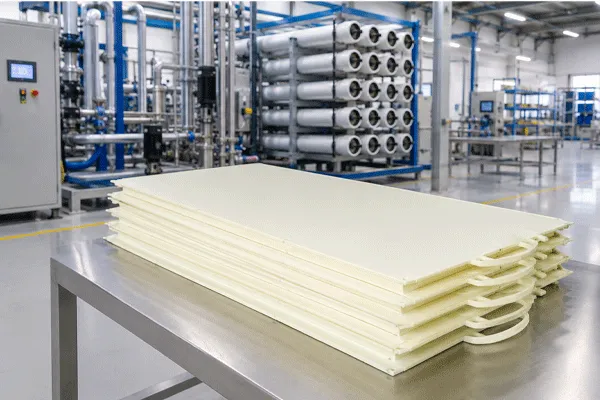
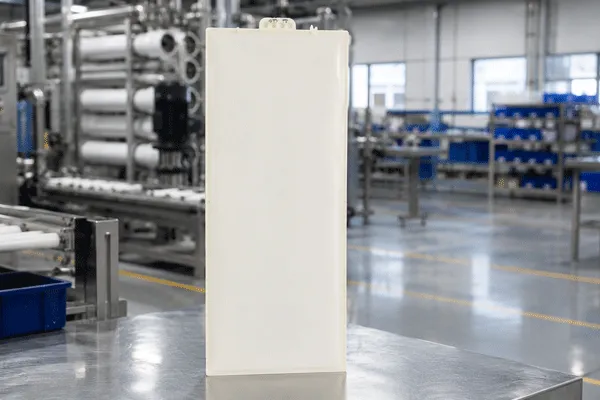
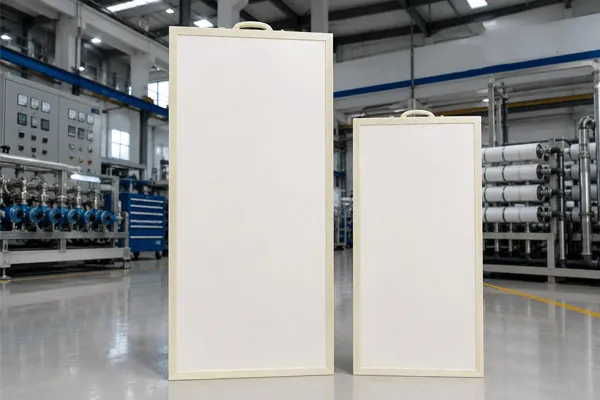
A membrana a foglio piatto è una membrana di filtrazione sottile realizzata sotto forma di pannello piatto o foglio piatto. La superficie della membrana presenta pori minuscoli che consentono il passaggio dell'acqua pulita, trattenendo al contempo fanghi, particelle, batteri e altri solidi. In parole semplici, funziona come un setaccio molto fine, ma con un livello di controllo molto più elevato.
I fogli piatti vengono solitamente installati all’interno di un telaio per formare un modulo a membrana. È possibile sovrapporre più fogli di membrana per aumentare la superficie della membrana e la capacità di trattamento. Nel trattamento delle acque reflue, questa struttura rende più agevoli l’ispezione, la pulizia e la sostituzione rispetto ad alcuni tipi di membrane più compatte.
Per gli acquirenti del settore ingegneristico, la membrana in foglio piatto non è solo un prodotto. È parte integrante di un sistema a membrana completo. Il sistema può comprendere una vasca di aerazione, un modulo a membrana, una pompa di permeato, un soffiante, una vasca di lavaggio, un quadro di controllo PLC, valvole, tubazioni e strumenti di monitoraggio in linea. In qualità di produttori di membrane e fornitori di sistemi orientati all’ingegneria, progettiamo insieme la membrana e l’intero processo, poiché la qualità dell’acqua dipende dall’intero sistema.
Che cos’è una membrana a foglio piatto? Membrana MBR a foglio piatto, progettazione dei moduli e guida alla filtrazione
Come funziona il principio di funzionamento della filtrazione a membrana a foglio piatto?
Il principio di funzionamento della filtrazione a membrana a foglio piatto si basa sulla differenza di pressione. Le acque reflue scorrono lungo la superficie della membrana. L'acqua pulita passa attraverso i pori della membrana, mentre i solidi in sospensione e i fanghi biologici rimangono sul lato di alimentazione.
In un Serbatoio MBR, dal fondo del modulo salgono delle bolle d'aria. Quest'aria contribuisce a mescolare i fanghi e riduce gli accumuli sulla superficie della membrana. La pompa di permeato aspira quindi l'acqua trattata attraverso la membrana. Ciò garantisce un processo di filtrazione costante quando il sistema è progettato correttamente.
Ecco la procedura da seguire:
| Passo |
Cosa succede |
Perché è importante |
| 1. Trattamento biologico |
I microrganismi degradano gli inquinanti organici |
Riduce il carico di COD, BOD e ammoniaca |
| 2. Filtrazione a membrana |
L'acqua passa attraverso i pori della membrana |
Separa i fanghi e i solidi in sospensione |
| 3. Raccolta del permeato |
L'acqua pulita entra nel tubo del permeato |
Produce un effluente stabile |
| 4. Lavaggio ad aria |
Le bolle puliscono la superficie della membrana |
Aiuta a ridurre l'accumulo di residui e incrostazioni |
| 5. Ciclo di pulizia |
La pulizia chimica o fisica ripristina il flusso |
Garantisce un funzionamento a lungo termine |
La filtrazione a membrana fa parte di un gruppo più ampio di processi di separazione. La microfiltrazione è in grado di rimuovere particelle in sospensione, cellule di lievito, batteri e altri materiali di dimensioni dell’ordine dei micron, mentre l’ultrafiltrazione opera a livelli di porosità inferiori. ScienceDirect descrive la microfiltrazione come un processo che utilizza filtri a membrana per trattenere le particelle, consentendo al contempo il passaggio del fluido.
Qual è il principio di funzionamento dell'MBR a foglio piatto?
Il principio di funzionamento dell'MBR a membrana piana è semplice: combina il trattamento biologico con la separazione a membrana. Il serbatoio biologico rimuove la materia organica disciolta. La membrana MBR separa quindi l'acqua trattata dai fanghi attivi. Il risultato è un effluente limpido senza la necessità di un chiarificatore secondario tradizionale.
Il bioreattore a membrana è ampiamente utilizzato nel trattamento delle acque e delle acque reflue poiché consente di ottenere un effluente di elevata qualità con un ingombro ridotto. L’EPA statunitense mette a disposizione una scheda informativa dedicata ai bioreattori a membrana, che ne illustra i vantaggi, l’applicabilità, le caratteristiche progettuali e gli aspetti da considerare nella progettazione degli impianti di trattamento delle acque reflue.
Nella nostra attività di progettazione, raccomandiamo spesso sistemi MBR a piastre piane per progetti in cui sono fondamentali la stabilità dell'effluente, un ingombro ridotto e una manutenzione semplice. Tra questi figurano alberghi, aziende agricole, stabilimenti alimentari, impianti tessili, parchi industriali, stazioni di depurazione comunali e impianti di trattamento containerizzati.
Quali materiali vengono utilizzati nei prodotti a membrana in fogli piani?
A membrana a foglio piatto È possibile utilizzare diversi tipi di materiali per le membrane, ma tra le scelte più comuni figurano il PVDF, il PES e altri materiali polimerici. Il PVDF è molto diffuso perché presenta una buona resistenza chimica, una buona robustezza e una lunga durata. Il PES può essere utilizzato anche per alcune membrane di ultrafiltrazione e per applicazioni nel trattamento delle acque.
Una membrana polimerica è flessibile e pratica per numerose applicazioni MBR. Le proprietà della membrana dipendono dalla dimensione dei pori, dalla porosità, dallo spessore, dalla resistenza superficiale, dalla tolleranza chimica e dal trattamento idrofilo. Questi fattori influenzano il flusso, il controllo delle incrostazioni, il recupero dopo la pulizia e la qualità finale dell'effluente.
In alcuni progetti è possibile che venga utilizzata una membrana ceramica anziché una membrana polimerica. I prodotti ceramici resistono meglio alle operazioni di pulizia aggressive e alle alte temperature, ma solitamente hanno un costo maggiore e richiedono un design diverso dei moduli. Una lastra piana in ceramica o una membrana ceramica piana può rivelarsi utile per le acque reflue industriali ad alta concentrazione, ma non è sempre la scelta migliore per i sistemi MBR standard di tipo municipale o commerciale.
Quali sono i vantaggi delle membrane in fogli piani?
I vantaggi del design a membrana piana sono facili da comprendere. La struttura è semplice. La superficie è visibile. Il modulo è facile da rimuovere. Spesso i fogli di membrana possono essere puliti o sostituiti uno per uno. Per molti operatori, ciò rende la manutenzione quotidiana meno stressante.
I vantaggi delle membrane a foglio piatto includono:
- Più facili da pulire rispetto alle fibre cave raggruppate in fasci densi in molte condizioni operative
- Elevata resistenza all'intasamento da fango quando il sistema di lavaggio ad aria è progettato correttamente
- Superficie della membrana liscia e trasparente per l'ispezione visiva
- Ottime prestazioni negli impianti MBR municipali e industriali
- Separazione stabile solido-liquido per il riutilizzo dell'acqua
- Telaio modulare semplice per sistemi in container o montati su skid
- Ciò non significa che i moduli a membrana a foglio piatto siano sempre la soluzione ideale. Nessuna membrana è perfetta. Qualità dell’acqua di alimentazione, concentrazione di MLSS, presenza di oli e grassi, durezza calcarea, pulizia
- Il metodo e la competenza degli operatori influiscono entrambi sulla durata della membrana. Una buona progettazione è fondamentale.
Nel trattamento delle acque, una membrana non è solo un filtro. È una promessa: l’acqua trattata dovrebbe rimanere stabile anche quando la qualità dell’acqua in entrata cambia.
Che cos’è una membrana a foglio piatto? Membrana MBR a foglio piatto, progettazione dei moduli e guida alla filtrazione
Membrana a foglio piatto vs membrana a fibra cava: quale è la migliore?
Una membrana a fibre cave è costituita da numerose piccole fibre a forma di tubicino. Le acque reflue scorrono all’esterno o all’interno delle fibre cave, mentre l’acqua pulita attraversa la parete della membrana. I sistemi a fibre cave offrono spesso un’elevata superficie membranosa per unità di volume, il che può rivelarsi utile in caso di spazio limitato.
Le membrane piatte funzionano in modo diverso. Utilizzano pannelli piatti aperti. Lo spazio tra le membrane consente alle bolle d’aria e al flusso dei fanghi di muoversi lungo la superficie della membrana. Ciò può facilitare la pulizia e ridurre il rischio di intasamento in presenza di acque reflue difficili da trattare. I termini “fibre cave” e “fibra cava” si riferiscono spesso alla stessa configurazione generale della membrana, con variazioni ortografiche a seconda della regione.
| Elemento di confronto |
Membrana a foglio piatto |
Membrana a fibra cava |
| Forma |
Pannelli piatti / lastre piatte |
Fibre cave a forma di tubo |
| Accesso per la pulizia |
Maggiore accessibilità visiva |
Più compatto ma più difficile da ispezionare |
| Area della membrana per unità |
Moderato |
Alto |
| Tolleranza alle incrostazioni |
Risultati positivi in molti casi di MBR |
Va bene, ma può aggrovigliarsi o intasarsi se non viene utilizzato correttamente |
| Sostituzione |
Basato su fogli o moduli |
Basato su pacchetti o moduli |
| Uso comune |
MBR, acque reflue industriali, riutilizzo dell'acqua |
MBR, pretrattamento UF, sistemi municipali |
Per gli appaltatori EPC, la scelta giusta dipende dalle caratteristiche dell’acqua in entrata, dall’ingombro, dal budget, dalle competenze del personale operativo, dall’accessibilità per la pulizia e dagli standard di scarico. Forniamo e progettiamo soluzioni MBR sia a membrane a fibra cava che a lamelle piatte, poiché non esiste un’unica configurazione adatta a tutti i progetti.
Membrana piana vs membrana ceramica e membrana tubolare
Le membrane piane, quelle ceramiche e quelle tubolari rientrano tutte nella tecnologia a membrana, ma risolvono problematiche diverse. Una membrana tubolare presenta un canale di flusso a forma di tubo. È in grado di trattare acque reflue con un contenuto di solidi più elevato e più viscose, ma spesso richiede una maggiore energia di pompaggio e più spazio.
Una membrana in ceramica offre un'elevata resistenza meccanica e un'ottima resistenza chimica. È adatta al trattamento di acque reflue ad alta temperatura o di flussi industriali difficili. Tuttavia, può presentare un costo iniziale più elevato rispetto alle membrane a foglio piatto in PVDF e PES.
Una membrana a foglio piatto si colloca a metà strada tra queste due opzioni. Offre una struttura semplice, un costo contenuto e una buona accessibilità per la manutenzione. Per molti prodotti a membrana MBR, in particolare nel trattamento delle acque reflue urbane, delle acque reflue del settore alimentare e delle bevande, degli hotel, delle aziende agricole e dei parchi industriali, le membrane a foglio piatto rappresentano una scelta equilibrata.
In quali ambiti del trattamento delle acque vengono utilizzati i moduli a membrana a foglio piatto?
I moduli a membrana a foglio piatto possono essere utilizzati in numerosi progetti di trattamento dell'acqua e delle acque reflue. Sono comunemente impiegati in Sistemi MBR, impianti di depurazione decentralizzati, impianti containerizzati, sistemi montati su skid e progetti di riutilizzo delle acque industriali.
Tra le applicazioni tipiche dei sistemi a membrana a foglio piatto figurano:
| Applicazione |
Perché le lenzuola piatte sono utili |
| Trattamento delle acque reflue comunali |
Effluente stabile e configurazione compatta |
| Trattamento delle acque reflue industriali |
Efficace separazione solido-liquido |
| Stabilimenti di produzione di alimenti e bevande |
Aiuta a trattare le acque reflue organiche |
| Fabbriche tessili e di tintoria |
Consente il riutilizzo previa adeguata preparazione preliminare |
| Alberghi e resort |
Ingombro ridotto e controllo degli odori |
| Aziende agricole e acque reflue rurali |
Struttura modulare e funzionamento semplice |
| Poli industriali |
Trattamento centralizzato con capacità flessibile |
| Progetti EPC nel settore del trattamento delle acque |
Facile integrazione con la progettazione civile e di processo |
Le membrane possono essere utilizzate nei sistemi di microfiltrazione, ultrafiltrazione, nanofiltrazione, osmosi inversa e MBR. La scheda informativa di Safe Water spiega che la filtrazione rimuove il particolato facendo passare l’acqua attraverso mezzi porosi e mette a confronto l’ultrafiltrazione, la nanofiltrazione e l’osmosi inversa in base alla dimensione dei pori e alla capacità di rimozione.
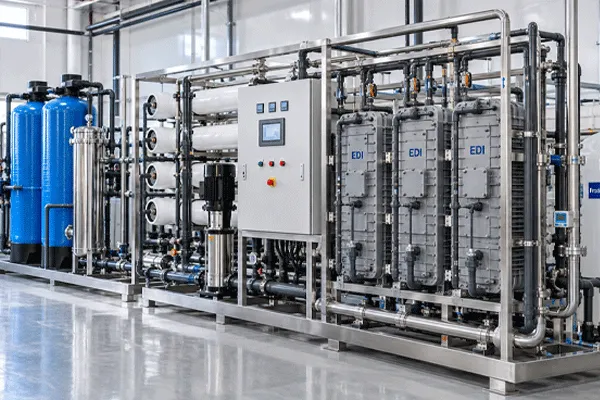
Per la produzione di acqua pura, l’MBR spesso non rappresenta la fase finale. Un sistema completo può includere pretrattamento, ultrafiltrazione, osmosi inversa, moduli EDI e rifinitura. Ecco perché forniamo soluzioni a membrana integrate, anziché vendere un singolo prodotto a membrana senza tener conto del contesto di processo.
In che modo gli appaltatori EPC dovrebbero scegliere una membrana MBR in foglio piatto?
Gli appaltatori EPC non si accontentano di un semplice opuscolo informativo sul prodotto. Hanno bisogno di dati progettuali chiari, prestazioni costanti e assistenza sia prima che dopo l’installazione. Nella scelta di una membrana MBR in foglio piatto, occorre partire dalla qualità dell’affluente e dagli obiettivi relativi all’effluente.
Tra i criteri di selezione più importanti figurano:
- COD, BOD, ammoniaca, oli, grassi e solidi sospesi nell'affluente
- Norme obbligatorie in materia di scarico o riutilizzo
- Capacità prevista in m³/giorno
- Dimensione dei pori della membrana e flusso operativo
- Intervallo MLSS nella vasca biologica
- Fabbisogno di lavaggio ad aria e scelta del ventilatore
- Frequenza di pulizia e compatibilità chimica
- Materiale del telaio del modulo e resistenza alla corrosione
- Esigenze di automazione PLC / SCADA
- Piano dei ricambi e assistenza alla messa in servizio
Un produttore serio di membrane MBR dovrebbe fornire disegni, calcoli di processo, schede tecniche, guide all’installazione, manuali operativi, procedure di pulizia e assistenza per i pezzi di ricambio. Per i progetti EPC complessi nel settore del trattamento delle acque, il fornitore dovrebbe inoltre fornire assistenza per la progettazione della disposizione, la progettazione idraulica, la logica di automazione e la messa in servizio in loco.
Che cos’è una membrana a foglio piatto? Membrana MBR a foglio piatto, progettazione dei moduli e guida alla filtrazione
In che modo il funzionamento, la pulizia e la manutenzione influiscono sulla durata delle membrane?
La durata delle membrane dipende dalla loro progettazione e dal loro funzionamento. Anche una membrana a foglio piatto ad alte prestazioni può guastarsi prematuramente se il pretrattamento è inadeguato, il flusso d’aria è insufficiente o gli operatori ignorano gli allarmi di pulizia. Ecco perché la messa in servizio e la formazione sono fondamentali.
Tra le cause più comuni di intasamento delle membrane figurano:
- Elevati livelli di olio e grasso
- Concentrazione di fango in eccesso
- Scarsa pulizia dell'aria
- Depositi inorganici
- Muco biologico
- Metodo di pulizia chimica errato
- pH o temperatura instabili
- Fibre sottili o capelli che entrano nella vasca MBR
La superficie della membrana deve essere sottoposta a un lavaggio costante con aria. Gli operatori devono monitorare la pressione transmembranaria, la portata, il flusso, la torbidità e il recupero dopo la pulizia. Quando la pressione aumenta troppo rapidamente, il sistema sta cercando di comunicare qualcosa. È importante prestare attenzione tempestivamente: è più economico che procedere a una sostituzione d’emergenza.
Che ruolo svolgono la microfiltrazione, l'ultrafiltrazione, la nanofiltrazione e l'osmosi inversa?
Tipi diversi di membrane risolvono diversi problemi legati all’acqua. Le membrane di microfiltrazione rimuovono le particelle più grandi e molti solidi sospesi. L'ultrafiltrazione e la microfiltrazione sono comunemente utilizzate nel pretrattamento e nel trattamento delle acque con sistemi MBR. La nanofiltrazione è in grado di rimuovere molte molecole organiche e ioni responsabili della durezza. L'osmosi inversa rimuove molti sali disciolti ed è ampiamente utilizzata per la produzione di acqua pura e per la desalinizzazione.
| Processo a membrana |
Ruolo tipico |
Utilizzo comune del progetto |
| Microfiltrazione |
Rimuove le particelle più grandi |
Pretrattamento, chiarificazione |
| Ultrafiltrazione |
Rimuove le particelle solide fini, i batteri e alcuni virus |
Pretrattamento RO, acqua di riutilizzo |
| Nanofiltrazione |
Rimuove i sali e le sostanze organiche selezionate |
Ammorbidimento, rimozione del colore |
| Osmosi inversa |
Rimuove i sali disciolti |
Acqua pura, riutilizzo, desalinizzazione |
| MBR |
Trattamento biologico + separazione a membrana |
Trattamento e riutilizzo delle acque reflue |
Safe Water sottolinea che i filtri a ultrafiltrazione hanno una porosità di circa 0,01 micron, quelli a nanofiltrazione di circa 0,001 micron e quelli a osmosi inversa di circa 0,0001 micron, mentre quelli a microfiltrazione hanno una porosità di circa 0,1 micron.
Ecco perché un unico sistema a membrana non può svolgere tutte le funzioni. In uno stabilimento farmaceutico, in un impianto di semiconduttori o in un’azienda produttrice di componenti elettronici, l’MBR può proteggere i processi a valle di osmosi inversa (RO) e elettrodialisi inversa (EDI). In un impianto di trattamento delle acque reflue urbane, l’MBR può costituire il principale processo biologico e di filtrazione. In un impianto di trattamento dell’acqua pura, invece, l’ultrafiltrazione (UF), l’osmosi inversa (RO) e l’elettrodialisi inversa (EDI) possono svolgere il ruolo principale.
Caso di studio: come un sistema MBR a foglio piatto contribuisce alla realizzazione di un progetto di trattamento delle acque reflue su scala ridotta
Un progetto di trattamento delle acque reflue alberghiere presenta spesso vincoli di spazio, portate instabili e requisiti rigorosi in materia di controllo degli odori. Un processo convenzionale potrebbe richiedere un grande bacino di decantazione e maggiori interventi di ingegneria civile. In questo tipo di progetto, un sistema MBR a piastre piane può ridurre l’ingombro e produrre un effluente più limpido.
Per un tipico progetto di sistema compatto, utilizzeremmo:
| Area di progettazione |
Scelta ingegneristica |
| Vasca biologica |
Trattamento aerobico con MLSS controllato |
| Modulo a membrana |
Modulo a membrana a foglio piatto |
| Automazione |
Controllo tramite PLC per pompe, ventilatori e allarmi |
| Installazione |
Configurazione su slitta o in container |
| Obiettivo relativo agli effluenti |
Riutilizzare o smaltire previa verifica della conformità alle norme locali |
| Supporto |
Messa in servizio, formazione, pezzi di ricambio, programma di pulizia |
Non si tratta di una promessa valida in ogni caso. Il progetto effettivo dipende dai dati relativi all’afflusso, dalle norme locali in materia di scarico, dalla temperatura, dalle ore di funzionamento, dalla gestione dei fanghi e dal budget del cliente. Ma il messaggio è chiaro: quando lo spazio è limitato e la stabilità dell’effluente è fondamentale, l’MBR a piastre piane può rappresentare una soluzione efficace.
Perché affidarsi a un produttore di membrane specializzato nel settore ingegneristico?
Un prodotto a membrana rappresenta solo una parte di un progetto di trattamento delle acque. Gli appaltatori EPC e i proprietari degli impianti hanno bisogno di un partner in grado di integrare membrana, serbatoio, pompa, soffiante, sistema di controllo, sistema di pulizia e documentazione in un’unica soluzione funzionante.
In qualità di produttore specializzato In qualità di fornitore orientato all'ingegneria, ci concentriamo su:
- Membrane MBR a fibra cava
- Membrane UF a fibra cava
- Membrane MBR a foglio piatto
- Membrane RO
- Moduli EDI
- Piccoli impianti di osmosi inversa
- Impianti di trattamento dell'acqua pura
- Impianti di trattamento delle acque reflue
- Sistemi integrati di filtrazione a membrana
- Soluzioni per il trattamento delle acque in container e su skid
Il nostro obiettivo è semplice: aiutare i clienti B2B di tutto il mondo a ridurre i rischi legati ai progetti. Forniamo supporto per il trattamento delle acque reflue industriali, il trattamento delle acque reflue urbane, la produzione di acqua pura, i sistemi di acqua ultrapura, i progetti di riutilizzo dell’acqua e i complessi progetti EPC di trattamento delle acque. Se avete bisogno di assistenza nella selezione tecnica, nella progettazione dei processi, nel supporto alla produzione di membrane o in una collaborazione a lungo termine per la fornitura di ricambi, è consigliabile discutere il progetto sin dalle prime fasi.
Domande frequenti sui sistemi a membrana piana e sui sistemi a membrana MBR
A cosa serve una membrana a foglio piatto?
Una membrana a foglio piatto viene utilizzata per la filtrazione dell'acqua e delle acque reflue. Viene comunemente installata nei sistemi MBR per separare l'acqua trattata pulita dai fanghi, dai solidi sospesi e dai microrganismi.
Una membrana a foglio piatto è migliore di una membrana a fibra cava?
Dipende dal progetto. I filtri a fogli piatti sono spesso più facili da ispezionare e pulire. I sistemi a fibre cave possono offrire una maggiore densità di riempimento. La scelta migliore dipende dalla qualità delle acque reflue, dall’ingombro, dal budget, dal metodo di pulizia e dalla competenza dell’operatore.
Che cos’è una membrana MBR a foglio piatto?
Una membrana MBR piana è una membrana a pannello piatto utilizzata in un bioreattore a membrana. Combina il trattamento biologico delle acque reflue con la separazione a membrana per produrre un effluente limpido.
Qual è la differenza tra UF e MBR?
L'UF è principalmente un processo di filtrazione fisica. L'MBR combina il trattamento biologico con la filtrazione a membrana. L'UF può essere utilizzato come pretrattamento per l'osmosi inversa (RO), mentre l'MBR viene impiegato per trattare biologicamente le acque reflue e separare contemporaneamente i fanghi.
Quali sono le cause dell'intasamento di una membrana a foglio piatto?
I problemi di intasamento delle membrane possono essere causati da olio, grasso, elevata concentrazione di fanghi, incrostazioni, proliferazione biologica, insufficiente lavaggio ad aria, pretrattamento inadeguato o procedure di pulizia errate. Una progettazione adeguata e controlli regolari del funzionamento contribuiscono a ridurre l’intasamento.
È possibile utilizzare membrane a foglio piatto per le acque reflue industriali?
Sì. I sistemi a membrana a foglio piatto sono in grado di trattare numerosi flussi di acque reflue industriali, previa adeguata pretrattamento e progettazione del processo biologico. Trovano impiego in progetti nei settori alimentare e delle bevande, tessile, chimico, alberghiero, agricolo e nei parchi industriali.
Punti chiave
- Una membrana piana è una membrana di filtrazione piana installata in un modulo per il trattamento dell'acqua e delle acque reflue.
- La membrana MBR a foglio piatto separa l'acqua trattata dai fanghi in un bioreattore a membrana.
- Le lastre piane presentano una struttura semplice, una superficie della membrana a vista e una buona facilità di pulizia.
- Le membrane a fibra cava, le membrane tubolari, le membrane ceramiche e le membrane a foglio piatto sono tutte progettate per soddisfare esigenze progettuali diverse.
- Una corretta scelta della membrana dipende dalla qualità dell’affluente, dagli standard di scarico, dal flusso, dalla dimensione dei pori, dal programma di pulizia e dal grado di automazione.
- Gli appaltatori EPC dovrebbero scegliere un produttore di membrane che fornisca assistenza tecnica, documentazione, messa in servizio e pezzi di ricambio.
- Per i progetti industriali, municipali, commerciali e infrastrutturali, le soluzioni integrate a membrana riducono i rischi in modo più efficace rispetto all’acquisto di prodotti singoli.












 17:01
17:01