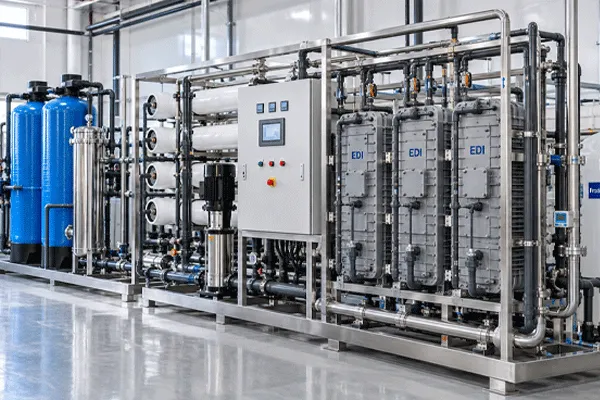
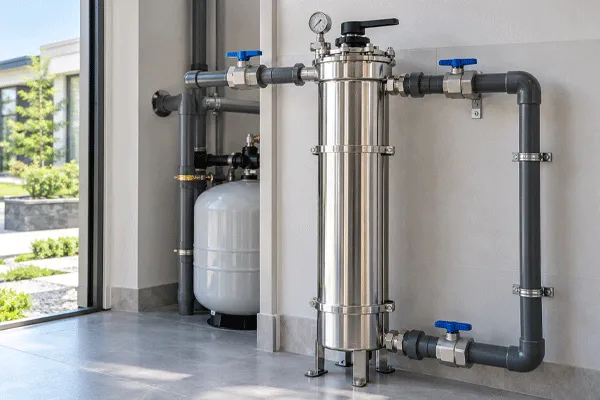
Molti progetti di trattamento delle acque reflue si trovano ad affrontare lo stesso problema: spazio limitato, norme di scarico rigorose e qualità instabile degli effluenti. Se il sistema di trattamento non è progettato correttamente, gli operatori devono fare i conti con fenomeni di intasamento, tempi di inattività e pressioni legate alla conformità normativa. Una membrana MBR contribuisce a risolvere questi problemi grazie a un processo di filtrazione compatto e stabile.
Una membrana MBR è la parte dedicata alla filtrazione a membrana di un bioreattore a membrana. In MBR Nel trattamento delle acque reflue, i microrganismi degradano la materia organica nei fanghi attivi, mentre la membrana separa l'effluente pulito dai solidi sospesi e dalla biomassa. Ciò consente di ottenere un processo di trattamento delle acque reflue compatto, con una qualità dell'effluente stabile.
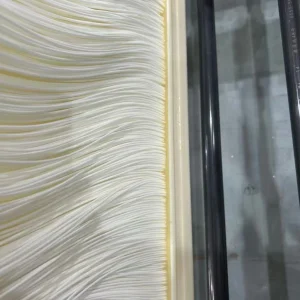
Elemento a membrana in fibra cava PVDF
Struttura dell'articolo
Che cos’è una membrana MBR?
Come funziona un bioreattore a membrana?
Quali sono le parti principali di un sistema MBR?
Perché la filtrazione a membrana è importante nel trattamento delle acque reflue?
Qual è il ruolo dei fanghi attivi e della biomassa nell'MBR?
Quali sono i vantaggi dei bioreattori a membrana?
In quali ambiti vengono utilizzati i sistemi MBR nel trattamento delle acque reflue urbane e industriali?
Quali sono le cause dell'intasamento delle membrane in un impianto di trattamento MBR?
Come si sceglie il modulo a membrana giusto?
Cosa dovrebbero verificare gli acquirenti di sistemi EPC prima di acquistare un sistema MBR?
Domande frequenti sulla membrana MBR
Punti chiave
Che cos’è una membrana MBR?
Una membrana MBR è una barriera di filtrazione fine utilizzata in un bioreattore a membrana. Consente il passaggio dell'acqua trattata, trattenendo al contempo i solidi sospesi, i fanghi attivi e la biomassa. La membrana funziona come un setaccio molto fine, ma viene utilizzata all'interno di un sistema biologico di trattamento delle acque reflue.
Un bioreattore a membrana combina un processo biologico con un processo a membrana. Il sito MBR descrive l'MBR come un processo di trattamento delle acque reflue in cui la separazione a membrana è integrata con un processo biologico a fanghi attivi, in sostituzione della fase di decantazione convenzionale.
Per gli appaltatori EPC, le società di ingegneria specializzate nel trattamento delle acque, gli impianti municipali di trattamento delle acque reflue e i proprietari di impianti industriali, questo aspetto è importante perché la tecnologia MBR può contribuire a realizzare un sistema di trattamento compatto in grado di garantire un effluente stabile. In qualità di produttori e fornitori di sistemi di trattamento dell’acqua e delle acque reflue orientati all’ingegneria, ci concentriamo su membrane MBR a fibra cava, membrane UF a fibra cava, membrane MBR a foglio piatto, membrane RO, moduli EDI, impianti di trattamento dell’acqua pura, impianti di trattamento delle acque reflue e sistemi integrati di filtrazione a membrana.
Come funziona un bioreattore a membrana?
Un impianto MBR funziona combinando il trattamento biologico e la filtrazione a membrana in un unico processo di trattamento. Le acque reflue entrano innanzitutto in un serbatoio bioreattore. All’interno del serbatoio, i microrganismi consumano la materia organica. Questo processo è simile a quello convenzionale a fanghi attivi.
La differenza sta nella fase di separazione. In un impianto convenzionale a fanghi attivi, si utilizza un chiarificatore secondario per la sedimentazione dei fanghi. In un impianto MBR, invece, è il modulo a membrana a separare l’acqua dai solidi sospesi. Ciò contribuisce a trattenere la biomassa all’interno dell’impianto e consente l’uscita di un effluente più pulito.
Un semplice processo di trattamento delle acque reflue con il metodo MBR si presenta così:
| Passo |
Cosa succede |
| Pretrattamento |
I filtri trattengono i solidi di grandi dimensioni, i capelli, la sabbia e i detriti |
| Vasca biologica |
I microrganismi degradano la materia organica |
| Filtrazione a membrana |
La membrana separa l'effluente dalla biomassa |
| Scarico del permeato |
L'acqua trattata esce dall'impianto |
| Controllo dei fanghi |
Il fango in eccesso viene rimosso quando necessario |
| Pulizia |
La pulizia della membrana previene l'incrostazione |
Se il sistema è progettato correttamente, questo processo contribuisce a migliorare la qualità dell'acqua e a facilitare l'automazione.
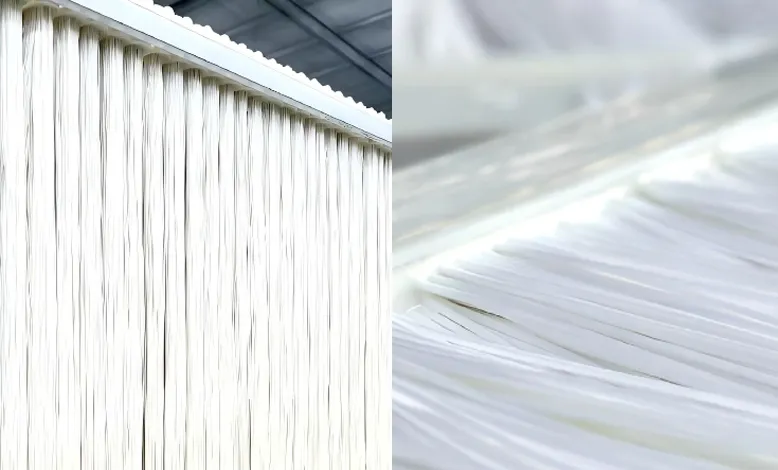
Questo è lo scenario di applicazione della membrana MRB.
Quali sono le parti principali di un sistema MBR?
Un completo Sistema MBR Non si tratta solo di una membrana. Comprende numerose componenti che devono funzionare in sinergia. Le componenti principali includono l'unità di pretrattamento, la vasca del bioreattore, il sistema di aerazione, il modulo a membrana, le pompe, le valvole, il sistema di controllo PLC, il sistema di pulizia e il sistema di scarico dei fanghi.
Il modulo è la parte che contiene la membrana. Può trattarsi di un modulo a fibre cave, di una cassetta a membrana piana o di un’altra configurazione a membrana. L’area della membrana, la densità di impacchettamento, il materiale e il metodo di pulizia influiscono tutti sulle prestazioni.
Le principali parti del sistema MBR comprendono:
| Parte MBR |
Funzione principale |
| Setaccio / pretrattamento |
Protegge la membrana dai solidi di grandi dimensioni |
| Serbatoio del bioreattore |
Contiene fanghi attivi e biomassa |
| Sistema di aerazione |
Fornisce ossigeno e aiuta a controllare la formazione di incrostazioni |
| Modulo a membrana |
Filtra l'effluente proveniente dal liquido misto |
| Pompa di aspirazione |
Asporta l'acqua pulita attraverso la membrana |
| Unità di controlavaggio / pulizia |
Favorisce la pulizia della membrana |
| Sistema PLC / SCADA |
Funzionamento dei comandi e allarmi |
| Sistema di trattamento dei fanghi |
Rimuove la biomassa in eccesso |
| Dosaggio di sostanze chimiche |
Supporta la pulizia e il controllo dei processi |
Per gli acquirenti di progetti, il modulo a membrana è importante, ma la progettazione complessiva dell'impianto di trattamento lo è altrettanto. Una buona membrana non può compensare un pretrattamento inadeguato, un'aerazione insufficiente o un funzionamento non corretto.
Perché la filtrazione a membrana è importante nel trattamento delle acque reflue?
La filtrazione a membrana è importante perché consente di MBR: una barriera di separazione fisica. I pori della membrana impediscono ai solidi in sospensione e alla biomassa di essere trasportati via con l'effluente. Ciò contribuisce a migliorare la qualità dell'effluente.
L'EPA statunitense sottolinea che i bioreattori a membrana possono garantire una migliore qualità degli effluenti, un ingombro ridotto e una maggiore facilità di automazione rispetto ai sistemi biologici convenzionali.
Ecco perché la tecnologia MBR viene impiegata nei moderni progetti di trattamento delle acque reflue, dove lo spazio è limitato o le norme di scarico sono rigorose. È utile anche quando l’acqua trattata può essere riutilizzata per l’irrigazione, il riutilizzo industriale, lo scarico dei WC, la cura del verde o altre applicazioni di riutilizzo non potabile, laddove le normative locali lo consentano.
Qual è il ruolo dei fanghi attivi e della biomassa nell'MBR?
In un impianto MBR, la membrana non svolge da sola tutto il lavoro. Il processo biologico rimane comunque molto importante. I fanghi attivi contengono microrganismi che degradano la materia organica presente nelle acque reflue. Questa biomassa costituisce la parte vivente del sistema di trattamento.
La membrana trattiene la biomassa all'interno del bioreattore. Ciò consente al sistema di mantenere una concentrazione di biomassa più elevata rispetto a molti sistemi tradizionali. Una concentrazione più elevata favorisce un trattamento biologico più efficace, ma richiede anche un'aerazione accurata e un attento controllo dei fanghi.
A stable MBR process depends on balance:
Enough oxygen for microorganisms
Proper sludge concentration
Good mixing within the bioreactor
Flusso corretto della membrana
Stable influent loading
Regular membrane cleaning
Proper control of fouling
When these factors are controlled, MBRs can deliver stable effluent and reduce the footprint of the treatment plant.
Quali sono i vantaggi dei bioreattori a membrana?
The advantages of membrane bioreactors include compact design, good effluent quality, strong solid-liquid separation, and easier automation. For industrial and municipal wastewater treatment, these benefits can reduce site pressure and improve operation stability.
A 2021 review states that MBR plants integrate biological processes with membrane filtration and are widely used for municipal and industrial wastewater treatment.
Common advantages include:
| Vantaggio |
Perché è importante |
| Ingombro ridotto |
Utile in caso di spazi limitati o per progetti di ristrutturazione |
| Effluente stabile |
Helps meet discharge or reuse goals |
| Assenza di chiarificatore secondario |
Semplifica la separazione solido-liquido |
| Elevata concentrazione di biomassa |
Favorisce un trattamento biologico efficace |
| Modular design |
Good for expansion and containerized systems |
| Automation friendly |
Supports PLC / SCADA operation |
| Potenziale di riutilizzo dell'acqua |
Useful for water-scarce projects |
For EPC contractors and system integrators, compact MBR systems are often attractive because they can be skid-mounted, containerized, or integrated into a larger water and wastewater treatment plant.
Where Are MBR Systems Used in Municipal and Industrial Wastewater Treatment?
MBR systems are used in many municipal and industrial wastewater treatment projects. Typical applications include municipal wastewater treatment, industrial wastewater treatment plants, food and beverage factories, textile and dyeing factories, pharmaceutical plants, chemical plants, electronics factories, hotels, farms, and industrial parks.
The Water Environment Federation explains that wastewater treatment uses physical, chemical, and biological processes to remove pollutants before discharge. MBR fits into this wider water and wastewater treatment field by combining biological wastewater treatment with membrane separation.
Typical applications of membrane bioreactors include:
Impianti comunali di trattamento delle acque reflue
Industrial wastewater treatment plants
Impianti di trattamento in container
Sistemi montati su telaio
Progetti di riutilizzo dell'acqua
Trattamento delle acque reflue di hotel e resort
Food and beverage wastewater treatment
Trattamento delle acque reflue del settore tessile e della tintoria
Pharmaceutical and chemical wastewater treatment
Industrial park wastewater treatment
Commercial building wastewater reuse
For project owners, the value is clear: MBR can support compact layout, stable effluent, modular expansion, and customized engineering.
What Causes Membrane Fouling in an MBR Treatment Plant?
Membrane fouling happens when solids, biomass, colloids, oils, organic matter, or microorganisms build up on the membrane surface or inside the membrane pores. Fouling reduces filtration flow and can increase energy use.
Fouling of the membrane is one of the main challenges in MBR operation. A peer-reviewed overview on MBR technology highlights membrane fouling and fouling control as major topics in MBR research and operation.
Common fouling causes include:
| Causa delle incrostazioni |
Risultato possibile |
| Poor pretreatment |
Capelli, fibre o residui ostruiscono la membrana |
| Elevata concentrazione di fanghi |
Higher resistance to filtration |
| Low aeration |
Less scouring on the membrane surface |
| Olio e grasso |
Sticky deposits on the membrane |
| Chemical imbalance |
Depositi di calcare o stress biologico |
| Funzionamento ad alto flusso |
Faster fouling and more cleaning |
| Programma di pulizia inadeguato |
Reduced membrane life |
A well-designed MBR treatment plant must include good pretreatment, correct aeration in the bioreactor, suitable flux design, clear membrane cleaning procedures, and long-term membrane replacement planning.
How Do You Choose the Right Membrane Module?
Choosing the right membrane module depends on wastewater type, effluent target, treatment capacity, operating mode, and project budget. Common options include hollow fiber MBR membranes and flat sheet MBR membranes.
A hollow fiber membrane module usually offers high membrane area in a compact space. It is widely used in municipal wastewater and many industrial wastewater projects. A flat sheet membrane may be easier to inspect and can be useful in certain wastewater conditions.
Key selection points include:
1.Membrane material
Check chemical resistance, strength, and cleaning tolerance.
2.Membrane area
Confirm whether the membrane area can handle the design flow.
3.Membrane packing density
Higher packing density saves space but may need careful cleaning design.
4.Flux rate
Do not push the membrane too hard. High flux can increase fouling.
5.Module structure
The module should be easy to install, clean, and replace.
6.Air scouring design
Aeration helps reduce foul buildup and supports stable operation.
7.Cleaning method
Confirm backwash, relaxation, chemical cleaning, and offline cleaning needs.
8.Spare parts supply
Long-term projects need stable membrane replacement and service support.
For international distributors and EPC buyers, the right membrane module should match not only the technical target but also local operation skill and maintenance conditions.
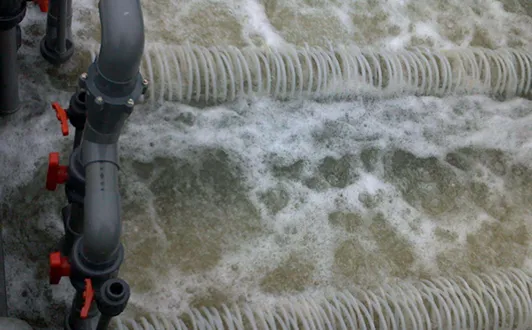
The mrb membrane is currently in use.
What Should EPC Buyers Check Before Buying an MBR System?
EPC buyers should not purchase an MBR system by price only. A low-cost system can become expensive if the effluent fails, the membrane fouls quickly, or spare parts are hard to find.
A practical buyer checklist includes:
| Check Point |
Perché è importante |
| Influent quality |
Determines process design |
| Design flow |
Affects tank size and membrane area |
| Effluent standard |
Controls treatment depth |
| Reuse target |
May require extra disinfection or RO |
| Pretrattamento |
Protects membrane life |
| Automazione |
Supports stable operation |
| Documentazione |
Helps installation and commissioning |
| Ricambi |
Reduces downtime |
| Assistenza alla messa in servizio |
Improves start-up success |
| Long-term service |
Protects project value |
As an engineering-oriented manufacturer, we support customized water treatment solutions for municipal wastewater, industrial wastewater, pure water production, ultrapure water systems, water reuse, containerized treatment plants, skid-mounted systems, and complex EPC water treatment projects.
How Does MBR Compare With Conventional Activated Sludge?
The conventional activated sludge process usually relies on biological treatment followed by a secondary clarifier. The clarifier allows sludge to settle before treated water is discharged. This works well in many projects, but it often needs more space and can be sensitive to sludge settling problems.
An MBR replaces the secondary clarifier with membrane filtration. This gives better physical separation and keeps suspended solids inside the bioreactor. The result is a more compact treatment process with stable effluent quality.
Tabella comparativa:
| Articolo |
Fanghi attivi convenzionali |
MBR System |
| Separazione solido-liquido |
Chiarificatore secondario |
Filtrazione a membrana |
| Impronta ecologica |
Larger |
Smaller |
| Solidi sospesi negli effluenti |
Dipende dalla stabilizzazione |
Very low when operated well |
| Concentrazione di biomassa |
Di solito più basso |
Di solito più alto |
| Automazione |
Varies |
Often easier |
| Potenziale di riutilizzo |
May need more polishing |
Often better for reuse planning |
| Fouling issue |
Not membrane related |
Needs membrane fouling control |
MBR is not always the cheapest option. But for projects that need compact layout, high effluent quality, or reuse, it can be a strong choice.
How Does MBR Support Water Reuse Projects?
Water reuse is becoming more important in industrial parks, hotels, farms, factories, and municipal projects. An MBR system can produce clear effluent that may be suitable for further treatment and reuse.
Depending on local standards, MBR effluent may be reused for irrigation, toilet flushing, landscape water, cooling tower makeup, or industrial process water after proper disinfection or polishing. Some projects may add RO membranes, UF membranes, or other membrane technologies after MBR to achieve higher water quality.
A reuse-focused system may include:
MBR membrane filtration
Disinfezione
Activated carbon filtration
RO membrane treatment
EDI module for ultrapure water
Storage tank
PLC / SCADA monitoring
This is why MBR is often part of a larger integrated membrane filtration system, especially in water reuse and industrial water treatment projects.
What Are Common Mistakes in MBR Membrane Projects?
The first mistake is weak pretreatment. If hair, fibers, plastics, grit, or large suspended solids enter the membrane zone, the membrane may foul quickly. Good screens protect the membrane.
The second mistake is undersizing the membrane area. If the design flux is too high, the membrane must work too hard. This can increase fouling and cleaning frequency.
The third mistake is ignoring operation skill. Even a good MBR membrane needs correct operation. Operators must understand sludge concentration, aeration, cleaning cycles, pressure changes, and alarm responses.
The fourth mistake is choosing equipment without service support. For EPC and overseas projects, clear technical documentation, commissioning support, spare parts supply, and long-term cooperation are important.
FAQs About MBR Membrane
Che cos’è una membrana MBR?
An MBR membrane is a filtration membrane used in a membrane bioreactor. It separates treated effluent from activated sludge, suspended solids, and biomass. It is commonly used in wastewater treatment and water reuse projects.
What does MBR mean in wastewater treatment?
MBR means membrane bioreactor. It is a wastewater treatment process that combines biological treatment with membrane filtration. The biological process removes organic matter, while the membrane separates clean water from solids.
Qual è la differenza tra il processo MBR e quello a fanghi attivi convenzionale?
Conventional activated sludge uses a secondary clarifier for solid-liquid separation. MBR uses a membrane module instead. This allows better suspended solids removal, smaller footprint, and more stable effluent quality.
What causes membrane fouling?
Membrane fouling can be caused by suspended solids, biomass buildup, oil, grease, scaling, poor aeration, high flux, or weak pretreatment. Good design and regular membrane cleaning help control fouling.
Can MBR be used for industrial wastewater treatment?
Yes. MBR can be used for many industrial wastewater treatment projects, including food and beverage, textile, pharmaceutical, chemical, electronics, and industrial park wastewater. The wastewater must be tested first to confirm the right process design.
Is MBR suitable for water reuse?
Yes. MBR can support water reuse because it produces clear effluent with low suspended solids. Depending on reuse standards, extra disinfection, RO membrane treatment, or advanced polishing may be needed.
Punti chiave
An MBR membrane is the filtration part of a membrane bioreactor.
MBR combines activated sludge biological treatment with membrane filtration.
The membrane separates effluent from suspended solids and biomass.
MBR can offer compact footprint, stable effluent quality, and reuse potential.
Main system parts include pretreatment, bioreactor tank, membrane module, aeration, pumps, controls, and cleaning units.
Membrane fouling is the main operation challenge and must be controlled.
Hollow fiber MBR membranes and flat sheet MBR membranes are common options.
MBR is used in municipal wastewater treatment, industrial wastewater treatment, water reuse, containerized plants, and EPC projects.
EPC buyers should check influent data, effluent standards, membrane area, automation, documentation, commissioning, and spare parts support.
A reliable membrane system manufacturer can help reduce project risk through customized engineering and long-term service.











 16:28
16:28