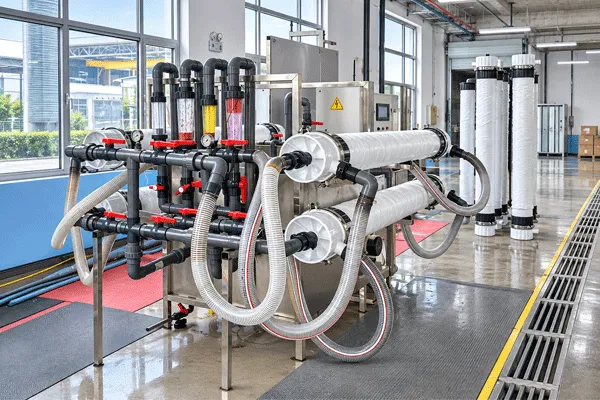
A reliable industrial ultrafiltration system starts with the right membrane module. Beyond filtration performance, buyers need to consider the module housing, connection structure, dimensions, and compatibility with the complete water treatment system.
At Qingdao Banott Environmental Technology Co., Ltd., we manufacture and supply hollow fiber ultrafiltration membranes and integrated water treatment solutions for industrial and municipal projects.
In this factory update, we share photographs of our finished hollow fiber UF membrane modules, highlighting their cylindrical structures, end-cap configurations, connection interfaces, protective wrapping, and workshop arrangement.
These real production photographs offer EPC contractors, water treatment engineering companies, industrial plant owners, and international distributors a closer look at the physical products behind our industrial ultrafiltration solutions.
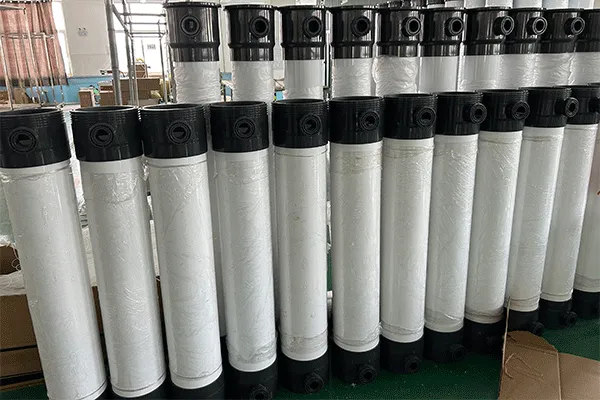
Modules de membranes UF à fibres creuses finis : dans l'atelier de production de Banott
Finished Hollow Fiber UF Membrane Modules in the Workshop
The photographs show multiple groups of cylindrical ultrafiltration membrane modules arranged inside the production workshop.
The modules feature long white cylindrical bodies with dark-colored end caps. Several units are positioned vertically in organized rows, while others are stored horizontally on supporting pallets.
Protective wrapping is visible around the cylindrical sections, helping shield the external components during appropriate handling and storage.
The photographs also show different end-cap designs and connection arrangements.
For industrial buyers, these details are relevant because UF membrane modules must fit the mechanical and hydraulic requirements of the intended filtration system.
A membrane module is not simply a filtration element. It is also a component that must connect correctly to the system’s piping, valves, instrumentation, and supporting structure.
Banott offers Industrial Hollow Fiber UF Membrane Modules for industrial water purification, RO pretreatment, and other membrane filtration applications.
A Closer Look at Cylindrical UF Membrane Structures
One of the most distinctive features of the products shown in these photographs is their cylindrical construction.
The visible modules include white cylindrical sections, large end caps, and external pipe connection points.
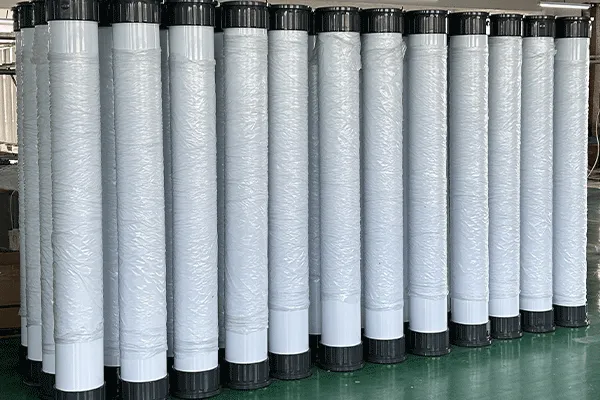
Modules de membranes UF à fibres creuses finis : dans l'atelier de production de Banott
In a typical pressurized hollow fiber UF module, the membrane fibers are contained within a cylindrical housing. Depending on the module design, water enters through specified connections and passes through the membrane under controlled operating conditions.
The membrane provides the filtration barrier, while the housing, internal sealing arrangement, and pipe connections support the flow configuration.
Different module designs may use different hydraulic arrangements, including inside-out or outside-in filtration.
For EPC contractors, the external module structure affects several installation considerations:
- Connection positioning and pipe compatibility.
- Module dimensions and required installation space.
- Vertical or horizontal installation requirements.
- Access for maintenance and replacement.
- Compatibility with the supporting equipment.
- Integration with the specified filtration process.
The correct configuration must be confirmed using the specific product datasheet and engineering drawings.
Different End-Cap and Connection Configurations
The workshop photographs include modules with black end caps and others with blue end-cap assemblies.
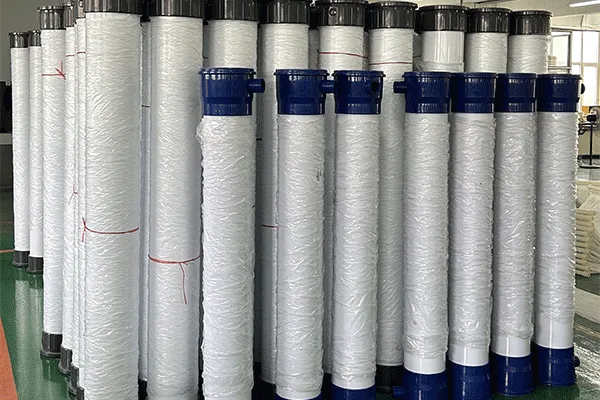
Modules de membranes UF à fibres creuses finis : dans l'atelier de production de Banott
These visible differences illustrate the variety of mechanical configurations that may be required for different membrane products.
In industrial filtration equipment, connection geometry is particularly important when integrating a module into an existing system.
The connection size, position, pressure rating, sealing arrangement, and compatible piping materials must meet the project specification.
A membrane that provides the required filtration area may still be unsuitable if its dimensions or connection structure do not match the installation.
For membrane replacement projects, this can create additional piping modifications, installation work, and commissioning delays.
Banott’s hollow fiber UF membrane portfolio includes multiple material and module options for different operating requirements.
Depending on the selected model, available membrane materials include PVDF, PES, PAN, RPVDF, and RPES. Our published product range also includes different module sizes and flow configurations.
These are product-range capabilities; the specific membrane material, model, and operating parameters of the photographed units cannot be confirmed from appearance alone.
For accurate selection, customers should provide the model designation or technical specifications of the existing equipment.
Protective Wrapping and Finished Membrane Module Handling
Several photographs show UF membrane modules covered with protective plastic wrapping.
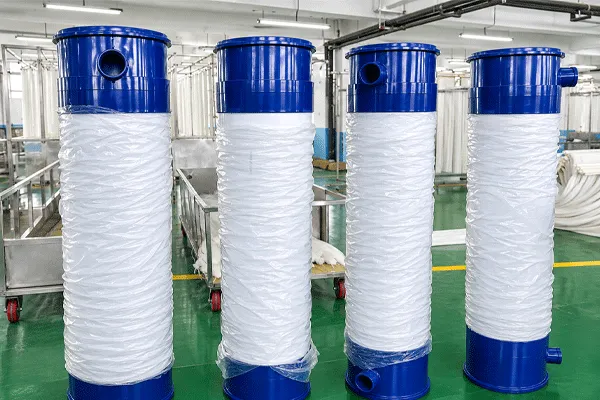
Modules de membranes UF à fibres creuses finis : dans l'atelier de production de Banott
Appropriate handling and storage are important aspects of membrane equipment management.
Although a UF module has a rigid external structure, the membrane fibers and internal components still require protection against unsuitable storage conditions, impacts, contamination, and incorrect handling.
For industrial water treatment projects, the supplier and buyer should confirm appropriate packaging and storage instructions before transportation or installation.
Relevant considerations may include:
- Protection of pipe connections.
- Appropriate positioning and support of modules.
- Membrane preservation requirements.
- Storage temperature and environmental conditions.
- Handling and lifting instructions.
- Identification of individual product models.
- Protection during transportation.
The requirements can vary depending on membrane material, module configuration, and manufacturer instructions.
The wrapping visible in these photographs demonstrates external product protection, but does not by itself confirm completed inspection, preservation treatment, or shipment status.
Why Module Compatibility Matters for EPC Water Treatment Projects
For industrial water treatment projects, choosing a suitable membrane module involves more than comparing nominal filtration capacity.
EPC contractors and system integrators must also verify whether the selected product can be installed, operated, maintained, and replaced within the planned treatment system.
| Critère d’évaluation |
Importance for Project Integration |
| Matériau de la membrane |
Compatibility with source water and cleaning conditions |
| Dimensions du module |
Installation space and equipment arrangement |
| Surface effective de la membrane |
Basis for filtration system sizing |
| Connection configuration |
Compatibility with existing piping |
| Operating flow direction |
Matching the specified filtration process |
| Exigences de pression |
Safe integration with system equipment |
| Cleaning requirements |
Maintenance planning and operating procedures |
| Replacement compatibility |
Reducing installation modifications |
For new projects, these specifications should be considered during the engineering design stage.
For replacement projects, the existing membrane model, housing dimensions, connection positions, and operating parameters should be checked before ordering new modules.
Banott supports customers through Ingénierie et intégration des systèmes, helping coordinate membrane equipment selection with complete treatment systems.
Industrial Applications of Hollow Fiber UF Membranes
Hollow fiber ultrafiltration membranes are widely used in industrial and municipal water treatment applications.
They provide a physical separation barrier for suspended solids, colloids, and many microorganisms, depending on the selected membrane and operating conditions.
Parmi les applications courantes, on peut citer :
Industrial process water treatment: UF membranes help remove fine suspended impurities and support stable downstream processing.
RO pretreatment: UF can protect reverse osmosis membranes by reducing particulate loading and improving feed-water clarity.
Municipal water purification: Hollow fiber UF modules can be used as part of systems designed to produce water that meets specified treatment requirements.
Industrial wastewater reuse: UF can serve as a pretreatment or polishing stage within a suitably designed water recovery system.
The membrane configuration should always be selected according to the feed-water characteristics and the required product water quality.
Explore Banott’s Membrane UF à fibres creuses product range and Pure Water Treatment Solution for further information about our industrial water filtration capabilities.
Banott: Supporting Industrial Ultrafiltration Projects Worldwide
At Banott, we combine membrane manufacturing with engineering-oriented water treatment solutions.
Our main product range includes:
- Hollow Fiber UF Membranes.
- Hollow Fiber MBR Membranes.
- Flat Sheet MBR Membranes.
- RO Membranes.
- EDI Modules.
- Pure Water Treatment Plants.
- Wastewater Treatment Plants.
- Integrated Membrane Filtration Systems.
We work with EPC contractors, municipal utilities, industrial plant owners, water treatment engineering companies, system integrators, and international equipment distributors.
Our services support project-specific membrane selection, equipment integration, technical documentation, customized configurations, and long-term technical cooperation.
The finished UF membrane modules shown in these photographs provide a practical view of our physical product range and production workshop.
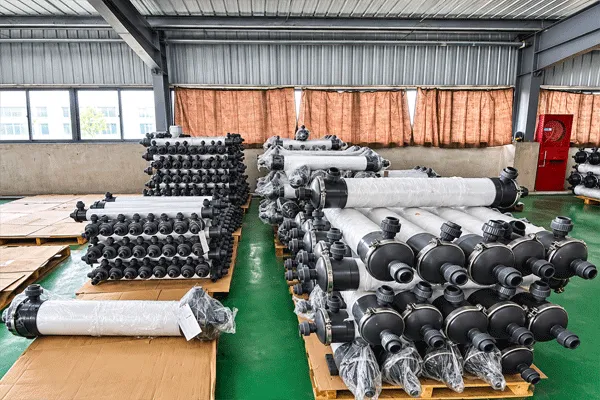
Modules de membranes UF à fibres creuses finis : dans l'atelier de production de Banott
For customers planning new installations or replacement projects, understanding these product details is an important part of selecting suitable equipment.
Looking for Hollow Fiber UF Membranes for Your Project?
Whether you need UF modules for industrial water purification, RO pretreatment, municipal water treatment, or an existing membrane system upgrade, Banott can help review your requirements.
To receive a suitable product recommendation, share the following information:
- Required treatment capacity.
- Feed-water characteristics.
- Existing membrane model, if applicable.
- Installation dimensions.
- Connection specifications.
- Required water quality.
- Project location and operating conditions.
Our team can discuss suitable hollow fiber UF membrane options and support your equipment selection and integration planning.
Contact Banott for Industrial UF Membrane Solutions











 09:48