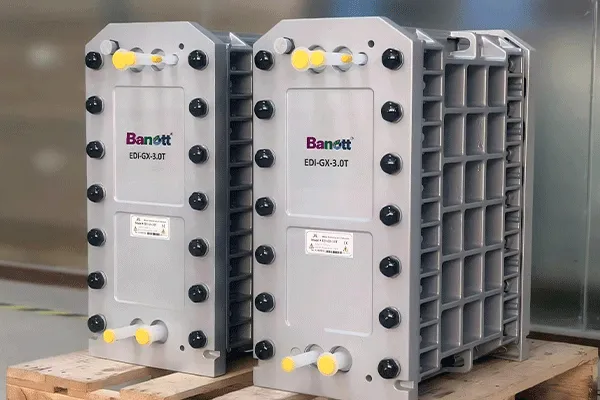
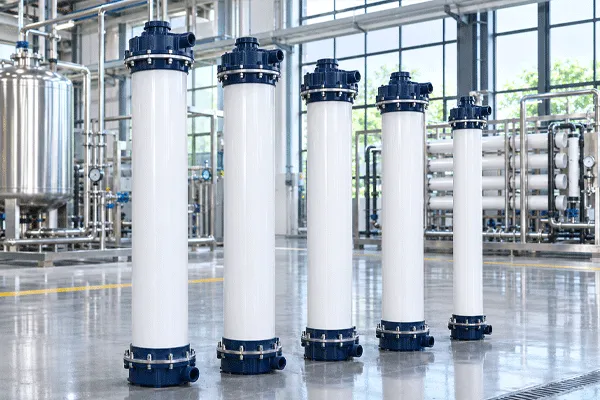
A reliable ultrafiltration system requires more than high-quality membrane modules. Proper module arrangement, piping connections, flow distribution, and system integration all play an important role in stable water treatment. A well-designed UF system brings these components together to support efficient filtration, easier maintenance, and reliable operation.
At Qingdao Banott Environmental Technology Co., Ltd., we manufacture hollow fiber UF membranes and provide integrated water treatment solutions for industrial and municipal applications. The following factory and system photographs showcase different UF system configurations, including membrane module arrays, connecting pipelines, valves, and supporting structures.
UF-Systemintegration für Projekte zur industriellen Wasseraufbereitung
UF System Configurations for Different Water Treatment Requirements
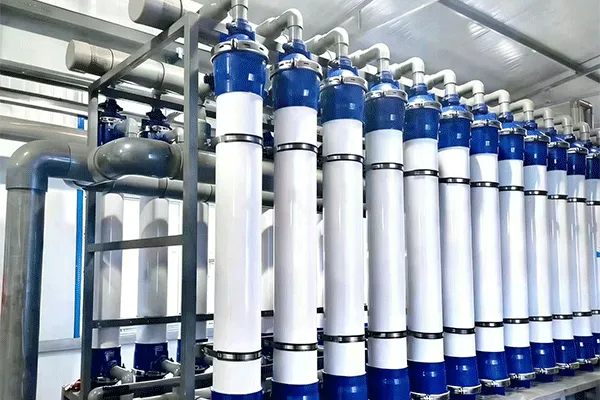
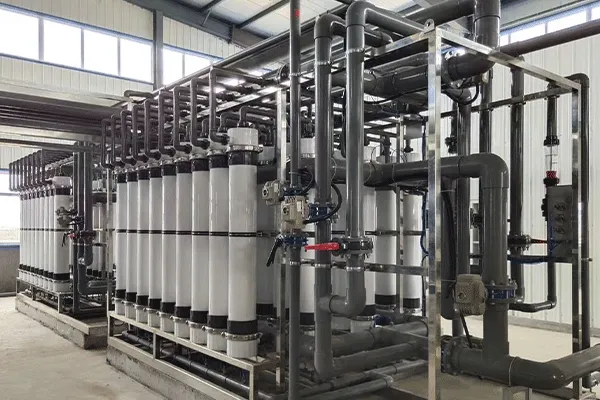
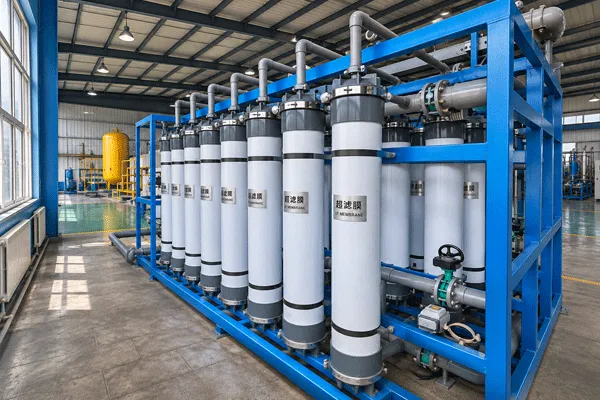
The photographs show several UF system configurations featuring multiple vertical ultrafiltration membrane modules connected through shared piping arrangements. These systems use modular layouts to organize individual membrane units into larger filtration assemblies.
Different configurations can be selected according to project capacity, available installation space, feed water conditions, and treatment requirements. Multiple membrane modules can be arranged within a common support structure, allowing the system to accommodate different engineering layouts.
The modular design also provides flexibility when planning new installations or upgrading existing water treatment facilities. Engineers can evaluate the number of membrane modules, connection arrangements, and available space to develop a suitable system configuration.
Integrated Piping and Connection Design
Piping integration is an important part of every industrial UF system. Feed water, filtrate, and cleaning connections must be arranged according to the selected membrane configuration and process requirements.
The systems shown in the photographs feature interconnected pipelines, multiple connection points, valves, and supporting frames. These components help organize water distribution and provide access for system operation and maintenance.
A properly planned piping layout can help engineers:
- Distribute feed water across the membrane modules.
- Organize filtrate collection and discharge connections.
- Provide suitable isolation points for maintenance.
- Arrange backwashing and flushing connections where required.
- Improve accessibility for inspection and component replacement.
The final piping arrangement should always follow the hydraulic design and operating requirements of the specific project.
Hollow Fiber UF Membrane Modules: The Core of the System
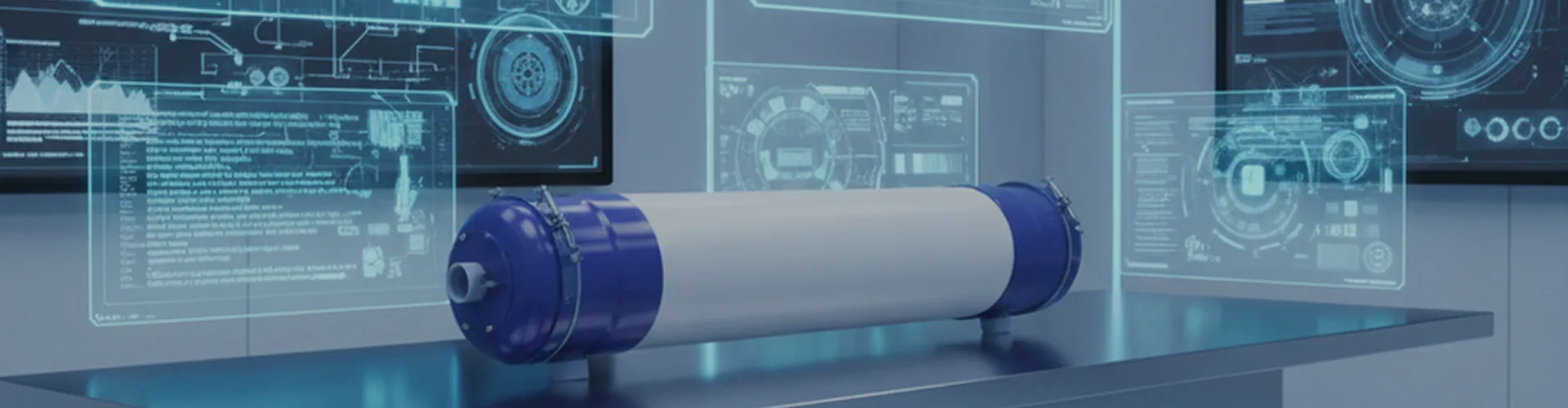
Membrane modules are the central filtration components of an ultrafiltration system. Banott supplies industrial hollow fiber UF membrane modules for water purification, industrial process water treatment, municipal applications, and wastewater reuse.
Unser Industrielles UF-Hohlfaser-Membranmodul product range offers multiple dimensions and membrane materials, including PES, PVDF, PAN, RPVDF, and RPES.
Depending on the selected model, the modules support different operating configurations, including inside-out and outside-in filtration, as well as cross-flow and dead-end operation.
Selecting the right module requires consideration of several factors:
- Raw water quality and suspended solids concentration.
- Required filtration capacity and membrane area.
- Betriebsdruck und Auslegungsdurchfluss.
- Membrane material and chemical compatibility.
- Connection dimensions and installation requirements.
- Backwashing and chemical cleaning arrangements.
These factors help ensure that individual membrane modules work effectively within the complete filtration system.
UF-Systemintegration für Projekte zur industriellen Wasseraufbereitung
How Does a UF System Work in an Integrated Water Treatment Process?
Ultrafiltration is a physical membrane separation process that helps remove suspended solids, colloids, fine particles, and many microorganisms from water.
In an integrated water treatment plant, UF can serve as a primary membrane filtration stage or as pretreatment before reverse osmosis. By reducing particulate matter and turbidity, it helps protect downstream equipment and provides more consistent feed water for subsequent treatment.
A typical UF pretreatment process may follow this arrangement:
Raw Water → Pretreatment → UF Membrane System → Filtrate Storage Tank → RO System
The actual process depends on the incoming water quality and required treated water specifications. UF does not remove most dissolved salts or hardness, so additional treatment technologies may be necessary when the project requires desalination or high-purity water.
For industrial projects, combining UF with RO and other treatment technologies can provide a more complete solution for process water production and water reuse.
Key Engineering Considerations for UF System Selection
Choosing an industrial UF system involves more than calculating the required membrane quantity. The complete configuration must match the hydraulic, mechanical, and operational conditions of the project.
Before selecting equipment, engineers should review the following information:
1. Feed Water Characteristics
Water source, turbidity, suspended solids, temperature, and chemical composition influence membrane selection and pretreatment requirements.
2. Required Treatment Capacity
Average flow, peak demand, daily operating hours, and target filtrate production help determine the required membrane area and module quantity.
3. System Configuration
Vertical or horizontal installation, module spacing, piping arrangement, and equipment footprint should be considered during the initial design stage.
4. Cleaning and Maintenance
Backwashing, flushing, and chemical cleaning requirements should be incorporated into the system design to support long-term membrane performance.
5. Automation and Operation
For projects requiring automatic operation, pumps, valves, instruments, pressure monitoring, and PLC controls can be integrated according to the project scope.
A clear engineering plan helps reduce installation difficulties and makes future operation and maintenance more manageable.
Banott’s UF System Integration and Engineering Capabilities
As a manufacturer of membrane products and an engineering-oriented water treatment provider, Banott supports customers beyond individual membrane module supply.
Unser Technik und Systemintegration capabilities include customized system design, piping layout, skid-mounted equipment assembly, and automation integration for water and wastewater treatment projects.
Depending on project requirements, our engineering support can include:
- Process and Instrumentation Diagrams (P&ID).
- Three-dimensional equipment and piping design.
- UF, RO, and MBR system integration.
- Customized skid-mounted equipment configurations.
- PLC, HMI, and SCADA control integration.
- Factory assembly and Factory Acceptance Testing (FAT).
- Technical documentation and commissioning support.
For customers developing new water treatment facilities or upgrading existing systems, these capabilities help connect membrane technology with practical engineering requirements.
UF-Systemintegration für Projekte zur industriellen Wasseraufbereitung
UF Systems for Industrial and Municipal Applications
Industrial and municipal water treatment projects have different feed water conditions, treatment targets, and operating requirements. Therefore, the UF system should be configured according to its intended application.
Banott’s hollow fiber UF membrane technology can support several applications, including:
- Municipal water purification and filtration.
- Industrial process water pretreatment.
- Reverse osmosis pretreatment.
- Wastewater polishing and reuse.
- Commercial and institutional water treatment.
- Integrated pure water production systems.
For wastewater projects, UF can serve as part of a broader wastewater treatment solution. For industrial water production, it can also be integrated into a pure water solution that combines membrane filtration with downstream purification technologies.
The appropriate process should be determined through water analysis, treatment objectives, and engineering evaluation.
Work with Banott on Your UF System Project
A successful UF installation depends on the coordination of membrane modules, piping, supporting structures, process equipment, and operating controls.
With membrane manufacturing capabilities and engineering experience in water treatment, Banott provides customized UF membrane products and integrated system solutions for EPC contractors, water treatment companies, industrial facilities, and international distributors.
If you are planning a new ultrafiltration project or upgrading an existing filtration system, our team can help review your requirements and recommend a suitable configuration.
To help us evaluate your project, please share:
- Raw water source and available water analysis.
- Required treatment capacity (m³/h or m³/day).
- Target filtrate quality.
- Intended application and downstream treatment process.
- Verfügbaren Aufstellplatz.
- Preferred membrane material or existing module specifications.
Contact Banott to discuss your UF membrane requirements and develop a suitable ultrafiltration system for your water treatment project.









 09:43