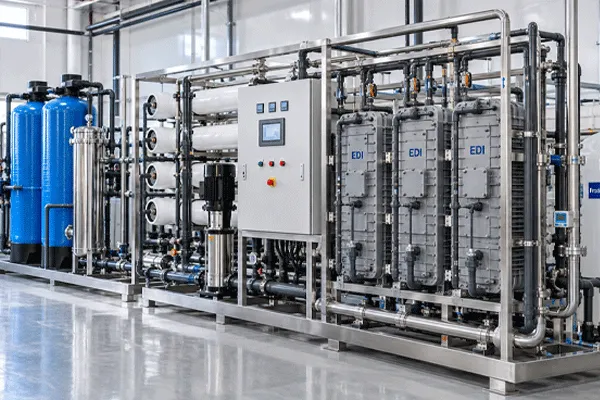
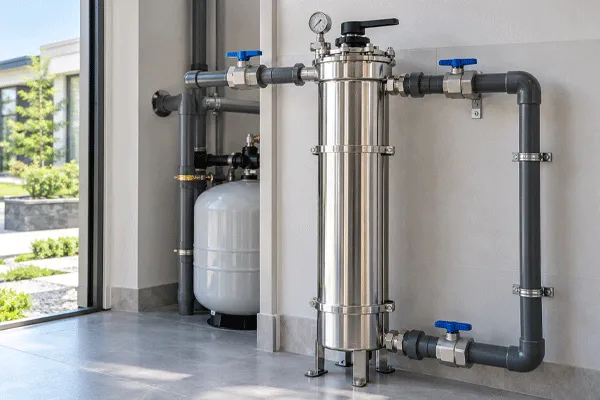
De nombreux projets de traitement des eaux usées sont confrontés aux mêmes difficultés : un espace limité, des règles strictes en matière de rejet et une qualité d'effluent instable. Si le système de traitement n'est pas bien conçu, les opérateurs doivent faire face à des problèmes d'encrassement, à des temps d'arrêt et à la pression liée au respect des normes. Une membrane MBR permet de résoudre ces problèmes grâce à une filtration compacte et stable.
Une membrane MBR est le composant de filtration membranaire d'un bioréacteur à membrane. Dans MBR Dans le traitement des eaux usées, les micro-organismes décomposent les matières organiques dans les boues activées, tandis que la membrane sépare l'effluent épuré des matières en suspension et de la biomasse. On obtient ainsi un procédé de traitement des eaux usées compact, garantissant une qualité stable de l'effluent.
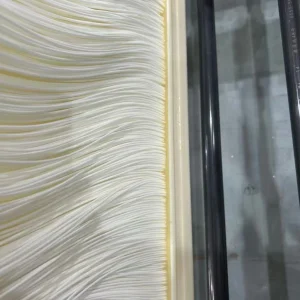
Élément de membrane à fibres creuses en PVDF
Plan de l'article
Qu'est-ce qu'une membrane MBR ?
Comment fonctionne un bioréacteur à membrane ?
Quels sont les principaux composants d'un système MBR ?
Pourquoi la filtration sur membrane est-elle importante dans le traitement des eaux usées ?
Quel est le rôle des boues activées et de la biomasse dans un système MBR ?
Quels sont les avantages des bioréacteurs à membrane ?
Dans quels domaines les systèmes MBR sont-ils utilisés dans le traitement des eaux usées municipales et industrielles ?
Quelles sont les causes de l'encrassement des membranes dans une station d'épuration MBR ?
Comment choisir le module à membrane qui convient ?
Que doivent vérifier les acheteurs d'EPC avant d'acheter un système MBR ?
Foire aux questions sur la membrane MBR
Points clés à retenir
Qu'est-ce qu'une membrane MBR ?
Une membrane MBR est une barrière de filtration fine utilisée dans un bioréacteur à membrane. Elle laisse passer l'eau traitée tout en retenant les matières en suspension, les boues activées et la biomasse. La membrane fonctionne comme un tamis très fin, mais elle est utilisée au sein d'un système biologique de traitement des eaux usées.
Un bioréacteur à membrane associe un procédé biologique à un procédé membranaire. Le site MBR décrit le MBR comme un procédé de traitement des eaux usées dans lequel la séparation membranaire est intégrée à un procédé biologique à boues activées, remplaçant ainsi l'étape de décantation classique.
Pour les entrepreneurs EPC, les sociétés d'ingénierie spécialisées dans le traitement de l'eau, les stations d'épuration municipales et les exploitants d'installations industrielles, cela revêt une importance particulière, car la technologie MBR permet de mettre en place un système de traitement compact garantissant un effluent stable. En tant que fabricant et fournisseur spécialisé dans l'ingénierie de systèmes de traitement de l'eau et des eaux usées, nous nous concentrons sur les membranes MBR à fibres creuses, les membranes UF à fibres creuses, les membranes MBR à feuille plate, les membranes RO, les modules EDI, les stations de traitement d'eau pure, les stations d'épuration des eaux usées et les systèmes intégrés de filtration membranaire.
Comment fonctionne un bioréacteur à membrane ?
Un système MBR combine le traitement biologique et la filtration sur membrane en un seul processus. Les eaux usées sont d'abord acheminées vers un bioréacteur. À l'intérieur de celui-ci, les micro-organismes décomposent les matières organiques. Ce principe est similaire à celui du procédé classique des boues activées.
La différence réside dans l'étape de séparation. Dans un système classique à boues activées, un décanteur secondaire est utilisé pour décanter les boues. Dans un système MBR, le module membranaire sépare l'eau des matières en suspension. Cela permet de retenir la biomasse à l'intérieur du système et d'obtenir un effluent plus propre en sortie.
Voici à quoi ressemble un procédé simple de traitement des eaux usées par MBR :
| Étape |
Que se passe-t-il ? |
| Prétraitement |
Les tamis retiennent les gros éléments solides, les cheveux, le sable et les débris |
| Filtre biologique |
Les micro-organismes décomposent la matière organique |
| Filtration membranaire |
La membrane sépare les effluents de la biomasse |
| Évacuation du perméat |
L'eau traitée quitte le réseau |
| Maîtrise des boues |
Les boues en excès sont éliminées lorsque cela s'avère nécessaire |
| Nettoyage |
Le nettoyage de la membrane permet de limiter l'encrassement |
Ce procédé permet d'améliorer la qualité de l'eau et facilite l'automatisation lorsque le système est correctement conçu.
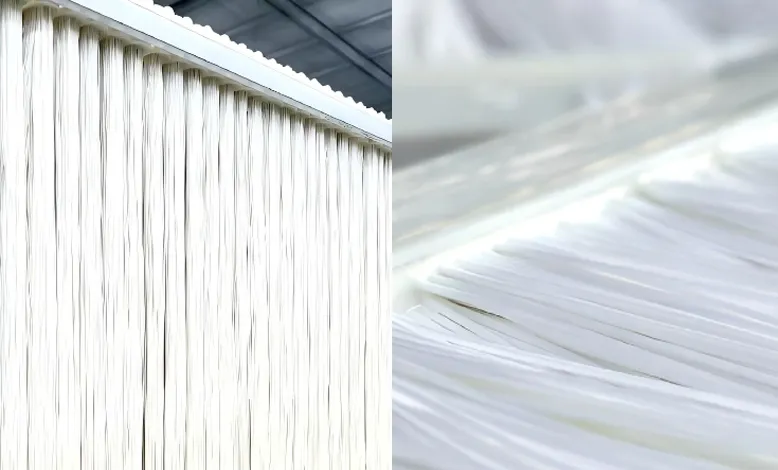
Voici le cas d'application de la membrane MRB.
Quels sont les principaux composants d'un système MBR ?
Un guide complet Système MBR Il ne s'agit pas simplement d'une membrane. Ce système comprend de nombreux éléments qui doivent fonctionner de concert. Les principaux composants sont l'unité de prétraitement, la cuve du bioréacteur, le système d'aération, le module membranaire, les pompes, les vannes, le système de commande par automate programmable (PLC), le système de nettoyage et le système d'évacuation des boues.
Le module est l'élément qui contient la membrane. Il peut s'agir d'un module à fibres creuses, d'une cassette à membrane plate ou d'une autre configuration de membrane. La surface de la membrane, la densité de remplissage, le matériau et la méthode de nettoyage ont tous une incidence sur les performances.
Les principaux composants du système MBR sont les suivants :
| Partie MBR |
Fonction principale |
| Tamisage / prétraitement |
Protège la membrane contre les particules solides de grande taille |
| Cuve de bioréacteur |
Contient des boues activées et de la biomasse |
| Système d'aération |
Fournit de l'oxygène et aide à limiter l'encrassement |
| Module à membrane |
Filtre les effluents provenant du mélange liquide |
| Pompe d'aspiration |
Fait passer l'eau propre à travers la membrane |
| Unité de lavage à contre-courant / de nettoyage |
Facilite le nettoyage des membranes |
| Système PLC / SCADA |
Fonctionnement des commandes et alarmes |
| Système de traitement des boues |
Élimine l'excès de biomasse |
| Dosage des produits chimiques |
Facilite le nettoyage et le contrôle des processus |
Pour les acheteurs de projets, le module à membrane est certes important, mais la conception globale de la station d'épuration l'est tout autant. Une membrane de qualité ne saurait pallier un prétraitement, une aération ou une exploitation déficients.
Pourquoi la filtration membranaire est-elle importante dans le traitement des eaux usées ?
La filtration membranaire est importante car elle permet de MBR : une barrière de séparation physique. Les pores de la membrane empêchent les matières en suspension et la biomasse de s'écouler avec les effluents. Cela contribue à améliorer la qualité des effluents.
L'Agence américaine de protection de l'environnement (EPA) souligne que les bioréacteurs à membrane permettent d'obtenir une meilleure qualité des effluents, nécessitent moins d'espace et facilitent l'automatisation par rapport aux systèmes biologiques classiques.
C'est pourquoi la technologie MBR est utilisée dans les projets modernes de traitement des eaux usées où l'espace est limité ou les normes de rejet strictes. Elle s'avère également utile lorsque l'eau traitée peut être réutilisée pour l'irrigation, des usages industriels, la chasse d'eau des toilettes, l'aménagement paysager ou d'autres applications non potables, lorsque la réglementation locale le permet.
Quel est le rôle des boues activées et de la biomasse dans un système MBR ?
Dans un système MBR, la membrane ne fait pas tout le travail à elle seule. Le processus biologique reste très important. Les boues activées contiennent des micro-organismes qui décomposent les matières organiques présentes dans les eaux usées. Cette biomasse constitue la partie vivante du système de traitement.
La membrane retient la biomasse à l'intérieur du bioréacteur. Cela permet au système de maintenir une concentration en biomasse plus élevée que celle de nombreux systèmes traditionnels. Une concentration plus élevée favorise un traitement biologique efficace, mais nécessite également une aération minutieuse et un contrôle rigoureux des boues.
Le bon fonctionnement du MBR repose sur l'équilibre :
Une quantité suffisante d'oxygène pour les micro-organismes
Concentration adéquate des boues
Une bonne homogénéisation à l'intérieur du bioréacteur
Débit membranaire correct
Charge stable des eaux usées entrantes
Nettoyage régulier de la membrane
Une gestion adéquate de l'encrassement
Lorsque ces facteurs sont maîtrisés, les systèmes MBR permettent d'obtenir des effluents stables et de réduire l'empreinte écologique de la station d'épuration.
Quels sont les avantages des bioréacteurs à membrane ?
Les avantages des bioréacteurs à membrane comprennent une conception compacte, une bonne qualité des effluents, une séparation solide-liquide efficace et une automatisation plus aisée. Dans le cadre du traitement des eaux usées industrielles et municipales, ces avantages permettent de réduire la charge de travail sur site et d'améliorer la stabilité de l'exploitation.
Une étude réalisée en 2021 indique que les stations MBR combinent des procédés biologiques et la filtration sur membrane, et qu'elles sont largement utilisées pour le traitement des eaux usées municipales et industrielles.
Parmi les avantages courants, on peut citer :
| Avantage |
Pourquoi c'est important |
| Encombrement réduit |
Idéal pour les terrains de petite superficie ou les projets de rénovation |
| Effluent stable |
Contribue à la réalisation des objectifs en matière de rejet ou de réutilisation |
| Pas de décanteur secondaire |
Simplifie la séparation solide-liquide |
| Concentration élevée en biomasse |
Favorise un traitement biologique efficace |
| Conception modulaire |
Idéal pour l'évolutivité et les systèmes en conteneurs |
| Facile à automatiser |
Prend en charge le fonctionnement en mode PLC / SCADA |
| Potentiel de réutilisation de l'eau |
Utile pour les projets menés dans des régions où l'eau est rare |
Pour les entrepreneurs EPC et les intégrateurs de systèmes, les systèmes MBR compacts présentent souvent un intérêt particulier, car ils peuvent être montés sur châssis, installés dans des conteneurs ou intégrés à une station de traitement de l'eau et des eaux usées de plus grande envergure.
Dans quels domaines les systèmes MBR sont-ils utilisés pour le traitement des eaux usées municipales et industrielles ?
Les systèmes MBR sont utilisé dans de nombreux projets de traitement des eaux usées municipales et industrielles. Parmi les applications courantes, on peut citer le traitement des eaux usées municipales, les stations d'épuration des eaux usées industrielles, les usines agroalimentaires, les usines de textile et de teinture, les usines pharmaceutiques, les usines chimiques, les usines électroniques, les hôtels, les exploitations agricoles et les parcs industriels.
La Water Environment Federation explique que le traitement des eaux usées fait appel à des procédés physiques, chimiques et biologiques pour éliminer les polluants avant le rejet. La technologie MBR s'inscrit dans ce domaine plus large du traitement de l'eau et des eaux usées en combinant le traitement biologique des eaux usées avec la séparation par membrane.
Parmi les applications courantes des bioréacteurs à membrane, on peut citer :
Stations d'épuration des eaux usées municipales
Stations d'épuration des eaux usées industrielles
Stations d'épuration en conteneurs
Systèmes montés sur châssis
Projets de réutilisation de l'eau
Traitement des eaux usées des hôtels et des complexes touristiques
Traitement des eaux usées issues de l'industrie agroalimentaire
Traitement des eaux usées issues de l'industrie textile et de la teinture
Traitement des eaux usées issues des industries pharmaceutique et chimique
Traitement des eaux usées des zones industrielles
Réutilisation des eaux usées dans les bâtiments commerciaux
Pour les maîtres d'ouvrage, les avantages sont évidents : le système MBR permet une configuration compacte, garantit un effluent stable, offre une extensibilité modulaire et permet une conception sur mesure.
Quelles sont les causes de l'encrassement des membranes dans une station d'épuration MBR ?
On parle d'encrassement des membranes lorsque des solides, de la biomasse, des colloïdes, des huiles, des matières organiques ou des micro-organismes s'accumulent à la surface des membranes ou à l'intérieur de leurs pores. L'encrassement réduit le débit de filtration et peut entraîner une augmentation de la consommation d'énergie.
L'encrassement des membranes constitue l'un des principaux défis liés à l'exploitation des systèmes MBR. Une synthèse évaluée par des pairs sur la technologie MBR met en évidence l'encrassement des membranes et la maîtrise de ce phénomène comme des thèmes majeurs de la recherche et de l'exploitation des systèmes MBR.
Parmi les causes courantes d'encrassement, on peut citer :
| Cause de l'encrassement |
Résultat possible |
| Mauvais prétraitement |
Des cheveux, des fibres ou des débris obstruent la membrane |
| Concentration élevée en boues |
Meilleure résistance à la filtration |
| Faible aération |
Moins d'abrasion à la surface de la membrane |
| Huiles et graisses |
Dépôts collants sur la membrane |
| Déséquilibre chimique |
Dépôt de tartre ou stress biologique |
| Fonctionnement à haut flux |
Encrassement plus rapide et nettoyage plus fréquent |
| Un planning de nettoyage insuffisant |
Réduction de la durée de vie de la membrane |
Une station d'épuration à membrane (MBR) bien conçue doit comporter un prétraitement efficace, une aération adéquate dans le bioréacteur, une conception appropriée du débit, des procédures claires de nettoyage des membranes et une planification à long terme du remplacement des membranes.
Comment choisir le module à membrane adapté ?
Le choix du module membranaire approprié dépend du type d'eaux usées, des objectifs en matière d'effluent, de la capacité de traitement, du mode de fonctionnement et du budget alloué au projet. Parmi les options courantes, on trouve les membranes MBR à fibres creuses et les membranes MBR à feuille plate.
Un module à membrane à fibres creuses offre généralement une grande surface de membrane dans un espace réduit. Il est largement utilisé dans le traitement des eaux usées municipales et dans de nombreux projets de traitement des eaux usées industrielles. Une membrane à feuille plate peut être plus facile à inspecter et s'avère utile dans certaines conditions de traitement des eaux usées.
Les principaux critères de sélection sont les suivants :
1. Matériau de la membrane
Vérifiez la résistance aux produits chimiques, la solidité et la résistance au nettoyage.
2. Surface de la membrane
Vérifiez si la surface de la membrane est suffisante pour supporter le débit prévu.
3. Densité de garnissage de la membrane
Une densité d'emballage plus élevée permet de gagner de la place, mais peut nécessiter une conception minutieuse du système de nettoyage.
4. Débit de flux
N'appuyez pas trop fort sur la membrane. Un débit élevé peut favoriser l'encrassement.
5. Structure du module
Le module doit être facile à installer, à nettoyer et à remplacer.
6. Conception du lavage à l'air
L'aération contribue à réduire l'accumulation de matières organiques et favorise un fonctionnement stable.
7. Méthode de nettoyage
Vérifiez les besoins en matière de lavage à contre-courant, de repos, de nettoyage chimique et de nettoyage hors ligne.
8. Approvisionnement en pièces de rechange
Les projets à long terme nécessitent un remplacement régulier des membranes et un service d'assistance fiable.
Pour les distributeurs internationaux et les acheteurs EPC, le module à membrane choisi doit non seulement répondre aux exigences techniques, mais aussi tenir compte des compétences opérationnelles locales et des conditions de maintenance.
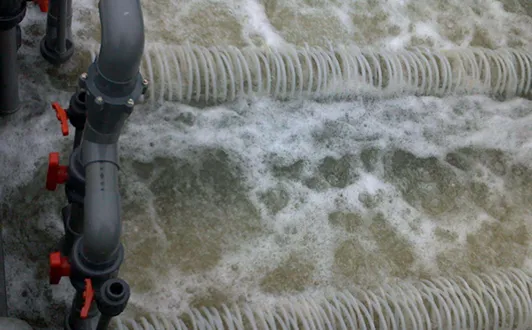
La membrane MRB est actuellement utilisée.
Que doivent vérifier les acheteurs d'EPC avant d'acheter un système MBR ?
Les acheteurs d'EPC ne devraient pas choisir un système MBR uniquement en fonction du prix. Un système bon marché peut s'avérer coûteux si l'effluent ne répond pas aux normes, si la membrane s'encrasse rapidement ou si les pièces de rechange sont difficiles à trouver.
Une liste de contrôle pratique pour l'acheteur comprend :
| Point de contrôle |
Pourquoi c'est important |
| Qualité des eaux d'alimentation |
Détermine la conception du processus |
| Processus de conception |
Cela influe sur la taille du réservoir et la surface de la membrane |
| Norme relative aux effluents |
Permet de régler la profondeur de traitement |
| Objectif de réutilisation |
Peut nécessiter une désinfection supplémentaire ou un traitement par osmose inverse |
| Prétraitement |
Prolonge la durée de vie de la membrane |
| Automatisation |
Assure un fonctionnement stable |
| Documentation |
Facilite l'installation et la mise en service |
| Pièces de rechange |
Réduit les temps d'arrêt |
| Assistance à la mise en service |
Améliore les chances de réussite au démarrage |
| Service à long terme |
Préserve la valeur du projet |
En tant que fabricant à vocation technique, nous proposons des solutions sur mesure pour le traitement des eaux usées municipales et industrielles, la production d'eau pure, les systèmes d'eau ultra-pure, la réutilisation de l'eau, les stations d'épuration conteneurisées, les systèmes montés sur châssis et les projets EPC complexes de traitement de l'eau.
En quoi le procédé MBR se distingue-t-il du procédé classique à boues activées ?
Le procédé classique des boues activées repose généralement sur un traitement biologique suivi d'un décanteur secondaire. Le décanteur permet aux boues de se déposer avant que l'eau traitée ne soit rejetée. Ce système fonctionne bien dans de nombreux projets, mais il nécessite souvent plus d'espace et peut être sensible aux problèmes de décantation des boues.
Un système MBR remplace le décanteur secondaire par une filtration sur membrane. Cela permet une meilleure séparation physique et retient les matières en suspension à l'intérieur du bioréacteur. Il en résulte un processus de traitement plus compact offrant une qualité d'effluent stable.
Tableau comparatif :
| Objet |
Procédé classique des boues activées |
Système MBR |
| Séparation solide-liquide |
Clarificateur secondaire |
Filtration membranaire |
| Empreinte écologique |
Plus grand |
Plus petit |
| Matières en suspension dans les effluents |
Cela dépend de la stabilisation |
Très faible lorsqu'il est bien utilisé |
| Concentration en biomasse |
Généralement plus bas |
Généralement plus élevé |
| Automatisation |
Variable |
Souvent plus facile |
| Potentiel de réutilisation |
Il faudrait peut-être peaufiner un peu plus |
Souvent plus adapté à la planification de la réutilisation |
| Problème d'encrassement |
Sans rapport avec les membranes |
Nécessite un contrôle de l'encrassement des membranes |
Le MBR n'est pas toujours la solution la moins coûteuse. Cependant, pour les projets qui nécessitent un encombrement réduit, une eau traitée de haute qualité ou la réutilisation des effluents, il peut s'agir d'un choix judicieux.
Comment MBR soutient-il les projets de réutilisation de l'eau ?
La réutilisation de l'eau prend de plus en plus d'importance dans les parcs industriels, les hôtels, les exploitations agricoles, les usines et les projets municipaux. Un système MBR permet de produire un effluent limpide pouvant se prêter à un traitement complémentaire et à la réutilisation.
En fonction des normes locales, les effluents issus du système MBR peuvent être réutilisés pour l'irrigation, la chasse d'eau des toilettes, l'arrosage des espaces verts, l'appoint des tours de refroidissement ou comme eau de process industrielle, après avoir subi une désinfection ou un traitement de finition approprié. Certains projets peuvent intégrer des membranes d'osmose inverse (RO), des membranes d'ultrafiltration (UF) ou d'autres technologies membranaires en aval du système MBR afin d'obtenir une eau de meilleure qualité.
Un système axé sur la réutilisation peut comprendre :
Filtration sur membrane MBR
Désinfection
Filtration au charbon actif
Traitement par membrane RO
Module EDI pour l'eau ultra-pure
Réservoir de stockage
Surveillance PLC / SCADA
C'est pourquoi le MBR fait souvent partie d'un système intégré plus vaste de filtration membranaire, notamment dans les projets de réutilisation de l'eau et de traitement des eaux industrielles.
Quelles sont les erreurs courantes dans les projets utilisant des membranes MBR ?
La première erreur réside dans un prétraitement insuffisant. Si des cheveux, des fibres, des plastiques, des particules de sable ou des grosses particules en suspension pénètrent dans la zone de la membrane, celle-ci risque de s'encrasser rapidement. Des tamis efficaces protègent la membrane.
La deuxième erreur consiste à sous-dimensionner la surface de la membrane. Si le débit nominal est trop élevé, la membrane est soumise à une contrainte excessive. Cela peut entraîner une augmentation de l'encrassement et de la fréquence des nettoyages.
La troisième erreur consiste à négliger les compétences opérationnelles. Même une membrane MBR de qualité doit être exploitée correctement. Les opérateurs doivent maîtriser la concentration des boues, l'aération, les cycles de nettoyage, les variations de pression et les procédures à suivre en cas d'alarme.
La quatrième erreur consiste à choisir du matériel sans service après-vente. Pour les projets EPC et à l'étranger, il est essentiel de disposer d'une documentation technique claire, d'une assistance à la mise en service, d'un approvisionnement en pièces de rechange et d'une collaboration à long terme.
Foire aux questions sur la membrane MBR
Qu'est-ce qu'une membrane MBR ?
Une membrane MBR est une membrane de filtration utilisée dans un bioréacteur à membrane. Elle sépare les effluents traités des boues activées, des matières en suspension et de la biomasse. Elle est couramment utilisée dans les projets de traitement des eaux usées et de réutilisation de l'eau.
Que signifie « MBR » dans le domaine du traitement des eaux usées ?
MBR signifie « bioréacteur à membrane ». Il s'agit d'un procédé de traitement des eaux usées qui combine un traitement biologique et une filtration sur membrane. Le traitement biologique élimine les matières organiques, tandis que la membrane sépare l'eau propre des matières solides.
Quelle est la différence entre le procédé MBR et le procédé classique à boues activées ?
Dans les systèmes classiques à boues activées, on utilise un décanteur secondaire pour la séparation solide-liquide. Le procédé MBR utilise quant à lui un module à membrane. Cela permet une meilleure élimination des matières en suspension, un encombrement réduit et une qualité d'effluent plus stable.
Quelles sont les causes de l'encrassement des membranes ?
L'encrassement des membranes peut être causé par des matières en suspension, une accumulation de biomasse, de l'huile, de la graisse, des dépôts minéraux, une aération insuffisante, un débit élevé ou un prétraitement inadéquat. Une conception adéquate et un nettoyage régulier des membranes permettent de limiter l'encrassement.
Le MBR peut-il être utilisé pour le traitement des eaux usées industrielles ?
Oui. La technologie MBR peut être utilisée dans de nombreux projets de traitement des eaux usées industrielles, notamment dans les secteurs de l'agroalimentaire, du textile, de l'industrie pharmaceutique, de l'industrie chimique, de l'électronique et des parcs industriels. Il est nécessaire de procéder au préalable à des analyses des eaux usées afin de confirmer la conception appropriée du procédé.
Le MBR est-il adapté à la réutilisation de l'eau ?
Oui. Le procédé MBR permet la réutilisation de l'eau, car il produit un effluent limpide à faible teneur en matières en suspension. En fonction des normes de réutilisation, une désinfection supplémentaire, un traitement par membrane d'osmose inverse ou un traitement de finition avancé peuvent s'avérer nécessaires.
Points clés à retenir
Une membrane MBR constitue l'élément de filtration d'un bioréacteur à membrane.
Le procédé MBR associe un traitement biologique par boues activées à une filtration sur membrane.
La membrane sépare les effluents des matières en suspension et de la biomasse.
Le MBR présente l'avantage d'un encombrement réduit, d'une qualité d'effluent stable et d'un potentiel de réutilisation.
Les principaux composants du système comprennent le prétraitement, la cuve du bioréacteur, le module membranaire, le système d'aération, les pompes, les dispositifs de commande et les unités de nettoyage.
L'encrassement des membranes constitue le principal défi opérationnel et doit être maîtrisé.
Les membranes MBR à fibres creuses et les membranes MBR à feuille plate sont des options courantes.
La technologie MBR est utilisée dans le traitement des eaux usées municipales et industrielles, la réutilisation de l'eau, les stations de traitement conteneurisées et les projets EPC.
Les acheteurs de systèmes EPC doivent vérifier les données relatives aux eaux d'alimentation, les normes applicables aux effluents, la surface des membranes, les systèmes d'automatisation, la documentation, la mise en service et la disponibilité des pièces de rechange.
Un fabricant de systèmes à membrane fiable peut contribuer à réduire les risques liés au projet grâce à des solutions d'ingénierie sur mesure et à un service après-vente à long terme.











 16:28
16:28