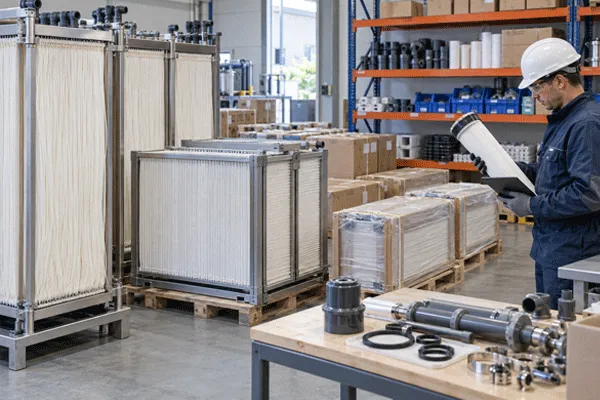
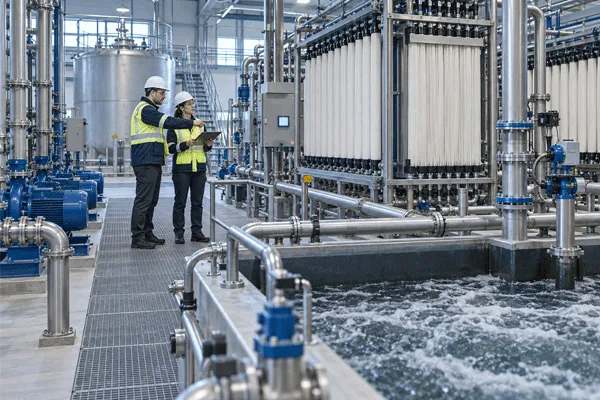
Poorly selected deionization equipment can cause unstable conductivity, frequent shutdowns, high chemical costs, and rejected product batches. These risks grow when an Módulo EDI receives unsuitable feed water. A properly engineered RO and electrodeionization system provides continuous, stable, and efficient high-purity water production.
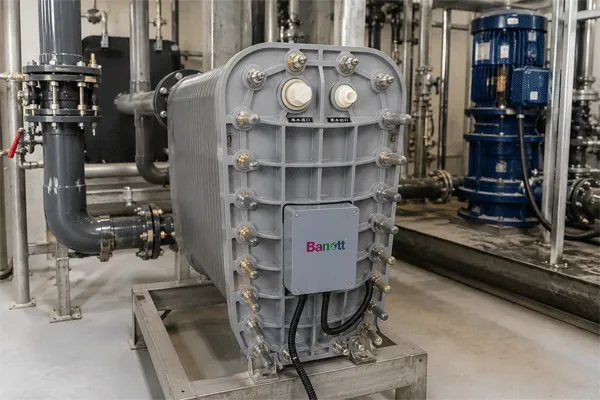
An electrodeionization module is a water purification device that combines ion exchange resin, ion-selective membranes, and a direct-current electric field to remove ions from RO permeate. Unlike a conventional mixed bed, EDI continuously regenerates its resin electrically, allowing the system to produce high-purity water without routine acid-and-caustic regeneration.
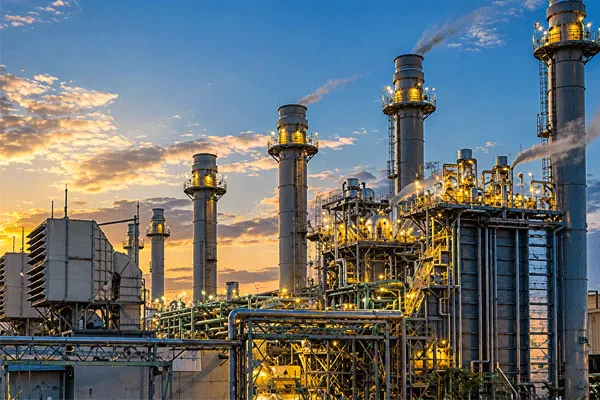
¿Qué es un módulo de electrodeionización en un sistema de tratamiento y purificación de agua?
Esquema del artículo
- ¿Qué es la electrodeionización en el tratamiento del agua?
- How does the working principle of EDI remove ions?
- What components are inside an EDI module?
- ¿Por qué suele instalarse el sistema de ósmosis inversa antes del EDI?
- What feed water quality does an EDI system require?
- What water quality can EDI water treatment produce?
- What are the benefits of using electrodeionization?
- How does EDI compare with mixed-bed ion exchange?
- Where is an electrodeionization system used?
- How should engineers select and size EDI units?
- How should an EDI water system be operated?
- Preguntas frecuentes
- Puntos clave que hay que recordar
¿Qué es la electrodeionización en el tratamiento del agua?
Electrodeionization, commonly shortened to EDI, is a continuous water treatment technology used to remove ionized and ionizable contaminants from water. It combines three main elements: ion exchange resin, ion-selective membrane layers, and direct-current electricity.
The technology is normally used after a reverse osmosis system. RO removes most dissolved salts, suspended matter, colloids, microorganisms, and many organic compounds. The EDI process then removes the small amount of ionic material that remains in the RO product water.
Typical ions entering an EDI system may include:
- Sodio
- Calcio
- Magnesio
- Cloruro
- Sulfato
- Nitrato
- Bicarbonato
- Silicate species
- Amonio
- Weakly ionized carbon dioxide-related species
EDI is therefore best understood as a polishing process, not a complete raw-water treatment process. DuPont describes electrodeionization as a continuous process that uses DC power to remove ionized and ionizable species, typically from RO permeate. It is widely used as an alternative to conventional mixed-bed ion exchange polishing.
How Does the Working Principle of EDI Remove Ions?
The working principle of EDI may appear complex, but the basic idea is straightforward. Feed water enters chambers filled with mixed ion exchange resin. The resin captures dissolved positive and negative ions while allowing water to continue through the module.
A direct-current electric field is applied across the module. Positive ions, called cations, move toward the cathode. Negative ions, called anions, move toward the anode. Ion exchange membranes control where these charged particles can travel:
- Cation-selective membranes allow positive ions to pass.
- Anion-selective membranes allow negative ions to pass.
- Alternating membranes form dilute and concentrate chambers.
- Ions leave the purified stream and enter the concentrate stream.
The result is a continuous separation process.
RO Permeate
     │
     ▼
Ion Exchange Resin Captures Ions
     │
     ▼
DC Electric Field Moves Charged Ions
     │
     ├── Positive ions → Cathode direction
     └── Negative ions → Anode direction
     │
     ▼
Ion-Selective Membranes Separate the Ions
     │
     ├── Product stream → High-purity water
     └── Concentrate stream → Removed ionic load
As the water becomes very pure, ordinary electrodialysis becomes less efficient because low-ion water conducts electricity poorly. EDI solves this problem by filling the dilute chambers with conductive ion exchange resin. The resin creates pathways that help ions move toward the membranes even at low conductivity.
How Does the EDI Process Regenerate Its Resin?
A conventional resin bed eventually becomes exhausted because its active sites fill with unwanted ions. It must then be taken offline and restored with acid and caustic chemicals.
In an EDI module, the electrical potential causes a small amount of water to split into hydrogen ions, H⁺, and hydroxide ions, OH⁻. These ions continuously regenerate the cation and anion resin inside the module. The resin therefore remains active while the system operates.
This is why EDI is often called continuous electrodeionization or CEDI. The system uses electricity to support deionization and resin regeneration at the same time.
However, “continuous regeneration” does not mean that an EDI module can never foul or scale. Hardness, particles, oxidants, oils, biological matter, silica, and excessive carbon dioxide can still reduce performance. Poor feed water may lead to:
- Higher electrical resistance
- Increased module pressure drop
- Lower product water resistivity
- Scale formation
- Resin or membrane damage
- Unstable operating current
- More frequent cleaning
The need for routine chemical regeneration is removed, but occasional approved chemical cleaning may still be required if fouling occurs. DuPont’s technical manual, for example, includes specific cleaning procedures for scale, organic fouling, biological fouling, and silica fouling.
What Components Are Inside an EDI Module?
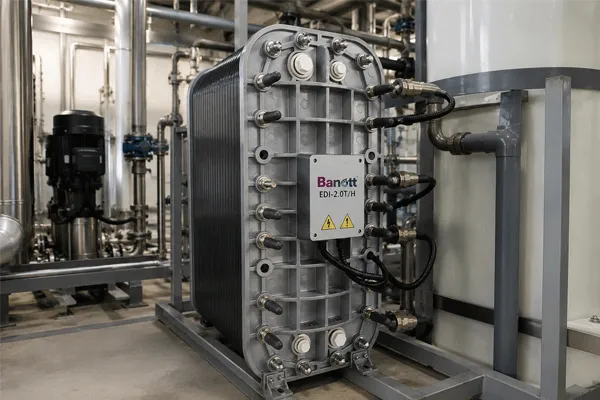
Un Módulo EDI contains several carefully arranged parts. Each part supports ion movement, hydraulic flow, electrical safety, or physical separation.
| EDI Component |
Función principal |
| Resina de intercambio iónico |
Captures ions and provides conductive pathways |
| Cation exchange membrane |
Allows positively charged ions to pass |
| Anion exchange membrane |
Allows negatively charged ions to pass |
| Dilute chamber |
Carries water being purified |
| Concentrate chamber |
Receives the removed ions |
| Electrodes |
Apply the DC electrical field |
| Electrode rinse channel |
Carries electrode reaction products away |
| Flow distributor |
Spreads water evenly through the module |
| Module housing |
Maintains pressure and protects internal parts |
| DC rectifier |
Converts electrical power into controlled DC power |
The dilute chamber produces purified water. The concentrate chamber carries salts away from the product stream. A separate electrode rinse flow may also be required, depending on the module design.
The exact internal structure varies by manufacturer. Some EDI units use plate-and-frame stacks, while others use spiral-wound arrangements. DuPont describes its EDI modules as combining membranes and ion exchange resins inside a reinforced pressure-vessel structure.
From an engineering perspective, the module cannot perform correctly without balanced hydraulics. Product flow, concentrate flow, electrode rinse flow, pressure difference, current, and voltage must stay within the approved operating range.
¿Qué es un módulo de electrodeionización en un sistema de tratamiento y purificación de agua?
¿Por qué se suele instalar la ósmosis inversa antes del EDI?
An EDI module is designed to handle a relatively low ionic load. It is generally not suitable for treating untreated tap water, brackish water, industrial wastewater, or other high-salinity feed directly.
Reverse osmosis removes most dissolved salts before the water enters the EDI system. This reduces the electrical and ionic load on the module and makes stable high-purity water production possible. DuPont and Veolia both present EDI as a polishing step following RO.
A common industrial water purification system may follow this process:
Raw Water
   ↓
Pretreatment
   ↓
Multimedia or Ultrafiltration
   ↓
Activated Carbon or Dechlorination
   ↓
Softening or Antiscalant Control
   ↓
Reverse Osmosis
   ↓
CO₂ Control, When Required
   ↓
EDI Module
   ↓
UV / UF / Final Filtration, When Required
   ↓
High-Purity Water Storage and Distribution
One-pass RO may be sufficient when feed conditions are stable and the EDI inlet specifications can be met. Two-pass RO may be selected when the project requires lower conductivity, tighter carbon dioxide control, higher silica rejection, or greater operating reliability.
For complex industrial water or water-reuse projects, pretreatment may also include hollow fiber UF membranes, MBR treatment, activated carbon, softening, pH adjustment, cartridge filtration, or membrane degassing.
What Feed Water Quality Does an EDI System Require?
Feed water quality is one of the most important factors in EDI design. Even a high-quality module can perform poorly when the RO permeate contains excessive hardness, silica, carbon dioxide, chlorine, iron, manganese, oil, turbidity, or organic contamination.
A representative DuPont EDI-310 technical specification lists strict limits for parameters such as hardness, dissolved silica, free chlorine, turbidity, iron, manganese, hydrogen sulfide, oil, grease, and total organic carbon. The exact limits depend on the module model and required product resistivity, so engineers must use the selected manufacturer’s current data sheet rather than treating one table as universal.
Key Feed Water Risks
| Feed Water Parameter |
Por qué es importante |
| Dureza |
Can form scale in concentrate channels |
| Carbon dioxide |
Adds ionic load after converting to bicarbonate or carbonate |
| Sílice |
May reduce product quality and create difficult deposits |
| Free chlorine |
Can damage resin and membrane materials |
| Hierro y manganeso |
Can foul resin and flow channels |
| Turbidez |
Can plug resin spaces and increase pressure drop |
| Aceite y grasa |
Can coat resin and membranes |
| TOC |
May cause organic or biological fouling |
| Temperatura |
Affects conductivity, resistance, flow, and performance |
| Conductividad del permeado de ósmosis inversa |
Indicates the total ionic burden entering EDI |
Carbon dioxide deserves special attention. RO membranes remove charged bicarbonate more effectively than dissolved, uncharged CO₂. The carbon dioxide can pass through RO and later convert into ionic forms inside the EDI module, increasing the removal load. The DuPont technical manual specifically notes the importance of accounting for carbon dioxide when evaluating EDI feed water.
Common control options include:
- Raising RO feed pH where suitable
- Installing a second RO pass
- Using a membrane degasser
- Using a decarbonator
- Optimizing alkalinity removal
- Controlling chemical dosing through PLC logic
What Water Quality Can EDI Water Treatment Produce?
A correctly designed EDI water treatment system can produce high-purity water with very low conductivity and high water resistivity. Product performance depends on the feed water composition, temperature, flow, current, module loading, carbon dioxide concentration, silica level, and system design.
Some commercial EDI modules are designed to produce water at or near 15–18 MΩ·cm under suitable conditions. DuPont states that its modules can produce up to 18 MΩ·cm product water, while Veolia describes integrated RO-CEDI systems capable of producing deionized water up to approximately 18 MΩ·cm.
Typical performance targets may include:
- Conductividad del producto
- Water resistivity
- Silica concentration
- Sodium concentration
- Boron concentration
- Product flow rate
- Recovery rate
- Carbono orgánico total
- Microbial level
- Temperature-compensated conductivity
Do not evaluate the system through resistivity alone. High-quality water for industrial use may also need tight control of silica, TOC, particles, bacteria, endotoxins, dissolved gases, or trace metals.
EDI removes ionized species from water, but it is not a complete barrier for every contaminant. Depending on the application, final treatment may include:
- Ultraviolet oxidation
- Ultrafiltración
- Final cartridge filtration
- Desgasificación por membrana
- Sanitizable storage tanks
- Recirculating distribution loops
- Point-of-use polishing
What Are the Benefits of Using Electrodeionization?
The main benefits of using electrodeionization come from continuous operation, reduced routine chemical handling, consistent product quality, and compact system integration.
Main Benefits
- No routine acid-and-caustic resin regeneration
- Producción continua de agua de alta pureza
- Stable automated operation
- Reduced operator contact with regeneration chemicals
- No regular mixed-bed regeneration shutdown
- Compact modular design
- Easy integration with RO systems
- Lower regeneration wastewater generation
- Suitable for skid-mounted and containerized plants
- PLC and SCADA monitoring capability
- Expandable capacity through parallel EDI units
DuPont notes that EDI eliminates the routine storage and handling of hazardous resin-regeneration chemicals used in conventional mixed beds. Electricity is the primary process consumable for ion removal and continuous resin regeneration.
This does not mean that the complete water treatment plant uses no chemicals. The upstream RO system may still require antiscalant, pH correction, dechlorination, membrane cleaning, or pretreatment chemicals. EDI should therefore be described as a chemical-regeneration-free polishing process, not as an entirely chemical-free plant.
How Does EDI Compare With Mixed-Bed Ion Exchange?
Both technologies can produce deionized water, but they operate differently.
| Punto de comparación |
EDI System |
Mixed-Bed Ion Exchange |
| Operating mode |
Continuo |
Batch cycle between regenerations |
| Resin regeneration |
Electrical and continuous |
Acid and caustic chemicals |
| Normal shutdown for regeneration |
Not required |
Obligatorio |
| Almacenamiento de productos químicos |
Lower for polishing stage |
Acid and caustic normally required |
| Feed water requirement |
Usually RO permeate |
Can accept a higher ion load in some designs |
| Product consistency |
Stable with controlled feed |
May change through the service cycle |
| Automatización |
Well suited to PLC control |
Regeneration sequence adds complexity |
| Flujo de residuos |
Continuous concentrate flow |
Periodic chemical regeneration waste |
| Sensitivity |
High sensitivity to poor feed quality |
Resin can also foul but may tolerate different conditions |
| Huella |
Compact and modular |
Tanks, chemical systems, and neutralization may add space |
A mixed bed remains useful in some projects. It may suit intermittent operation, emergency polishing, very small demand, special redundancy plans, or locations where operating conditions do not fit EDI requirements.
EDI becomes attractive when the facility needs continuous water production, stable quality, lower chemical use, and automatic operation. It is commonly chosen in modern RO-based pure water plants because it works well with modular skid construction.
Where Is an Electrodeionization System Used?
EDI solutions serve industries where ionic contamination can affect product quality, equipment reliability, heat transfer, chemical reactions, coating, cleaning, or manufacturing yield.
Entre sus aplicaciones más habituales se encuentran:
- Agua de alimentación de la caldera
- Generación de energía
- Pharmaceutical purified water systems
- Fabricación de semiconductores y productos electrónicos
- Solar cell production
- Battery manufacturing
- Elaboración de alimentos y bebidas
- Chemical production
- Cosmetics manufacturing
- Laboratory water systems
- Surface treatment and electroplating
- Hydrogen production
- Agua de proceso industrial
- Water reuse polishing
Veolia markets integrated RO and continuous electrodeionization systems for applications including power generation, pharmaceutical production, microelectronics, laboratories, cosmetics, and general manufacturing.
EDI can also be part of an advanced wastewater reuse project. In that case, the aguas residuales must first pass through biological treatment, clarification or MBR, UF, RO, and other pretreatment stages. The EDI module only receives the final low-salt RO permeate.
¿Qué es un módulo de electrodeionización en un sistema de tratamiento y purificación de agua?
Illustrative Industrial Project Configuration
An electronics plant needs stable deionized water for rinsing and process preparation. Its source water varies seasonally, and the existing mixed bed requires frequent regeneration.
A possible engineering solution may include:
- Raw-water conditioning
- Hollow fiber UF pretreatment
- Two-pass RO
- Desgasificación por membrana
- Parallel EDI modules
- UV oxidation
- Final ultrafiltration
- High-purity storage and recirculation
- PLC and SCADA monitoring
This design reduces the ionic load before EDI, provides operating redundancy, and allows key data to be recorded continuously. The final configuration must still be based on a complete water analysis, required flow, peak demand, recovery target, redundancy philosophy, and final water standard.
How Should Engineers Select and Size EDI Units?
EDI selection should begin with water analysis and product requirements, not merely with nominal flow. Two projects with the same flow rate may need different module quantities because their ionic loads, temperatures, carbon dioxide levels, silica targets, and redundancy requirements differ.
Important design inputs include:
- Required product flow
- Minimum, normal, and peak demand
- Conductividad del permeado de ósmosis inversa
- Feed water equivalent conductivity
- Carbon dioxide
- Dureza
- Sílice
- Sodio
- Ammonia
- Rango de temperaturas
- Required resistivity
- Required silica level
- Recovery target
- Available inlet pressure
- Electrical supply
- Required standby capacity
The designer should then confirm the approved operating flow per module, current range, voltage range, pressure drop, concentrate flow, electrode rinse flow, and recovery. For example, the DuPont EDI-310 technical manual lists model-specific ranges for product flow, current, voltage, pressure, temperature, and recovery. These values should never be copied to a different module without verification.
Example Capacity Logic
Required Net Product Flow
        +
Peak Demand Allowance
        +
Distribution or Tank Recovery Requirement
        +
Redundancy Requirement
        ↓
Number of Operating EDI Modules
        +
Standby Module, if required
For critical industrial or infrastructure projects, an N+1 configuration may be considered. This means the required production can continue when one module or train is unavailable. The correct redundancy strategy depends on the cost of downtime and the plant’s storage capacity.
How Should an EDI Water System Be Operated?
A reliable EDI water system needs more than a module and rectifier. The skid should include suitable instruments, valves, flow control, pressure protection, sampling points, electrical grounding, interlocks, and automated startup and shutdown sequences.
Recommended monitoring points include:
- EDI inlet conductivity
- Product conductivity or resistivity
- Temperatura del pienso
- Flujo de productos
- Caudal de concentrado
- Electrode rinse flow
- Inlet and outlet pressure
- Module pressure drop
- DC voltage
- DC current
- RO permeate tank level
- Product water tank level
- Alarm and shutdown status
The PLC should prevent power from reaching the module without adequate water flow. The operating sequence should also avoid deadheading, reverse pressure, dry operation, excessive differential pressure, and uncontrolled current.
DuPont’s module manual warns against operating without adequate dilute, concentrate, and electrode-rinse flow. It also requires proper grounding because water and metal skid components may be exposed to electrical potential.
Common Warning Signs
| Observación |
Posible causa |
| Falling product resistivity |
Higher ionic load, CO₂ increase, low current, fouling |
| Rising pressure drop |
Particle fouling, biological growth, scale |
| Rising voltage at stable current |
Higher electrical resistance or fouling |
| Unstable current |
Feed conductivity changes or electrical fault |
| Lower recovery |
Incorrect flow balance or hardness risk |
| Poor silica removal |
Excess silica, CO₂ interference, low current |
| Alarmas frecuentes |
Instrument, flow, pressure, or power problems |
Trend data is often more useful than a single reading. PLC and SCADA records allow operators to compare conductivity, flow, pressure, current, and voltage over time. Early changes can then be investigated before product quality falls outside the required range.
Why Does Engineering Support Matter for an EDI Project?
An EDI module cannot correct an unsuitable upstream process. Stable performance depends on the design of the complete water treatment system, including pretreatment, RO recovery, carbon dioxide control, hydraulic balance, automation, storage, and distribution.
As a professional manufacturer and engineering-oriented water treatment provider, we support customized systems that can integrate:
- Membranas MBR de fibra hueca
- Membranas de ultrafiltración de fibra hueca
- Membranas MBR planas
- Membranas de ósmosis inversa
- Módulos EDI
- Pequeñas máquinas de ósmosis inversa
- Plantas de tratamiento de agua pura
- Plantas de tratamiento de aguas residuales
- Sistemas montados sobre patines
- Plantas depuradoras en contenedores
For EPC contractors and system integrators, useful project support should include clear process flow diagrams, equipment data sheets, electrical load lists, instrument lists, general arrangement drawings, control descriptions, piping information, operating manuals, spare-parts recommendations, and commissioning guidance.
A successful EDI project is not simply a module purchase. It is a complete engineering match between feed water, pretreatment, equipment, automation, water quality targets, and long-term operating conditions.
Frequently Asked Questions About EDI Water Treatment
Can an EDI module treat raw water directly?
Normally, no. EDI is generally designed to polish RO permeate. Raw water contains too much hardness, salt, suspended matter, organic contamination, and other substances that may overload or foul the module.
Does EDI completely eliminate chemical use?
EDI eliminates the need for routine acid-and-caustic regeneration of its internal resin. However, the overall plant may still use chemicals for RO pretreatment, pH adjustment, dechlorination, membrane cleaning, sanitization, or occasional EDI cleaning.
What is the difference between DI and EDI?
DI is a broad term for deionization and often refers to conventional ion exchange resin. EDI combines resin, ion exchange membranes, and electricity to remove ions continuously while electrically regenerating the resin.
Can EDI produce ultrapure water?
EDI can produce high-purity or near-ultrapure water under suitable conditions. Some commercial systems can reach approximately 15–18 MΩ·cm. Applications with stricter TOC, particle, bacterial, endotoxin, or trace-metal requirements may need additional UV, UF, degassing, storage, and distribution treatment.
Why is carbon dioxide a problem for EDI?
Dissolved carbon dioxide can pass through RO more easily than charged salts. Inside the EDI process, it can form bicarbonate and carbonate ions, increasing the ionic load and reducing product resistivity or silica-removal performance.
How long does an EDI module last?
There is no single fixed service life. Longevity depends on feed water quality, pretreatment, hydraulic control, operating current, scaling risk, cleaning practices, shutdown procedures, and maintenance. Stable RO permeate and proper operation can significantly reduce premature performance loss.
Puntos clave que hay que recordar
- Electrodeionization combines resin, ion-selective membranes, and DC electricity.
- An EDI module normally treats RO permeate, not untreated raw water.
- The electric field moves positive and negative ions into concentrate channels.
- Water splitting continuously regenerates the internal ion exchange resin.
- EDI removes the need for routine acid-and-caustic resin regeneration.
- The complete plant may still require pretreatment and cleaning chemicals.
- Hardness, silica, CO₂, chlorine, turbidity, iron, oil, and organics must be controlled.
- Product resistivity alone does not define total water quality.
- EDI systems can support continuous and automated high-purity water production.
- Flow, pressure, concentrate rate, current, voltage, and temperature must remain within module limits.
- PLC and SCADA trend monitoring help detect performance changes early.
- EDI works well in modular, skid-mounted, and containerized treatment plants.
- Proper module selection requires a complete feed water analysis.
- Reliable results depend on the engineering of the whole RO-EDI system.











 10:06
10:06